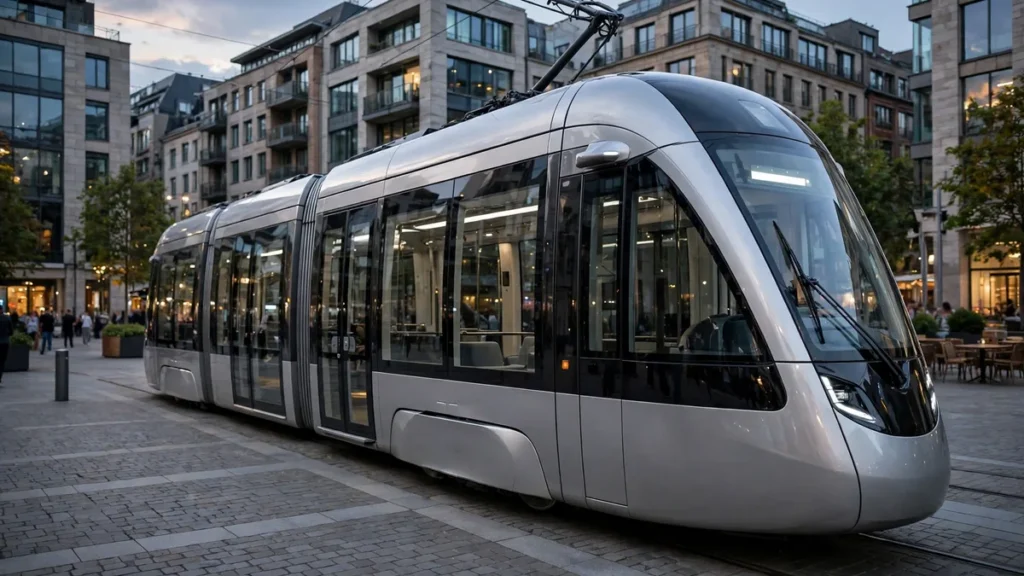
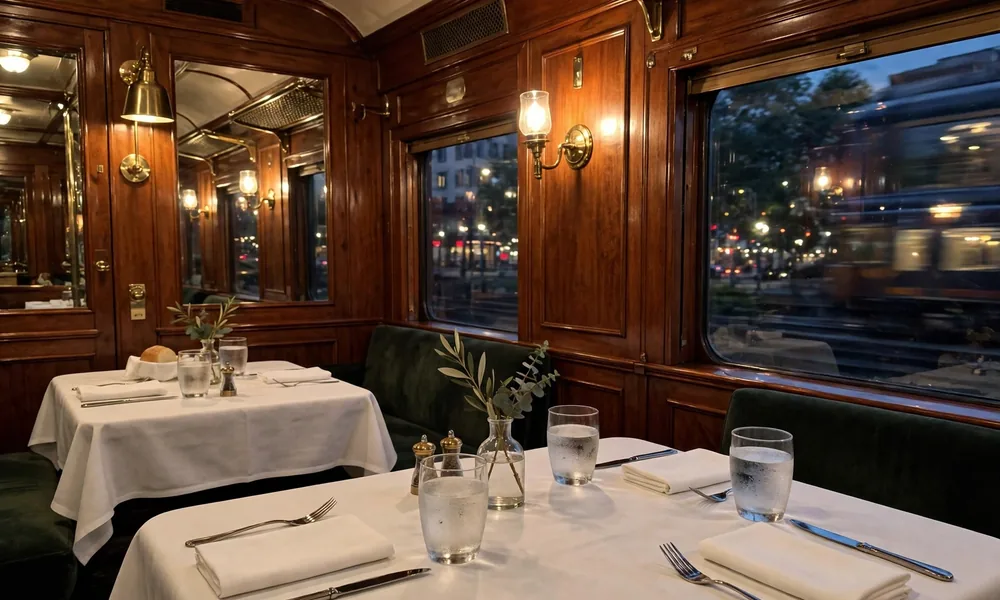
The platform was quiet in the early evening, and then the train arrived without the rumble anyone expected, sliding in on a cushion of sound so soft that the announcements seemed loud by comparison. Its body was smooth silver, its windows glowed warm, and through them you could see polished wood, brass lamps and white tablecloths.
A luxury electric train is expensive for reasons that are easy to miss, because most of the cost is hidden under the floor, inside the motors and in the years of testing before a single passenger boards. This guide follows the money, from the steel body to the dining car, so the price reads like a list of reasons instead of a mystery.

The trainset: a building that moves at speed
The first and largest cost is the trainset itself, the locomotive and the carriages, which are built to order in tiny numbers. A luxury electric trainset costs an estimated 20 to 50 million dollars, because it is not mass produced like a car but hand built like a small ship, with each carriage welded, wired and fitted by specialists.
Every carriage is a separate engineering project, with its own air conditioning, its own power, its own water and its own safety systems, and they must all work together through couplings that flex around corners. The steel is thicker than on an ordinary train, the windows are double glazed and laminated, and the floors are insulated so the sound of the wheels never reaches the cabin.
The motors and the power: drinking from the sky
The second cost is the electric power system, and it starts with the pantograph, the folding arm on the roof that reaches up to touch the overhead wire. That wire carries thousands of volts, and the train must turn it into smooth, silent power for motors that can pull hundreds of tonnes up a hill.
Electric motors are beautifully simple compared with diesel engines, with one moving part and no exhaust, but the power electronics around them are anything but simple. They must handle lightning strikes, voltage spikes and sudden braking, when the motors turn into generators and feed power back into the wire. The guide to how a luxury electric car works explains the same idea in a small car, and the train scales it up a thousand times. Silence is the luxury here, and silence is expensive to engineer.
The interior: suites, dining cars and lounges
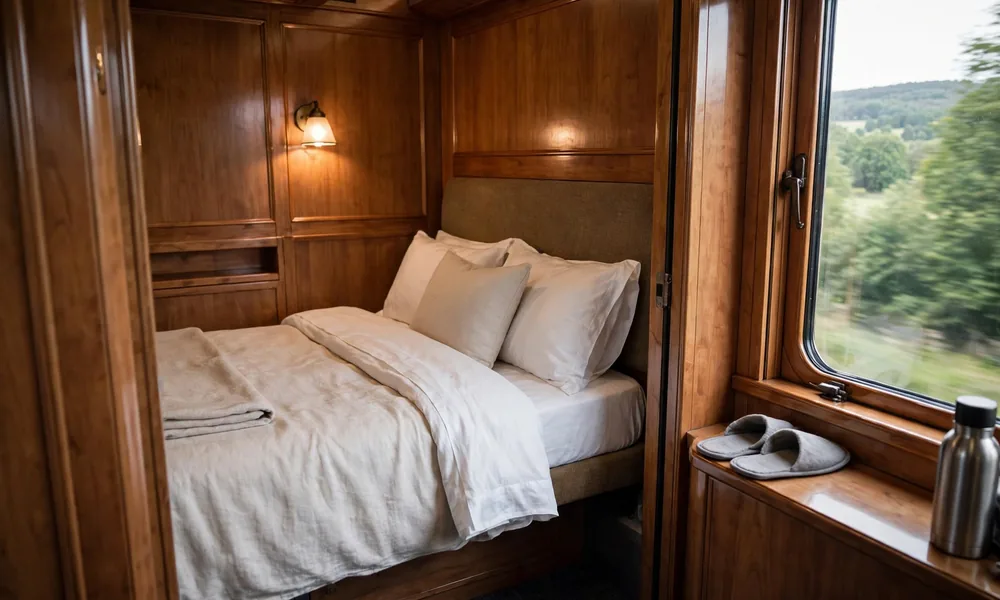
The third cost is the interior, and it is where the luxury shows. A sleeper cabin is a hotel room that must survive a hundred kilometres an hour, with a bed that stays made, a shower that does not leak, and wood panels that do not rattle loose after a million kilometres.
The dining car is the hardest room of all, because it serves hot food on tables that must not wobble while the train sways through curves. The kitchen is smaller than a restaurant kitchen but must cook for a hundred people, with ovens, fridges and storage squeezed into a space the size of a corridor. The lounge car adds sofas, a bar and a library, and every piece of furniture is bolted down, weighted and tested.
The safety systems: the invisible price
The fourth cost is safety, and it is the part passengers never see. A luxury electric train carries automatic braking that stops the train if the driver misses a signal, crash structures that absorb enormous forces, fire detection in every carriage, and emergency systems that work even if the power fails.
Then there is the signalling, because a luxury train must talk to the track, the stations and the control centres in every country it crosses, each with its own system. The train carries several different signalling computers, and they must all agree before the train is allowed to move. The guide to how a luxury electric ferry is made shows the same safety thinking on water, and the train faces the same rule: the luxury is the visible part, but the safety is the expensive part. Nobody books a ticket for the brakes, yet the brakes are why the ticket feels safe.
The testing: years before the first passenger
The fifth cost is testing and approval, which can take years and cost an estimated 1 to 3 million dollars. A new trainset is run empty for thousands of kilometres, through winter and summer, over bridges and through tunnels, while engineers measure every vibration, every temperature and every decibel.
Low volume makes everything dearer, because the cost of designing the train is shared across a handful of trainsets instead of a million cars. A car maker can spread the cost of a new model across a million buyers, but a train builder may sell only ten, so each one carries a tenth of the design bill. That is the quiet maths behind the price, and it explains why a train costs millions before it earns a single fare. The guide to why a luxury electric ship is so expensive tells the same story on water, where low volume and high safety do the same thing to the price.
| Part of the price | What it covers | Estimated cost |
|---|---|---|
| Trainset | Locomotive and carriages, built to order | Estimated 20 to 50 million dollars |
| Motors and power | Electric motors, transformers, pantograph | Estimated 5 to 10 million dollars |
| Interior and suites | Cabins, dining car, lounge, materials | Estimated 3 to 8 million dollars |
| Safety systems | Braking, signalling, crash protection | Estimated 2 to 5 million dollars |
| Testing and approval | Track trials and certification | Estimated 1 to 3 million dollars |
| Maintenance setup | Depot tools, spares and training | Estimated 1 to 2 million dollars |
What it costs
A luxury electric trainset typically costs an estimated 30 to 70 million dollars, depending on its length, its speed and the richness of its interior. A single sleeper suite ticket on a famous luxury service can cost an estimated 3,000 to 10,000 dollars for one journey, which sounds extraordinary until you remember that the train itself cost tens of millions and carries only a few dozen passengers at a time. The fare is the price of a hotel, a restaurant and a theatre, all moving through the countryside at a hundred kilometres an hour.
A rare fact about the luxury electric train
Some of the most famous luxury trains in the world still run in carriages built a century ago, restored by hand with their original wood, brass and glass. The oldest cars on one celebrated service date back to the 1920s, and they have been rebuilt so carefully that passengers cannot tell where the original ends and the restoration begins.
So the next time a silent silver train slides into the platform, remember what is inside it: a building that moves, motors that drink power from the sky, a hotel that never stops, safety systems you will never see, and years of testing before the first ticket was sold. The price is not a mystery. It is the cost of moving a hotel at a hundred kilometres an hour, in silence, and making it feel effortless.