Out past the horizon, where the water turns from blue to a hard grey-green and the nearest land is a day behind, a fishing trawler works. It is not a pretty sight in the way a yacht is pretty. It is steel, rust-streaked at the waterline, with a gantry like a factory crane. But look closer and the trawler is one of the most expensive and most sophisticated machines that ordinary people ever build — a floating factory, a freezer warehouse and a seagoing home, all in a hull that must survive the worst weather on the planet and still bring its crew home.
A luxury trawler — the kind built for an owner-operator who fishes the deep water for weeks at a time, or for a company that demands the best of everything — can cost an estimate of $10 to $50 million, and the largest factory trawlers go far beyond that. The price surprises people who think of a fishing boat as a simple thing. It is not simple. It is a vessel that must catch fish, process them, freeze them, house its crew, and survive storms that would sink most ships, all without seeing a port for weeks.
Before the price, one distinction matters. This is the working fishing trawler — the commercial vessel that earns its living from the sea. It is not the trawler yacht, the slow pleasure boat that borrows the trawler’s shape for comfort and style. The two share a name and a silhouette, and little else. The fishing trawler is a machine built to work, and its cost is the cost of working, far from help, in the hardest conditions on earth.
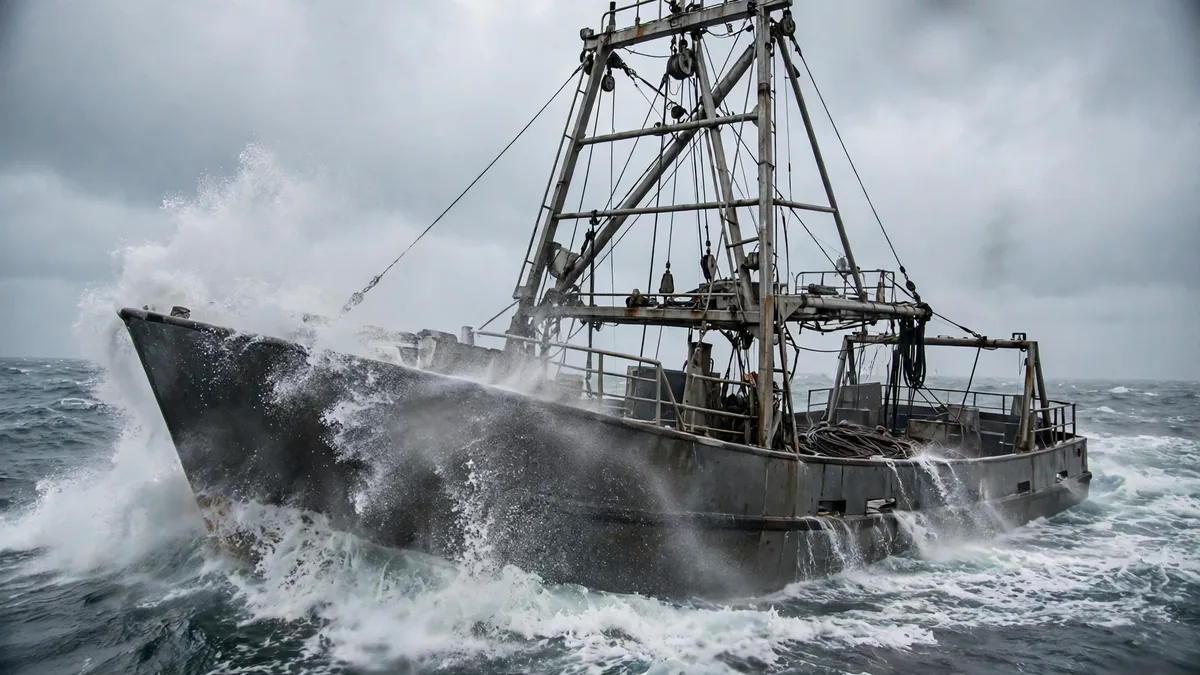
Reason one: the hull is built to survive anything
A trawler’s hull is its first and largest expense. It is built from thick steel, welded and reinforced to a standard far beyond a pleasure boat, because it will be hit by waves that can throw a ship of its size around like a toy. The bow is high and flared to keep green water off the deck. The stern is open and working, with a gantry — a great steel frame — that hauls the trawl net aboard. It must take the weight of a full net, the shock of a snagged trawl, and the impact of northern ice.
Reason two: it is a factory, not just a boat
The second great cost is what the trawler does with its catch. A modern luxury trawler does not just catch fish and bring them home. It processes them at sea, in a factory deck below the working deck: heading, gutting, filleting, freezing and packing, all within hours of the fish coming aboard. The factory is a production line that happens to be at sea, built to strict food-safety standards.
The freezing system alone is a major investment. Blast freezers that can take tonnes of fish to minus 30 degrees in hours, cold stores that hold them there for weeks, and the refrigeration plant to power it all — The processing machinery is stainless steel, custom-built, and designed to be cleaned and sterilised at sea. A trawler that cannot process its catch quickly loses its value: fish that are not frozen fast are worth less, and the factory is what turns a good catch into a profitable one. The craft of building the vessel is a story of its own, and how a luxury trawler is made follows that build.
Reason three: the fishing gear is industrial machinery
The trawl itself is an industrial system. The net can be hundreds of metres long, with doors — great steel or wooden boards — that hold it open as it is dragged along the seabed, and sensors that report its depth, its spread and its catch in real time. The winches that haul it are among the largest on any civilian vessel, capable of pulling tens of tonnes of net and fish through the water.
All of this gear is expensive, and all of it wears out. A single trawl net costs an estimate of tens of thousands of dollars, and a trawler carries several. The doors, the warps, the sensors, the winches — each is a specialist item, built in small numbers for a small market. Dragged along the seabed, it is damaged regularly: snagged on wrecks, torn on rock, worn by sand.

Reason four: the crew lives aboard for weeks
A trawler is also a home. The crew of fifteen to thirty people lives aboard for trips of three to six weeks, and the accommodation, the galley, the mess and the medical facilities must be good enough to keep them safe, fed and sane in conditions that would drive most people ashore in a day. Luxury trawlers go further: proper cabins instead of bunks, a galley that can cook real meals in a rolling sea, and satellite internet so the crew can call home.
That is not softness. It is economics. A crew that is rested, fed and healthy catches more fish and has fewer accidents, and in an industry where a good crew is hard to find and harder to keep, the accommodation is a recruitment tool. The best trawler owners spend serious money on the living quarters because they have learned that the cheapest crew is the one that stays. The same logic shows in the luxury pontoon boat’s specifications, where space, seating and shade are the whole point.
Reason five: the running costs never stop
Fuel is the trawler’s largest running cost, and it is enormous. A large trawler dragging a net can burn an estimate of 10,000 to 20,000 litres of diesel a day — hundreds of thousands of dollars of fuel on a six-week trip. The engines are large — often 3,000 to 6,000 horsepower — and they run continuously, driving the ship, the winches and the factory at the same time.
Maintenance is the second great cost. Salt water, heavy loads and constant use wear a trawler out faster than almost any other vessel, and the ship must be dry-docked regularly for hull inspection, repainting and repairs. Insurance, licences, quotas and crew wages add more. Owners commonly reckon that a trawler costs an estimate of 15 to 20 percent of its purchase price every year to run — which on a $30 million vessel is an estimate of $4.5 to $6 million a year before it catches a single fish. Running costs overtaking the purchase price is a pattern across boats, as why a luxury wakeboard boat is so expensive explains.
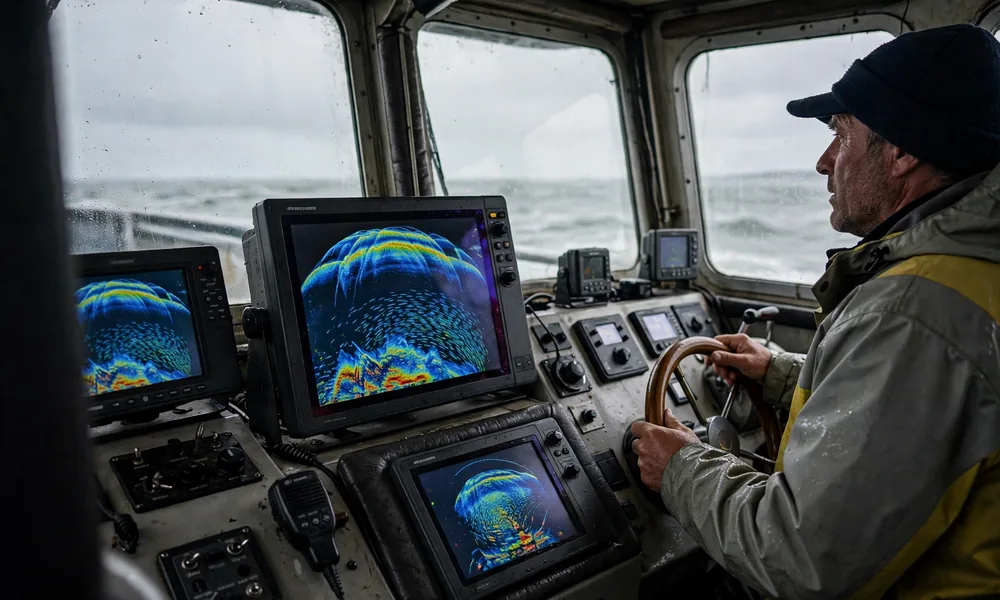
A rare fact
Here is the detail that even many sailors do not know: the most valuable thing on a modern trawler is not the net, the engines or the factory. It is the sonar. A modern trawler carries fish-finding sonar so advanced that it can show the captain the fish as a three-dimensional cloud, estimate the weight of the catch before the net is even set. The best systems cost an estimate of hundreds of thousands of dollars, and they have changed fishing from luck into information. A captain with good sonar fishes less, burns less fuel, and catches more.
A luxury fishing trawler is expensive because it is asked to be four things at once: a ship that can survive the worst seas, a factory that can process food to the highest standards, a home for thirty people for six weeks, and a hunting machine that can find fish hundreds of metres down in the dark. Each of those jobs alone would justify a serious vessel. Together, in one steel hull, they justify the price.


