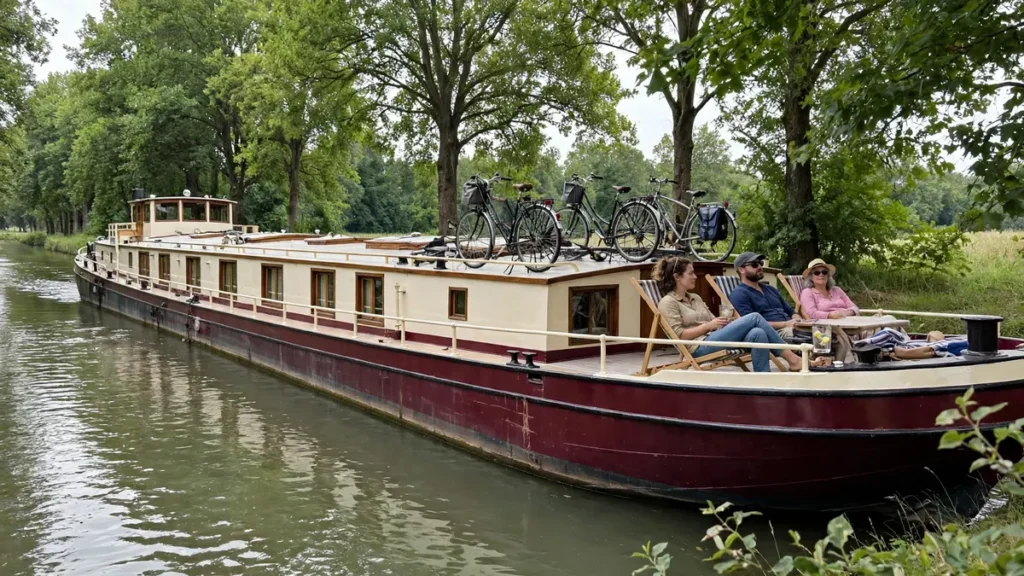
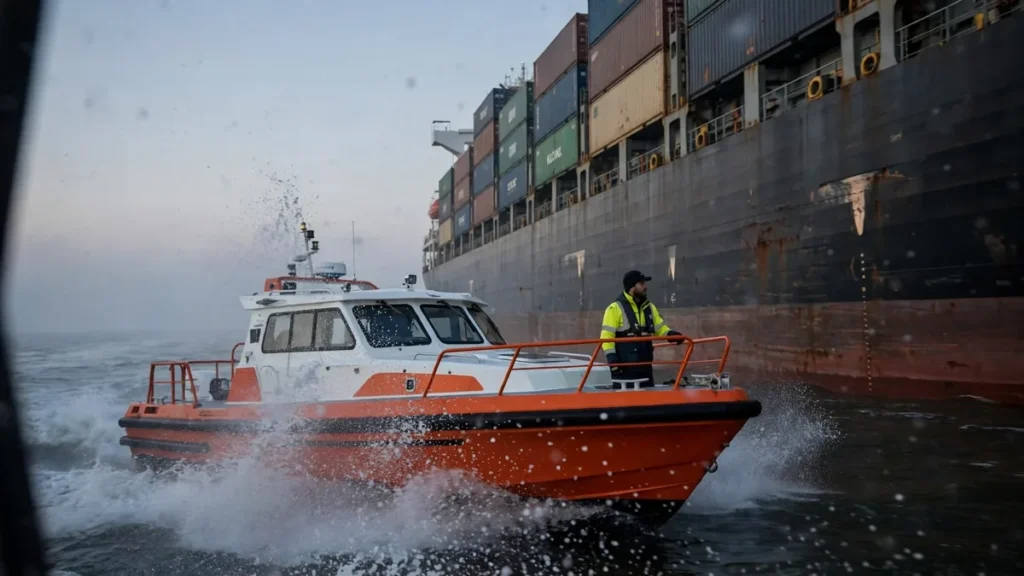
There is a particular kind of silence on the deck of a luxury trawler yacht at anchor, and it is the first thing a visitor notices. The boat is not a sleek white arrow built for speed. It is a broad, high-bowed ship with a workboat’s shoulders and a penthouse’s interior, and it sits in the water the way a house sits on a hill: settled, unhurried, certain of itself. Then the owner mentions the price, and the silence changes. A number somewhere between five and thirty million dollars, depending on size, and the visitor’s first question is always the same. Why does a slow boat cost as much as a fast one, or more?
The answer begins with what a trawler yacht is not. It is not a planing yacht that skims across the surface at thirty knots, and it is not a commercial fishing trawler, though it borrows that vessel’s hull shape, its heavy displacement and its appetite for long distances. A luxury trawler yacht is a long-range cruising ship dressed as a home, built to cross oceans at eight or nine knots and to do it in comfort that a faster yacht cannot match at any price. Everything about it is expensive for a reason, and the reasons stack up in layers, from the steel in the hull to the stabilisers under it.

The hull is a ship, not a boat
The first and largest reason is the hull itself. A luxury trawler yacht is built like a small ship, with a full-displacement steel or aluminium hull that displaces far more water than a planing yacht of the same length. A 30-metre trawler yacht can weigh 200 tonnes or more, where a planing yacht of the same length might weigh half that. The steel alone costs a fortune, and the labour costs more: cutting, welding, fairing and painting a steel hull to yacht standards takes thousands of skilled hours, and every weld is inspected, because a hull that will cross an ocean cannot have a weak seam.
Range costs money, and then it saves it
The second reason is range, and it is the trawler yacht’s whole point. A luxury trawler yacht typically carries 15,000 to 40,000 litres of fuel, enough for 4,000 to 6,000 nautical miles at economical speed, which is enough to cross the Atlantic with fuel to spare. That range is not a number on a brochure. It is tanks, and tanks take space, and space inside a hull is the most expensive real estate on the water. Every litre of fuel capacity is a litre that cannot be a cabin, a tank room or a store, so the designer has to fit a ship’s fuel system, a ship’s water system and a ship’s generators into a hull that also has to be a home.
Comfort at sea is the most expensive luxury of all
The third reason is comfort, and it is where a trawler yacht spends money that a fast yacht never has to. A displacement hull rolls, and rolling is the enemy of a good night’s sleep, so a luxury trawler yacht carries stabilisation. The best systems are active fins that extend from the hull and adjust hundreds of times a minute, or gyroscopic stabilisers that spin a heavy flywheel inside the boat to resist the roll. Either system costs hundreds of thousands of dollars as an estimate, and the fins also need hydraulic power, structural reinforcement in the hull and regular maintenance. Without them, the boat would be uninhabitable in a seaway. With them, a guest can drink coffee in a force six and barely notice the sea.
Where the money actually goes
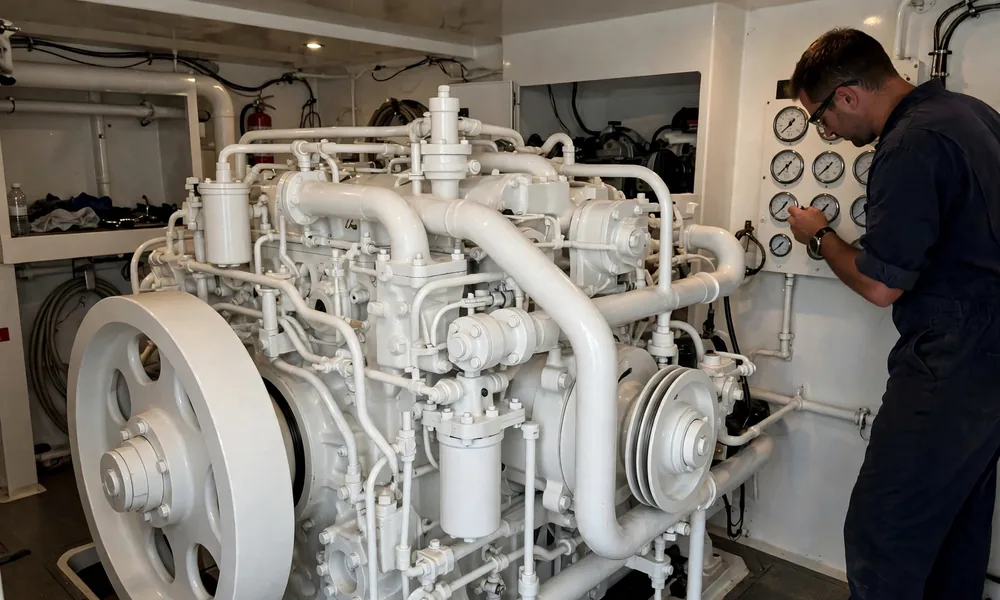
Put the build together and the cost breaks down into recognisable parts. As an estimate, the hull and superstructure, in steel or aluminium, account for roughly a fifth to a quarter of the total. The machinery, engines, generators, stabilisers and systems, accounts for another quarter, and the interior fit-out, joinery, stone, glass and soft furnishings, accounts for a similar share again. Electronics, navigation, communications and entertainment take a smaller but still serious slice, and the rest goes to design, project management, sea trials and the shipyard’s margin. A 25-metre luxury trawler yacht might be built for an estimated $6 million to $10 million, a 35-metre example for $15 million to $25 million, and a 45-metre example for $30 million and beyond. The numbers vary with the yard and the specification, but the shape of the breakdown does not: there is no single thing that makes a trawler yacht expensive, and there is no single thing that could be removed to make it cheap.
Why slow is worth it
There is a final reason, and it is the hardest to put on a spreadsheet. A trawler yacht can go places a fast yacht cannot, and it can stay there. Its range opens up the Pacific crossing, the Northwest Passage in summer, the long run from the Mediterranean to the Caribbean without a fuel stop in the Azores if the owner prefers, and its heavy hull and stabilisers make those passages comfortable rather than heroic. It carries a tender, kayaks, diving gear and a workshop, and it carries enough water, food and fuel to be independent for weeks. For an owner who wants to see the world from the water rather than from a marina, that independence is the product, and the boat is just the way it is delivered.
A rare fact worth knowing
Here is a detail that few people outside the shipyards know. Some of the finest luxury trawler yachts are built with a bulbous bow, a torpedo-shaped bulb below the waterline at the front of the hull, borrowed directly from commercial ships. The bulb creates its own wave that cancels out the bow wave, reducing resistance and saving fuel, and on a long ocean passage the saving can be several percent of the total fuel burn. It is invisible when the boat is in the water, it adds cost and complexity in the yard, and it only works at the boat’s designed cruising speed, which is why it appears on trawler yachts and almost never on fast planing yachts. A visitor looking at the boat from the dock will never see it. The ocean, over four thousand miles, will feel it.
A luxury trawler yacht is expensive because it is a ship, a home and a life-support system in one hull, built to be used far from help for weeks at a time. To understand the machinery, see how a luxury trawler yacht works, and for the figures, see the luxury trawler yacht spec sheet. For a working boat’s answer to the same question, see why a luxury trawler is so expensive.

| Cost area | Share of build (estimate) | Why it costs so much |
|---|---|---|
| Hull and superstructure | 20–25% | Steel or aluminium, one-off construction |
| Machinery and systems | 20–25% | Commercial engines, redundancy, stabilisers |
| Interior fit-out | 20–25% | Hand-built joinery and stone |
| Electronics and navigation | 5–10% | Ocean-grade comms and safety |
| Design and trials | 10–15% | Naval architecture, sea trials, yard margin |
| Annual running costs | 5–10% of value | Crew, fuel, maintenance, berthing |