From the harbour crane, the ship did not look like a ship at all. It looked like a floating warehouse district: four hundred metres of steel, stacked eight containers high, the bow seeming to belong to a different vessel from the stern. On the bridge, twenty-three decks up, the captain could see the whole port below, and the ship’s bow was a distant red line. It was not a yacht, and nobody would call it beautiful — but it was the most expensive machine in the harbour.
A luxury container ship is a strange phrase, and it needs explaining. Nobody buys a container ship for pleasure. But the newest, largest container ships are built to a standard that earns the word: custom hulls, the most efficient engines ever fitted to a ship, automated cargo systems, and crew accommodation unthinkable a generation ago. They are the flagships of the world’s biggest shipping lines, and they cost more than most superyachts. The price is in the scale, the steel, and the systems letting twenty people run a machine the size of a small town.

What the money actually buys
A container ship’s job is simple to state and brutal to deliver: carry as many standard steel boxes as possible, as fast as possible, as cheaply as possible, across the world’s busiest trade routes, for twenty-five years, with almost no time in port. The newest ultra-large ships carry more than 24,000 containers — enough to stretch from one city to another. To do that they need a hull longer than four football pitches, an engine like a small power station, and a crew small enough that wages do not eat the profit.
That is where the luxury comes in, if that is the right word. The accommodation block on a modern flagship is a quiet hotel for twenty-odd people: single cabins with en suites, a gym, a mess room, a small cinema, a hospital bay, and a bridge fitted like a warship’s. How a luxury container ship is made is a story of scale first and comfort second — but comfort matters, because the crew live aboard for months, and a tired crew makes mistakes this ship cannot afford.
How a luxury container ship is made
Step 1 — The hull is designed in a computer, then a tank. Naval architects model the hull to cut fuel use by a fraction of a percent, because on a ship burning a hundred tonnes a day that is real money. Scale models are towed through test tanks for months before a single plate is cut. The bow gets a bulbous nose below the waterline, and the stern is shaped to feed clean water to the propeller.
Step 2 — The steel goes up in blocks. The ship is built in giant sections, each the size of a building, in a dry dock. Cranes lift the blocks into place and welders join them — kilometres of weld in total, checked by ultrasound. The double hull is fitted as the blocks go together, and the holds are shaped to stack containers twenty-four across.
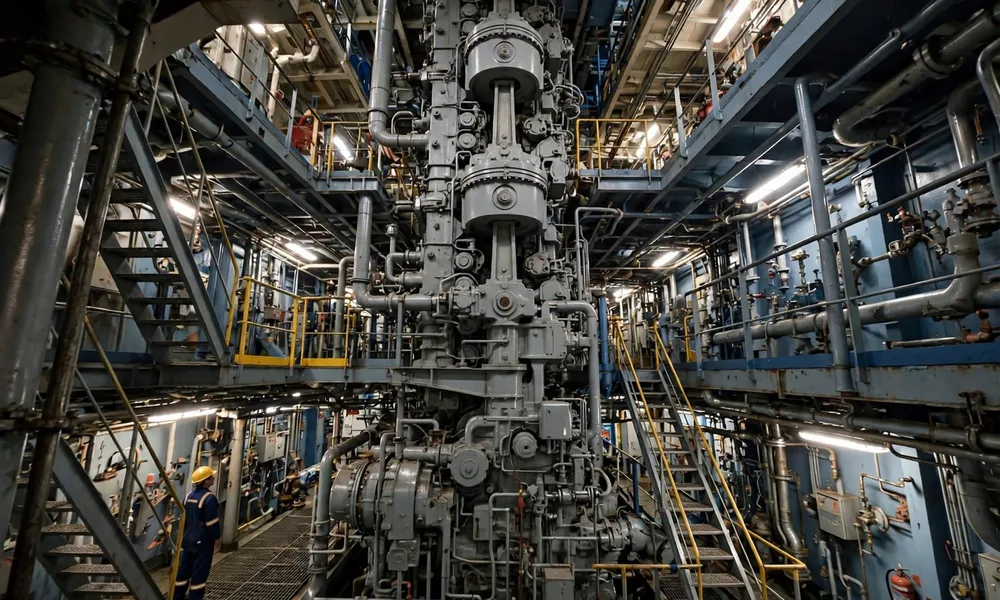
Step 3 — The engine is installed. The main engine is a two-stroke diesel as tall as a four-storey building, lowered into the ship in pieces. It turns a single shaft and a propeller weighing around a hundred tonnes. Around it go generators, the fuel treatment plant, exhaust scrubbers and the ballast water system — a power station buried in the stern.
Step 4 — Cargo systems are fitted. Cell guides, steel rails in the holds, slot containers into place, and lashing bridges let the crew secure the stacks. Hundreds of refrigerated sockets are wired in so chilled cargo can plug in. The newest ships add sensors that report the load on every stack to the bridge.
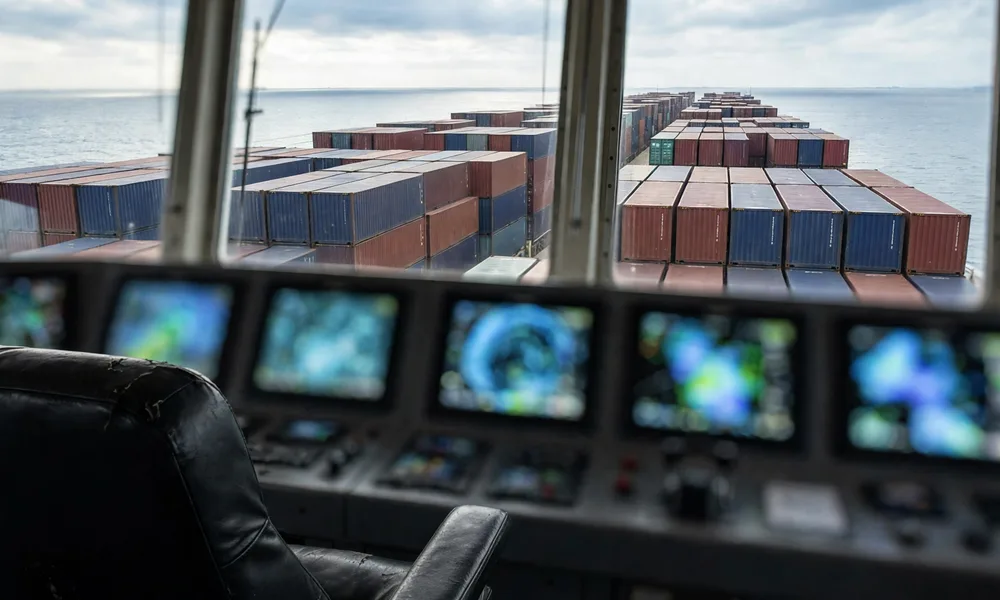
Step 5 — The accommodation block is finished. The white tower at the front is built out like a small hotel: cabins, mess rooms, galley, gym and hospital, all insulated against engine noise and vibration. The bridge, at the top, carries radar, electronic charts and communications linking the ship to the line’s office worldwide.
Step 6 — Sea trials and delivery. The ship runs measured trials: speed, fuel consumption, turning, stopping and vibration, with the holds loaded to prove the design. Only when the numbers match the contract does the line take delivery, and the ship sails for its first loading port — a journey repeated, with variations, for twenty-five years.
The specification that drives the price
| Specification | Typical figure | What it means |
|---|---|---|
| Length overall | 399–400 metres | Longer than four football pitches |
| Beam | 59–61 metres | Twenty-four containers across |
| Capacity | 23,000–24,000 TEU | Standard containers carried at once |
| Main engine | 60,000–80,000 hp | Power of a small power station |
| Service speed | 21–23 knots | Fast enough to keep the schedule |
| Crew | 20–25 people | A tiny crew for a huge machine |
| Fuel use | 100–150 tonnes a day | Why a fraction of a percent matters |
| Build time | 18–24 months | From first steel to delivery |
The figure that surprises people most is the crew: twenty people run a ship carrying the cargo of a small city, because almost everything is automated — the engine room is unmanned at night, the cargo is tracked by computer, and two people can run the bridge. The second surprise is fuel. A ship this size burns more in a day than a village uses in a year, which is why hull and engine matter most on the sheet — and why the most efficient ships cost the most to build.
What it costs
A new ultra-large container ship typically costs an estimated $150 million to $250 million, depending on size, engines and accommodation. A standard 24,000-container vessel sits in the middle; a custom flagship with dual-fuel engines, the latest cargo automation and a premium crew block reaches the top. The price also reflects the yard: only a handful in the world can build a ship this size, and their order books are full for years. Running costs run to tens of millions a year in fuel, crew, insurance and maintenance, yet the economics work — the price of a luxury trawler yacht is a rounding error beside a container ship, but the container ship earns its keep carrying the world’s trade, twenty-four thousand boxes at a time.
A rare fact
The biggest container ships are so long that the hull flexes, bending and twisting in a seaway by more than a metre from bow to stern, by design. The steel works like a spring, and the cargo lashings and piping are built to move with it. Stranger still, the propeller turns at around eighty revolutions a minute — slow enough to count the blades, each taller than a person. The luxury trawler yacht spec sheet reads like a different language: where the yacht’s numbers describe comfort and range, the container ship’s describe a machine that must never stop, because a day late costs more than most people earn in a lifetime.
A luxury container ship is not luxurious the way a yacht is: no marble, no champagne, no sun deck. The luxury is in the engineering — a hull shaped by months of tank testing, an engine that sips fuel by the tonne, a crew block quiet enough to sleep in while the ship thunders on at twenty-two knots. It is the most expensive machine in the harbour because it is the hardest-working one, and because it has to pay for itself, every day, for twenty-five years.