Feed a machine a pile of grey powder and a digital file, and hours later it hands you a finished metal part — a turbine blade, a rocket nozzle, a bracket with a shape no foundry could cast and no mill could cut. That is metal 3D printing, and it feels like magic. It is also one of the most expensive ways to make anything. The magic is real, but so is the bill.
The reason is that metal 3D printing is not printing at all. It is welding, thousands of times a second, in a sealed chamber, with a laser, in an atmosphere of pure argon, using powder that costs more per kilo than silver. Here is where the money goes.
1. The Machine Costs as Much as a House
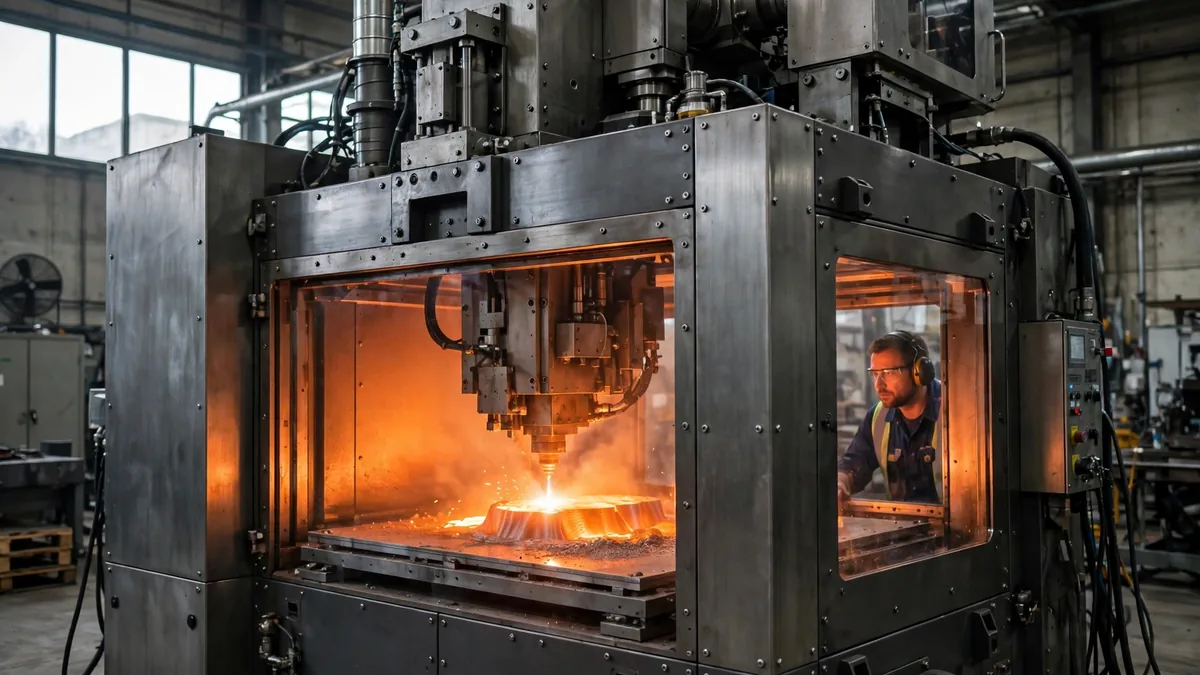
An industrial metal 3D printer is a serious piece of capital equipment. A single machine can cost from hundreds of thousands to several million dollars (estimate), and it needs a factory around it: a clean room, a supply of argon gas, power, cooling and ventilation. The machine is slow — a part can take a day or more to print — so the cost of the machine is spread across relatively few parts. Every hour the printer runs is expensive, and every hour it sits idle is wasted money.
2. The Powder Costs More Than Silver
The raw material of metal 3D printing is powder: tiny spheres of titanium, nickel alloy, stainless steel or aluminium, each one a few tens of micrometres across. The powder is made by atomisation, a process that melts the metal and sprays it into droplets that freeze into spheres, and it must be almost perfectly round and uniform in size, or it will not spread evenly. Titanium powder can cost hundreds of dollars per kilogram (estimate), and a single build can use tens of kilograms. The powder is the most expensive raw material in manufacturing, and it is the starting point of every part.
3. The Powder Is Dangerous to Handle
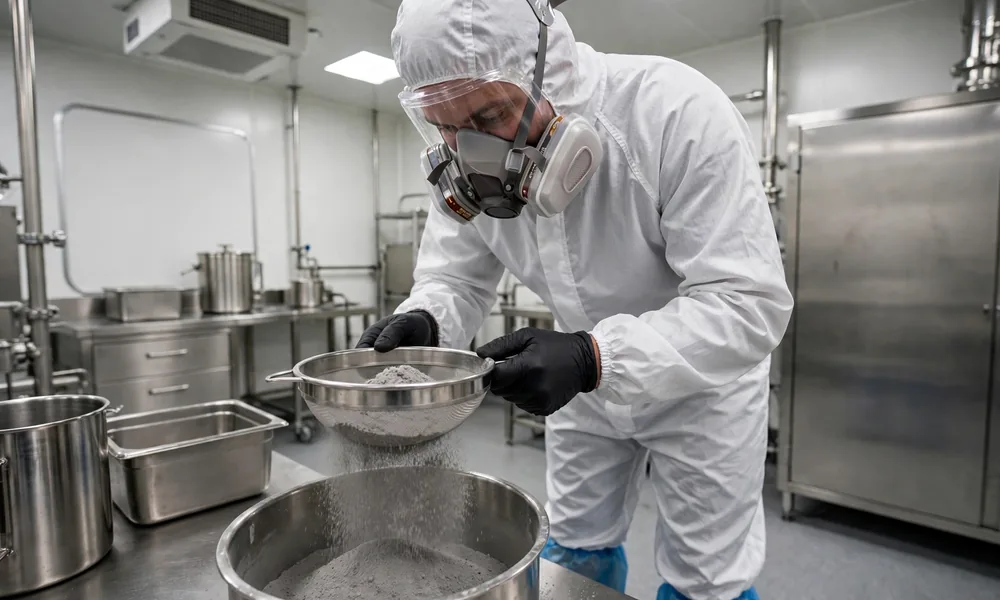
Fine metal powder is not just expensive; it is hazardous. Titanium and aluminium powders can catch fire or explode if they are exposed to air in the wrong way, and breathing the dust is harmful. Handling it requires protective suits, respirators, sealed containers and a clean room with controlled humidity. The powder must be stored, sieved, loaded and unloaded by trained staff, and any spill must be cleaned up by specialists. The handling rules are part of the price of every part that comes out of the machine.
4. Printing Is Slow — Glacially Slow
Metal 3D printing builds a part one layer at a time, each layer a fraction of a millimetre thick, with the laser tracing the shape of that layer in the powder. A part a few centimetres tall can have thousands of layers, and each layer takes time to spread, scan and fuse. A complex part can take 24 hours or more in the machine, and during that time the machine can do nothing else. The printer’s slowness is the price of its freedom: it can make shapes no other process can, but it makes them one layer at a time.
5. Every Part Needs Finishing by Hand
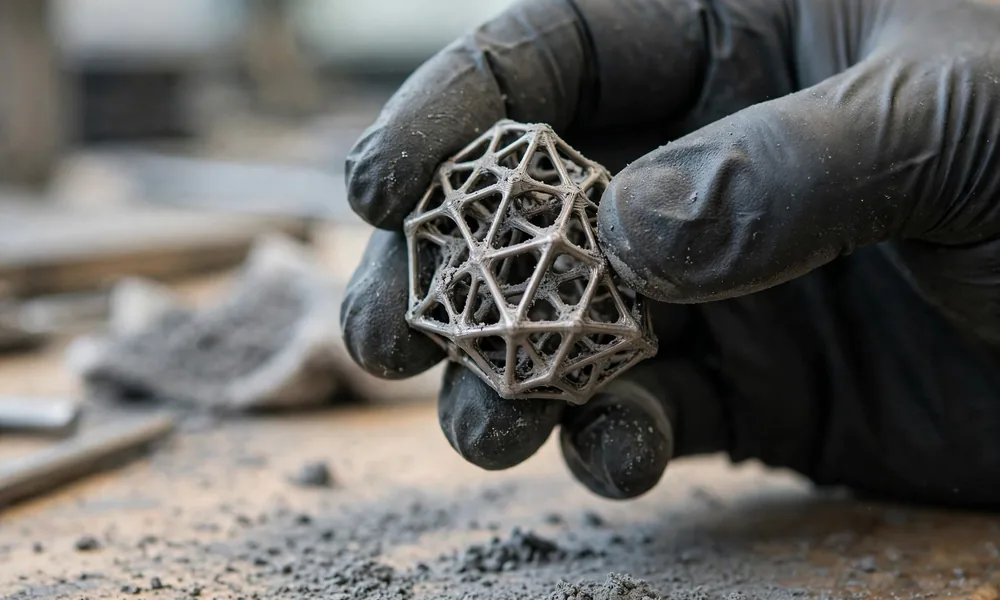
A part that comes out of the printer is not finished. It is stuck to a build plate by supports, covered in loose powder, and rough on the surface. The supports must be cut away, the surface must be machined or polished, and the part must be heat-treated to relieve the stresses built up during printing. All of this is skilled hand work and specialist equipment, and it can take as long as the print itself. The printer makes the shape; the finishing makes it usable. The materials behind additive manufacturing show how much of the work happens after the print finishes.
6. Testing and Certification: Proving a Part That Has No History
A cast or forged part has a century of history behind it; engineers know how it behaves. A printed part does not, so every critical printed part must be tested and certified from scratch. The part is X-rayed or CT-scanned to find internal voids, tested for strength, and documented in a trail that follows the powder from the supplier to the finished component. The testing is the reason printed parts are trusted in jet engines and implants, and it is also a major reason they are so expensive. Forging is the older craft it competes with — the materials behind aluminium forging show how the traditional process works.
7. The Freedom to Design Costs Money Too
The great strength of metal 3D printing is design freedom: lattices that weigh almost nothing, cooling channels that curve through a part, shapes that no mould could release. But that freedom is expensive to use. Designing for printing takes specialist engineers, simulation software that models how the part will warp as it cools, and test prints that are often scrapped before the real part is attempted. The specifications of aerogel insulation show how far advanced materials have come, and printed metal is part of that same frontier.
Metal 3D Printing at a Glance
| Specification | Detail |
|---|---|
| Main process | Laser powder bed fusion, melting metal powder layer by layer |
| Layer thickness | Typically 20–60 micrometres per layer |
| Common metals | Titanium, nickel alloys, stainless steel, aluminium |
| Build chamber | Sealed, filled with argon gas to prevent oxidation |
| Build time | Hours to days for a single part (estimate) |
| Powder cost | Hundreds of dollars per kilogram for titanium (estimate) |
| Post-processing | Support removal, heat treatment, machining, inspection |
What Does It Cost?
Metal 3D printing is priced by the part, and the numbers are steep. A small printed part can cost hundreds of dollars (estimate), a part the size of a shoebox can cost thousands (estimate), and a large aerospace component can cost tens of thousands (estimate). The machines themselves cost hundreds of thousands to millions of dollars (estimate), and the powder, the argon, the finishing and the certification all add to the bill.
A Rare Fact
One of the most famous metal printed parts in the world is a fuel nozzle for a jet engine, and it tells the whole story of the technology. The old nozzle was made from 20 separate parts, welded together; the printed version is a single piece, with internal cooling channels that could never have been drilled or cast. It is lighter, stronger and more efficient than the part it replaced, and it is made in a machine that melts powder with a laser. The nozzle is the reason airlines and rocket companies pay the price: a part that cannot be made any other way is worth whatever it costs to print.


