Stand in front of a new BMW M4, a Lexus NX or a Cadillac Escalade and the first thing you meet is not the headlights or the badge. It is the mouth: a grille so large it looks less like an air intake than a challenge. Carmakers will tell you it is bold, distinctive, instantly recognisable. They are right about the last part. You cannot mistake these cars for anything else. The trouble is that recognition is not the same thing as good design, and the giant grille is the worst styling habit in the modern car industry — a feature that hurts aerodynamics, hurts safety, and on electric cars does not even do the job it pretends to do.
This is the case against the giant grille. Not against grilles themselves, which have a real job to do, and not against distinctive design, which the car world desperately needs. It is a case against scale for its own sake: against mouths that grew because nobody in the design studio was willing to say stop.
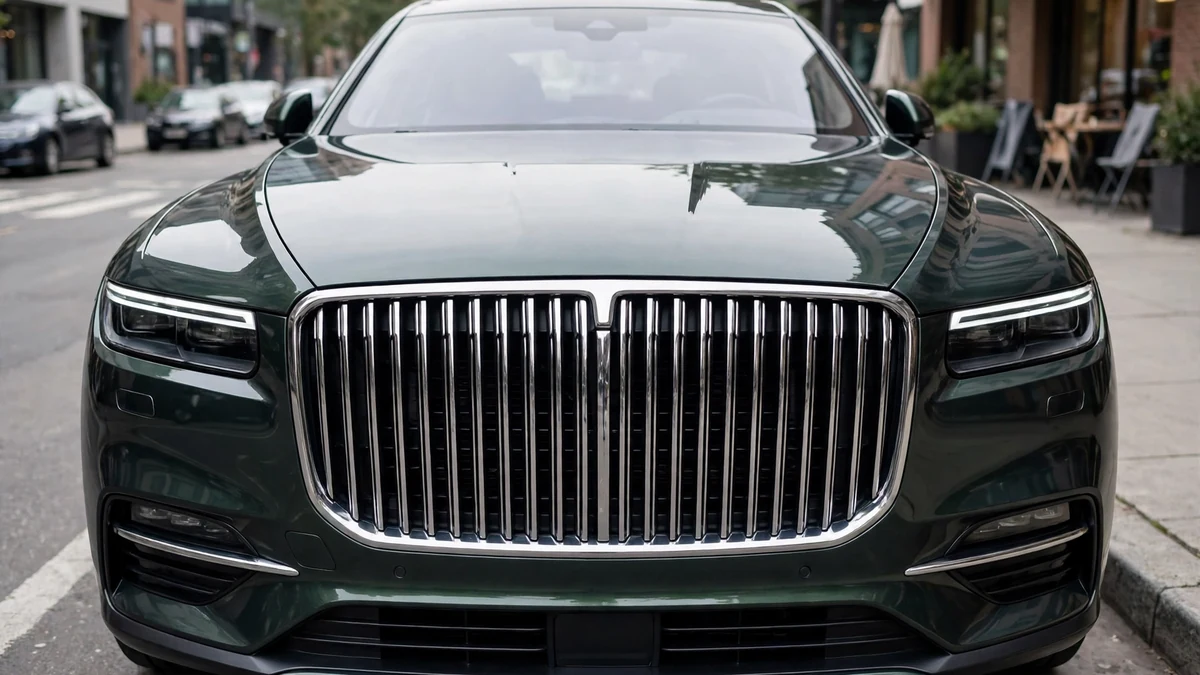
The aerodynamic penalty is real
Air does not care about brand identity. A tall, upright front end pushes a wall of air ahead of the car, and a giant grille opening swallows air that then has to be managed through the engine bay, around radiators and out again — all of it drag. Carmakers spend fortunes in wind tunnels shaving fractions off a car’s drag coefficient, sculpting mirrors, underbodies and roof lines, and then bolt a barn door to the front and call it a face. The contradiction is visible in the numbers: the most aerodynamically efficient cars on sale, from the Tesla Model 3 to the Hyundai Ioniq 6, have smooth, nearly grille-free noses, because there is nothing to cool and nothing to gain from an opening.
Electric cars gave the game away
Nothing exposes the giant grille like the electric car. An electric motor needs a fraction of the cooling air a combustion engine needs, and a battery pack is cooled through its own system, mostly from below. There is no radiator behind that vast opening demanding to be fed. BMW itself has admitted that the huge kidney grille on its iX is largely closed off, because the car needs so little cooling air. Mercedes sells cars with grilles lit by hundreds of tiny lights. The grille has stopped being an intake and become a screen — a place to hang lights and brand identity where an engine used to need air.
The safety cost is the serious charge
The aesthetic argument is a matter of taste, and taste is personal. The safety argument is not. Cars have grown taller over the last thirty years — the average American passenger vehicle is about eight inches taller than it was, and the average new-car bonnet in Europe rose from 76.9 centimetres in 2010 to 83.8 centimetres in 2024. Tall, blunt front ends are measurably worse for the people outside the car: they strike pedestrians higher on the body, at the chest and head rather than the legs, and they hide small children standing directly in front of the car. In tests for a European transport study, the driver of a large pickup could not see children up to nine years old standing immediately ahead of it.
The giant grille is both a symptom and a cause of this. It belongs on tall, upright noses, and it encourages them, because a grille that big needs a tall front end to hang it on. The interior of a car is where the driver lives, and the best cabins prove that restraint ages better than shouting — our ranking of the best hypercar interiors shows how the finest cars impress through materials and proportion, not through the loudest single feature.

The defence, heard fairly
The giant grille has defenders, and the honest version of their case deserves an answer. First, brand identity. In a market where cars increasingly share platforms, motors and even silhouettes, the face is one of the few places a brand can still be itself. BMW’s kidneys date to 1933, Alfa Romeo’s shield is older still, and a distinctive face helps buyers find the car they want in a crowded car park.
All three points are true, and none of them answers the charge. Brand identity does not require gigantism: the most recognisable BMWs in history — the 2002, the M1, the E39 5 Series — wore small, elegant kidneys, and nobody struggled to identify them. Fashion is a cycle, and the fact that oversized chrome happened before is an argument for learning from it, not repeating it. And sales prove that buyers will tolerate a face they dislike when the rest of the car is good, not that the face is good. People bought the M3 in spite of its grille, because the engine and chassis were superb. That is a compliment to the engineers, not to the designers who gave them a face to overcome.
What good design looks like instead
The alternative is already on the road, and it is not boring. The most interesting car faces today are the ones that treat the front end as a surface to sculpt rather than a hole to enlarge: the smooth, low nose of a Porsche Taycan, the slim light bar of a modern Hyundai, the careful surfacing of a Lotus Emira. These cars are recognisable without shouting, and their shapes serve the air rather than fighting it. Even within BMW’s own history, the lesson is there: the kidney grille was at its most elegant when it was small, horizontal and shark-nosed, a detail rather than a demand.
There is a parallel in the cabin, where the industry has learned — sometimes the hard way — that one dominant feature is not a design philosophy. The backlash against touchscreens that swallowed every button taught carmakers that drivers want controls they can find without looking, and the best interiors now mix screens with real switches. Our opinion piece on the case for physical buttons in cars makes that argument for the cabin; the grille is the same argument for the face. Restraint is not the absence of design. It is design with the confidence to stop.
The engineering case is just as clear. The materials of a great car deserve better than to be spent on a hole: the weave of carbon fibre, the shaping of a panel, the cooling of a brake are all places where engineering effort pays the driver back, and our guide to carbon fibre weave specs shows how much thought goes into getting a single material right. A grille should earn its size the same way.
The Takeaway
The giant grille will probably survive for a while yet, because fashion moves slowly and brand managers love a billboard. But the case against it is now overwhelming: it wastes aerodynamic effort, it rides on front ends that are measurably worse for pedestrians, and on electric cars it does not even perform the job it is shaped like it performs. The great car faces of history were confident, proportioned and sized to their purpose. The giant grille is none of those things.


