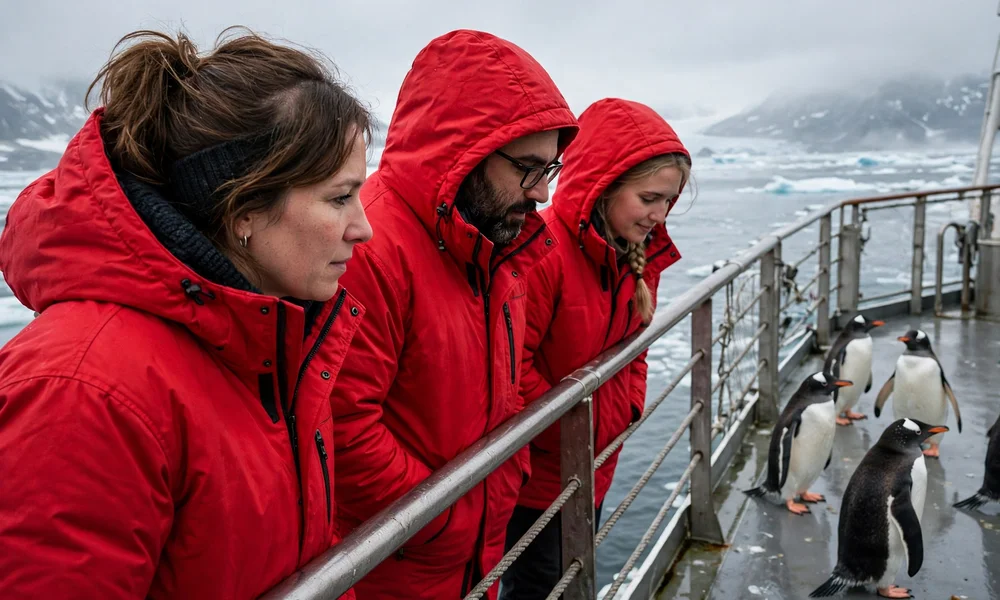
The ship moves slowly through water the colour of steel, and the ice makes a sound like breaking glass against the hull. On deck, passengers in red parkas stand in silence, watching a wall of white that has no edge and no end. A few hundred metres away, a colony of penguins goes about its day, entirely unimpressed. It is the kind of morning people save for years to see, and the ticket price is the first thing they forget once the ice appears.
That price is not a small one. A voyage to Antarctica or the high Arctic can cost as much as a family car, and the most luxurious cabins cost as much as a small house deposit. The figure shocks people until they understand what the ship must be to reach the ice at all. A polar cruise ship is not a floating hotel that happens to sail south. It is an expedition vessel built to survive one of the harshest environments on Earth, and every part of it is more expensive than its warm-water equivalent.
What follows is an honest account of where the money goes. The cost is spread across the hull, the engines, the safety systems, the crew, and the rules that govern who may sail in polar waters. None of it is decoration, and almost none of it can be removed without making the voyage less safe.

Why It Costs What It Costs
The ice-strengthened hull is the foundation of the price. A polar ship’s hull is built from thicker steel than an ordinary cruise ship, with extra framing and a reinforced bow designed to push through sea ice. The steel itself costs more, the welding takes longer, and the ship must be inspected and certified to a polar class that few yards in the world can deliver. That certification alone can add millions of dollars to the build, before a single cabin is fitted.
The engines must work in extreme cold. Diesel engines, fuel systems, and lubricants all behave differently at minus thirty degrees, and a polar ship is designed so that nothing freezes, cracks, or fails when the temperature falls. Fuel tanks are heated, pipes are insulated, and the ship carries redundant systems so that losing one engine does not leave it helpless among the ice. The engineering is invisible to passengers, but it is the difference between a voyage and a rescue.
Safety equipment is carried in duplicate. Polar rules require lifeboats, life rafts, and survival suits for everyone on board, plus the means to keep people alive for days if rescue is delayed. The ship carries extra food, extra fuel, and medical facilities far beyond those of a normal cruise vessel, including a small hospital and a doctor experienced in remote medicine. Helicopter decks and landing facilities add further cost, because in the far south a helicopter is sometimes the only way to reach a sick passenger.
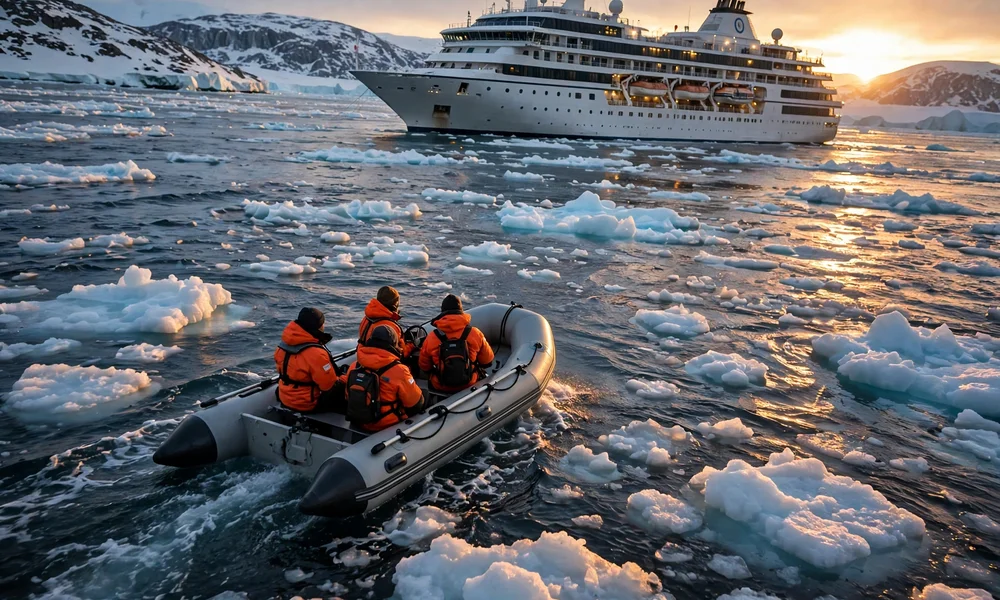
The crew is larger and more specialised. A polar cruise ship carries not only sailors and hotel staff but also expedition leaders, naturalists, glaciologists, and zodiac drivers, all of whom must be trained for polar conditions. The crew-to-passenger ratio is far higher than on a Caribbean cruise, and the specialists are scarce enough to command high salaries. Their knowledge is part of what passengers pay for: the person pointing at a whale is usually a scientist, not a tour guide reading from a script.
Small ships cost more per passenger. Polar rules and fragile environments limit how many people may land at one site, so polar ships are deliberately small, often carrying fewer than two hundred passengers instead of several thousand. A small ship spreads its enormous build and operating costs across far fewer tickets, which pushes the price of each berth sharply upward. The small size is also the point: it is what allows the ship to enter narrow fjords and land passengers on beaches a large vessel could never reach.
Fuel, permits, and insurance are all more expensive. A polar voyage burns a great deal of fuel sailing to the edge of the world and back, and the fuel itself must meet strict environmental standards. Permits from treaty authorities, landing fees, and environmental bonds add further cost, while insurance for a ship operating far from rescue carries premiums that would shock a Mediterranean operator. Each voyage also needs a detailed environmental plan, approved in advance, and the paperwork alone employs a small team.
The season is short, so the ship must earn its keep quickly. The Antarctic season lasts only a few months each year, and the Arctic season is shorter still. A polar ship that sits idle for half the year must earn its annual costs in a brief window, which pushes ticket prices higher still. Some ships reposition to warmer waters in the off-season, but the repositioning voyage itself costs money, and the ship must be refitted twice a year for two very different kinds of cruising.
The Numbers at a Glance
| Specification | Typical polar cruise ship |
|---|---|
| Passengers | 100 to 200 |
| Crew | 90 to 140, including expedition staff |
| Length | 100 to 150 metres |
| Ice class | Polar Class 5 or 6, ice-strengthened hull |
| Voyage length | 10 to 20 days |
| Ticket price | Estimated $10,000 to $30,000 per person |
| Fuel per voyage | Estimated $500,000 or more |
| Build cost | Estimated $150 million to $300 million |
What a Polar Cruise Costs
A berth on a polar cruise typically costs an estimated $10,000 per person for the simplest cabin on a shorter voyage, rising past an estimated $30,000 for a suite on a longer expedition, with the most luxurious cabins reaching an estimated $50,000. Flights to the departure port, cold-weather clothing, and travel insurance add further thousands, and none of it is refundable if the weather turns. The price surprises first-time travellers, but repeat passengers say the same thing: once you have stood on the ice, the number on the ticket stops mattering.
The cost of operating the ship explains most of it. A single voyage can burn an estimated $500,000 of fuel, the crew must be paid whether the ship is full or half-empty, and the vessel’s insurance and maintenance continue all year, season or not. Operators also set aside money for the voyages that never sail, because ice conditions or storms can force a cancellation at short notice, and the passengers must be refunded or rebooked at the company’s expense.
To see how the numbers look on the sheet, read our polar cruise ship specs explained in plain language, which decodes the ice class and range figures. The best cruise ship restaurants ranked shows what dining looks like once you are on board, while the case against giant cruise ships explains why small expedition vessels exist at all.
A Rare Fact Worth Remembering
The first tourists to reach Antarctica travelled on working ships, not cruise vessels, and they slept in whatever bunks were free. One early expedition carried passengers who paid to work alongside the crew, scrubbing decks and hauling supplies in exchange for the journey. The modern polar cruise, with its heated cabins and expert guides, is a luxury built on that rough beginning. The ice has not changed, but the ship that carries you to it has become one of the most specialised vessels afloat.


