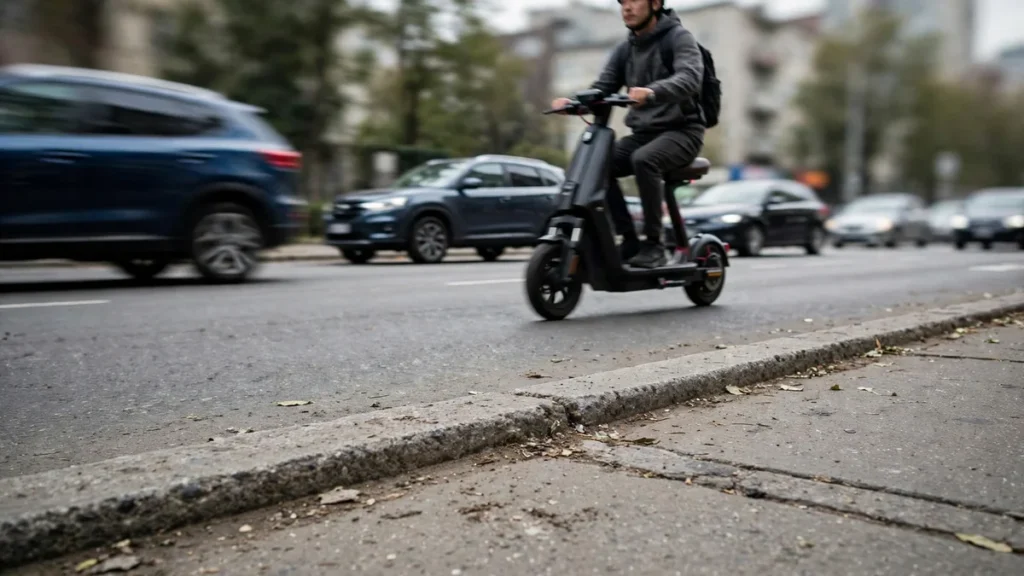
Take your foot off the accelerator in an electric car and something remarkable happens: the car slows down, and the battery charges. That is regenerative braking, and it is one of the cleverest ideas in the electric car. It is also one of the most expensive systems in the vehicle, and the reason is not the idea — it is everything the idea demands from the car around it.
A regenerative braking system is not a single part. It is a motor that can run backwards as a generator, an inverter that can handle power flowing in both directions, a battery that can accept a sudden surge of charge, friction brakes that blend in seamlessly, and software that decides, hundreds of times a second, how much of each to use. Together, they explain the price.
1. The Motor Must Work Backwards, Perfectly
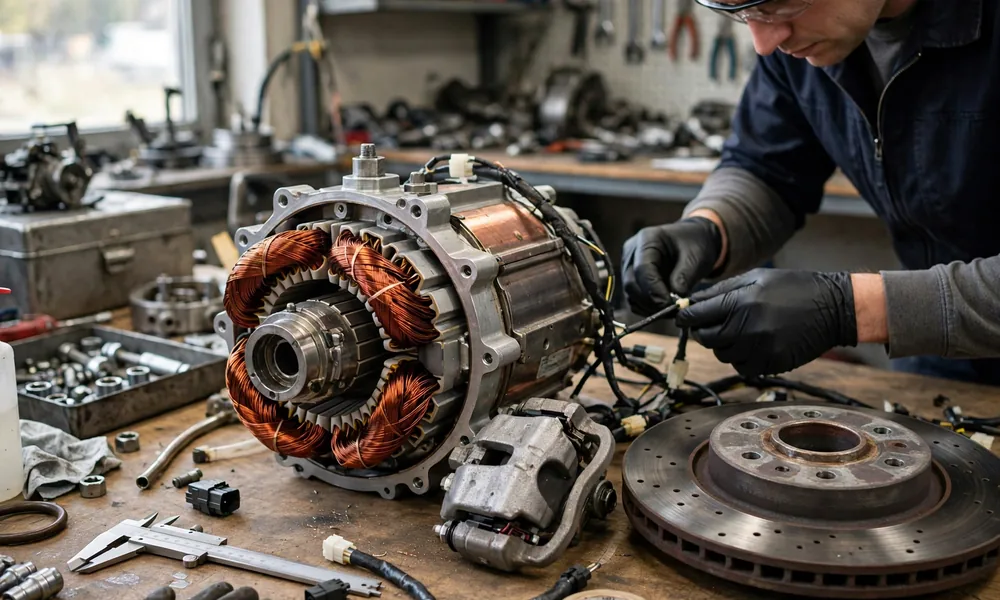
In an electric car, the drive motor and the regenerative brake are the same machine. When you accelerate, the motor turns electricity into motion. When you slow down, it runs in reverse, turning motion back into electricity. That sounds simple, but it demands a motor built to tight tolerances: powerful permanent magnets or precisely wound copper coils, a rotor that spins at thousands of revolutions per minute, and bearings that survive years of hard use. The magnets alone, made from rare-earth materials, are one of the most expensive parts of the car.
2. The Inverter: A Power Station in a Box
Between the motor and the battery sits the inverter, a box of power electronics that converts the battery’s direct current into the alternating current the motor needs — and, during braking, converts the motor’s alternating current back into direct current for the battery. It does this thousands of times a second, handling hundreds of amps at hundreds of volts, and it must do it without wasting energy as heat. The inverter is built from silicon carbide or insulated-gate bipolar transistor modules, cooled by liquid, and sealed against vibration and temperature swings.
3. The Battery Must Swallow a Surge
Regenerative braking dumps energy into the battery in sudden bursts — far faster than a home charger ever could. The battery must accept that surge without damage, which means cells with low internal resistance, a sophisticated battery management system, and cooling that can carry away the heat of a hard stop from motorway speed. Not every battery chemistry can do this well, and the ones that can are more expensive to make. The materials behind a regenerative braking system show how much of the cost sits in the battery and the motor.
4. Blending Two Brakes Into One Pedal
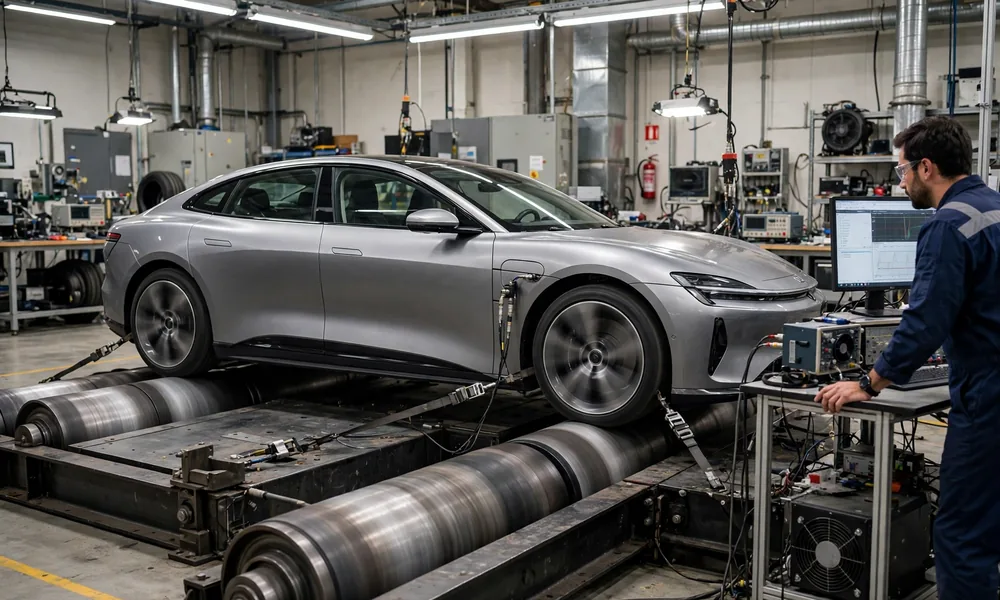
Here is the hardest problem in the whole system: the driver presses one pedal and expects one smooth response, but two different brakes are doing the work. At low speeds and gentle stops, the motor does almost everything. At high speeds and hard stops, the friction brakes take over. Between the two, the system must hand over seamlessly, hundreds of times a second, without the pedal feeling strange or the car jerking. That blending is done by software running on a dedicated controller, tuned over thousands of hours of testing on test tracks and dynamometers. The engineering hours behind a pedal that feels natural are a major part of the price.
5. Friction Brakes That Barely Get Used — and Still Cost Plenty
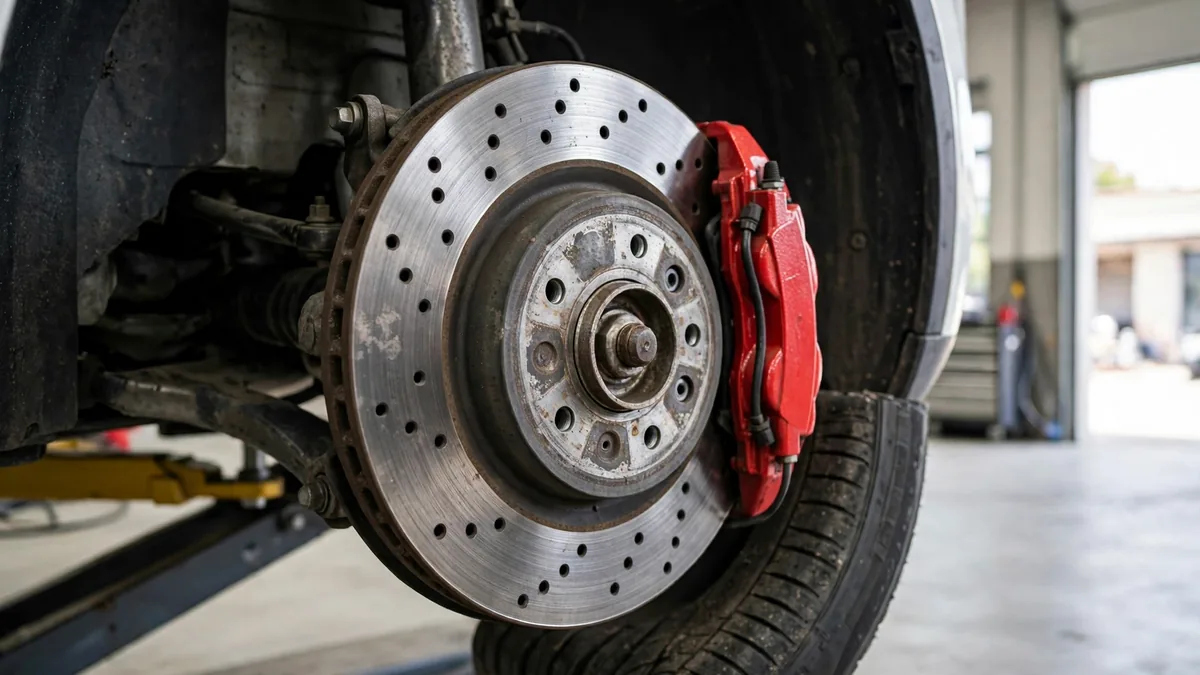
It would be a mistake to think regenerative braking replaces the friction brakes. It does not. The friction brakes are still there for hard stops, for emergencies, and for when the battery is full or cold and cannot take more charge. But because they are used so rarely, they face a different problem: rust. A brake disc that sits unused for weeks can corrode, and a corroded disc brakes badly when it is suddenly needed. The friction system is smaller than in a petrol car, but it is more specialised, and specialised parts cost more. The specifications of a regenerative braking system show how the two brake types share the work.
6. Testing: Thousands of Stops Before a Single Sale
Before a regenerative braking system reaches a customer, it has been tested to destruction. Motors are spun on dynamometers for thousands of hours, inverters are baked and frozen, batteries are charged and discharged through endless cycles, and whole cars are driven down mountains and around test tracks while engineers measure every stop. The testing exists because the stakes are absolute: a braking system cannot fail, ever. The motor itself is part of the story too — the specifications of an EV motor winding show how tightly the drive unit is built.
7. Safety Rules Written in Blood
Braking is one of the most heavily regulated systems in any car, and regenerative braking adds new rules. The system must keep working if a sensor fails, if the battery disconnects, or if the software crashes, which means redundant sensors, backup power paths and fail-safe modes that default to the friction brakes. Regulation is not a cost anyone chooses; it is a cost the law imposes, and it falls hardest on the most complex systems. Regenerative braking is one of the most complex systems in the car.
Regenerative Braking System at a Glance
| Specification | Detail |
|---|---|
| Main components | Drive motor/generator, inverter, battery, friction brakes, controller |
| Energy recovered | Typically 10–30 percent of the energy used in city driving (estimate) |
| Motor type | Permanent magnet or induction, running as a generator under braking |
| Inverter | Silicon carbide or IGBT modules, liquid cooled, bidirectional |
| Peak braking power | Often 50–150 kW fed back into the battery (estimate) |
| Friction brake role | Hard stops, emergencies, and when the battery cannot accept charge |
| Control rate | Blending decisions made hundreds of times per second |
What Does It Cost?
A regenerative braking system is not sold separately, so its price is folded into the cost of the electric drivetrain, but the parts tell the story. A drive motor with its inverter can cost several thousand dollars (estimate) in a mainstream electric car, and considerably more in a performance model, while the battery — the most expensive single part of the car — costs many thousands more (estimate). The friction brakes, controller and software add further cost on top. What the driver pays for is not a brake pedal; it is a motor that can run backwards, power electronics that can handle hundreds of amps in both directions, a battery that can swallow a surge, and software that blends it all into a pedal that feels like any other.
A Rare Fact
Regenerative braking is so effective in city driving that some electric cars can go months without their friction brakes doing any real work — and that creates a problem nobody expected. Brake discs rust when they are not used, so engineers had to design discs with special coatings and software that deliberately uses the friction brakes now and then, just to keep them clean. The most advanced braking system ever fitted to a car has to remind itself to use its oldest part.