A Small Machine With a Very Large Price
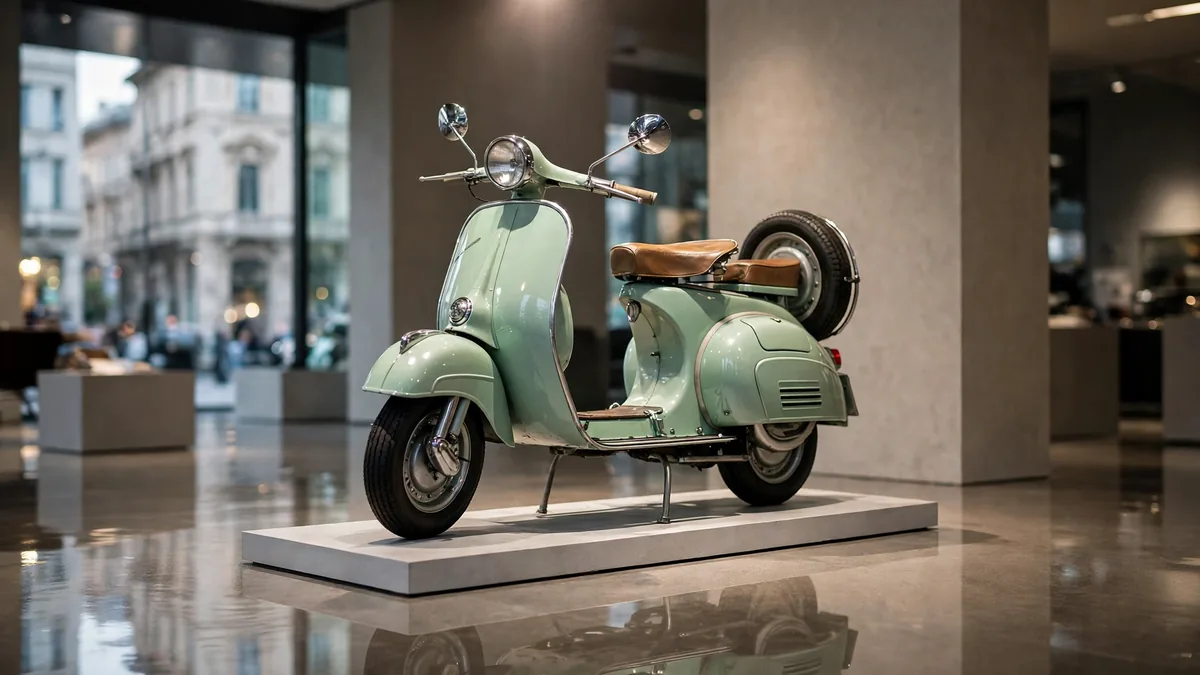
In a Milan showroom last spring, a scooter the size of a large suitcase sat on a plinth under a single spotlight, and the price tag beside it read higher than a brand new family car. Visitors laughed at first, assuming a misprint, until they read the small print. The machine was a 1950s Italian scooter, one of a limited run, restored by hand over two years, with every part either original or remade to the factory’s exact drawings. It had a 150cc engine, a top speed that a modern cyclist could match downhill, and brakes that demanded planning ahead. It also had a waiting list of buyers.
The vintage scooter is one of the strangest objects in the collecting world: a humble machine designed for cheap urban transport that has become, in its rarest forms, a serious collectible. The transformation did not happen by accident. It is the result of design history, cultural memory, scarcity, and a restoration craft that treats a pressed-steel body as seriously as a coachbuilder treats a classic car. Understanding the price means understanding that nobody is paying for transport. They are paying for a piece of post-war Italy, or Britain, or Spain, preserved in steel and chrome.
Craft: A Body Made Like a Car, Not a Bike
A vintage scooter is not a motorcycle with small wheels. Its defining feature is the pressed-steel monocoque body, a shell that serves as both frame and styling, formed in presses that were, in their day, among the most advanced in the world. The body panels were shaped, welded, and finished by hand, and the quality of that work is visible in the shut lines, the curves, and the way the paint sits on the steel. Restoring one means stripping the machine to bare metal, repairing seven decades of dents and rust, and rebuilding a body that was never designed to come apart.
The restoration of a top-tier vintage scooter can take 500 to 900 hours, and the work is spread across several crafts. The body goes to a panel specialist, the engine to a two-stroke expert, the chrome to a plater, and the paint to a sprayer who can match colours that have not been produced in decades. Each of those specialists is in short supply, and their order books stretch months ahead. A single incorrect detail, a wrong shade of paint, a modern fastener where a period one belongs, can cut the value of the finished machine significantly, so restorers work from factory drawings, period photographs, and the judgement of people who have spent their lives with these machines.
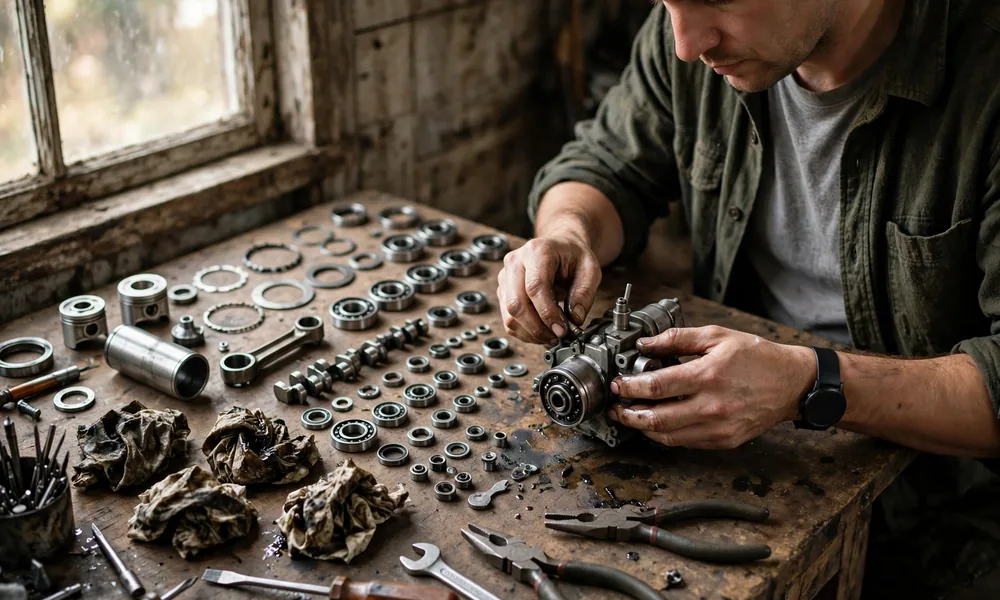
The engine is deceptively simple and surprisingly demanding. A vintage two-stroke engine has few parts, but each one must be exactly right, and many are no longer manufactured. Crankshafts are rebuilt by hand, cylinders are re-bored or re-plated, and carburettors are restored rather than replaced, because a reproduction carburettor changes how the engine runs and how the bike is judged. The parts that do survive are traded in a small, knowledgeable market where a rare original component can cost more than a complete modern scooter. The modern electric scooter is a very different machine, and the contrast is sharp in our guide to electric scooter range specs explained, which shows how far the humble scooter has travelled.
Rarity: Small Runs, Hard Lives, Few Survivors
Most vintage scooters were built to be used hard and thrown away. They were cheap transport for a generation rebuilding after the war, ridden in all weathers, parked on the street, and repaired with whatever was at hand. The survival rate is brutally low. A model built in a run of ten thousand may survive today in the low hundreds, and of those, only a handful will be in the original, unmolested condition that collectors prize above all else.
Certain models are rare by design. Limited editions built for exhibitions, for export markets, or to celebrate a racing victory were produced in runs of a few hundred, and some were never sold to the public at all. Others are rare because they were built in countries whose factories closed quickly, leaving no spare parts network and no successors. A Spanish or French scooter from a short-lived marque can be rarer than a famous Italian model, and its rarity is precisely what makes it desirable to the collectors who know it exists.
Originality is the currency of this market. A scooter that has never been repainted, with its factory paint, its original seat, and its matching engine and frame numbers, is worth far more than a restored example, however beautiful the restoration. Collectors speak of patina, the gentle wear that proves a machine is genuine, and they will pay a premium for it. A scooter that has been over-restored, stripped of every trace of its history in pursuit of perfection, can actually lose value. The market rewards honesty about a machine’s past, not the erasure of it.
Why Collectors Pay: Culture, Design, and the Mod Years
The rallies and the community sustain the market. Events across Europe draw thousands of scooters, and the social world around them, the clubs, the magazines, the specialist dealers, gives owners a reason to keep buying, restoring, and riding. A scooter that is never ridden is a sad object, and the best owners use theirs, carefully, on dry days, on roads they know. The engineering underneath is simple by modern standards, and our explanation of how an electric scooter motor works shows how the newest scooters have replaced that simple two-stroke with something entirely different.
Key Specifications at a Glance
| Specification | Typical vintage figure |
|---|---|
| Era | 1940s–1970s, 1950s–60s most prized |
| Engine | Single-cylinder two-stroke, 50–200 cc |
| Power | 3–11 hp |
| Top speed | 40–65 mph |
| Weight | 75–120 kg |
| Body | Pressed-steel monocoque |
| Gears | 3 or 4 speed, handlebar twist grip |
| Production run | Often 5,000–50,000, rare models under 500 |
| Full restoration time | 500–900 hours |
| Fuel | Petrol mixed with two-stroke oil |
What a Vintage Scooter Costs
A usable vintage scooter in fair condition can be bought for $3,000 to $8,000, while a well-restored example of a desirable model typically sells for $12,000 to $30,000. The rarest machines, limited editions, first-year models, and scooters with documented history, can reach $60,000 to $100,000, and a few exceptional examples have sold for more. These are estimates based on recent auction and dealer results, and prices vary sharply by model, country of origin, and originality.
The scooter world is also a reminder that small machines can carry big prices, and the debate about what a scooter should be continues today in electric form. Our piece on the case against overpowered electric scooters argues that the scooter’s charm was always its modesty, a quality the vintage machines understood instinctively.
A Rare Fact Worth Knowing
One of the rarest vintage scooters ever built was a prototype fitted with a supercharger, developed in the 1950s by an Italian factory that wanted to prove a scooter could compete with small motorcycles. Only a handful were made, and the project was abandoned because the supercharged engine was too fragile and too expensive for a machine meant to be cheap transport. Decades later, one surviving example sold for a price that would have bought a fleet of the ordinary scooters it was based on. The factory had tried to make the humblest machine on the road into something extraordinary, and the market, eventually, agreed with them.


