The wind is rising, the sail is full, and the rope in your hands is pulling with the force of a small car. One person leans on the winch handle, the drum turns, and a load that no crew could hold by hand comes under control. It looks simple: a shiny drum on the deck, a handle, a rope. Yet that drum is a machine built to hold back tonnes of force in salt water, year after year, without ever slipping at the wrong moment.
A good yacht winch can cost as much as a small car, and the reason is not the shine. It is the engineering hidden inside the drum: gears cut to perfection, bearings that never rust, and a brake that holds a sail in a storm. A winch that fails at sea is not an inconvenience, it is a danger. This is why it costs so much.

Why It Costs So Much
Reason 1: It holds back tonnes of force
A winch on a sailing yacht does not just wind rope. It holds the sail against the wind, and the wind on a big sail in a blow can pull with several tonnes of force. The drum, the gears and the base must take that load without bending, cracking or slipping, and they must do it thousands of times over the life of the boat. The metal is cast and machined thick, the gears are cut from hardened bronze or stainless steel, and every part is sized with a wide safety margin. The engineering figures behind it are laid out in the yacht winch specifications.
Reason 2: Salt water eats everything
Everything on a yacht lives in salt water, and salt water is one of the most corrosive environments on Earth. Ordinary steel rusts in weeks, cheap chrome peels in months, and a seized bearing can strand a crew when they need the winch most. A good winch is made from marine-grade stainless steel, bronze and anodised aluminium, metals chosen because they survive decades of spray and sun. Seals keep the salt out of the gears, and the grease inside is a special marine grade that does not wash away.
Reason 3: The gears are cut by hand-finished machines
Inside the drum sits a set of gears that turns a gentle push on the handle into enormous pulling power, sometimes multiplying the force by forty times or more. Those gears must mesh perfectly, because a rough gear wastes effort, wears quickly and can jam under load. Each gear is cut, hardened, polished and checked, and the best winches still have parts fitted and adjusted by hand. The pawls that stop the drum from unwinding are spring-loaded and tested again and again, because they are the one thing standing between the crew and a sail breaking free.
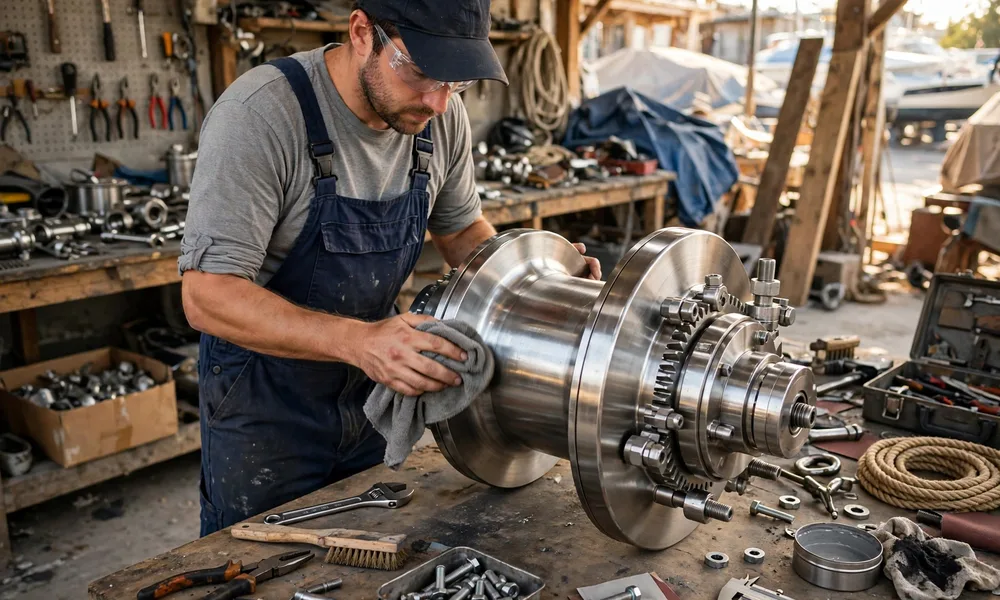
Reason 4: Every winch is built for one boat
Winches are not bought off a shelf in one size. A small day sailer needs a light single-speed winch, a racing yacht needs a fast two-speed or three-speed model, and a superyacht needs an electric or hydraulic winch that a single person can operate from the helm. Each size needs its own castings, its own gears and its own testing, and the biggest models are built in tiny numbers, sometimes only a few dozen a year. The materials and construction behind these sizes are covered in the yacht winch materials and engineering guide.
Reason 5: It is tested like safety equipment
A winch is safety equipment, and it is tested like it. Factories load-test every winch to far more than it will ever face at sea, cycle the gears thousands of times, soak the parts in salt spray for weeks, and check the brake under full load. A winch that slips under load can injure a crew member, so no maker can afford to cut corners on testing. The same culture of testing runs through the rest of the boat, as the yacht propeller specifications show for the part that drives the yacht through the water.
Reason 6: It must last for decades
The last reason is time. A cheap winch might last five years before the gears wear and the chrome peels. A good winch lasts thirty years, is serviced every few seasons, and is still working when the boat changes owners twice over. That longevity is designed in: oversized bearings, replaceable wear parts, and a finish that can be polished back to new. Buyers pay for the decades, not just the day they fit it, and makers price accordingly. A winch that outlives the boat it was fitted to is not expensive by accident, it is expensive because it was built to be the last one you will ever buy.
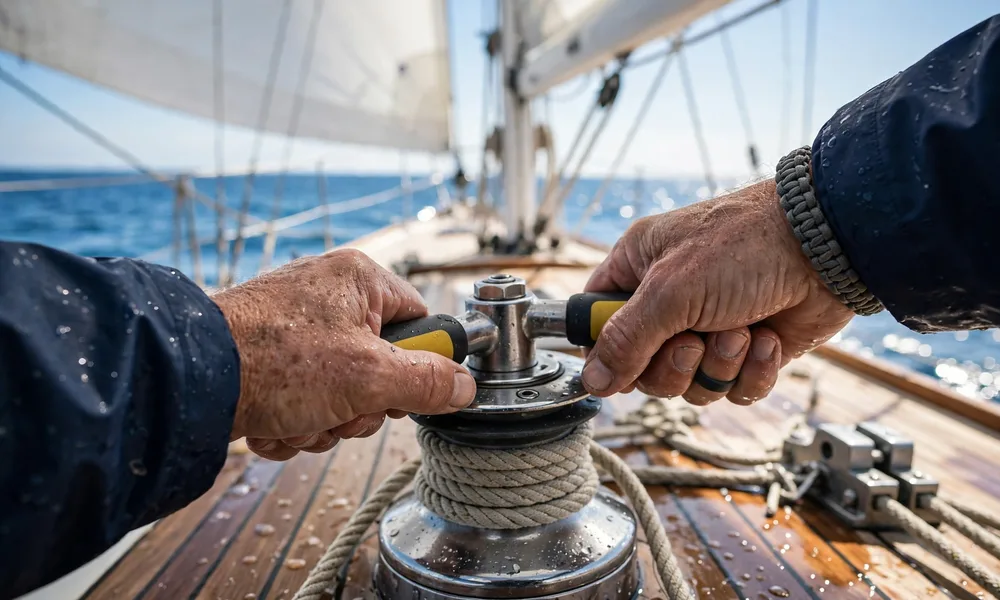
Yacht Winch at a Glance
| Specification | Detail |
|---|---|
| Winch type | Manual, electric or hydraulic sailing winch |
| Materials | Marine stainless steel, bronze, anodised aluminium |
| Gear ratio | Up to around 40 to 1 or more in multi-speed models |
| Load capacity | Several tonnes of working load on large models |
| Corrosion protection | Sealed gears, marine grease, polished finish |
| Speeds | One, two or three speeds, plus self-tailing models |
| Main uses | Trimming sails, hoisting halyards, anchoring |
| Main advantage | Huge pulling power from one person |
| Main drawback | Heavy, expensive, needs regular servicing |
What Does It Cost?
| Cost item | Estimate |
|---|---|
| Small manual winch | Around $500 to $1,500 (estimate) |
| Large manual two-speed winch | Around $2,000 to $6,000 (estimate) |
| Electric yacht winch | Around $5,000 to $15,000 (estimate) |
| Hydraulic superyacht winch | Around $20,000 to $80,000 (estimate) |
| Marine-grade materials | Around $500 to $2,000 (estimate) |
| Professional fitting and servicing | Around $300 to $1,500 (estimate) |
All figures above are estimates, not quotes, and the real number depends on the size, the drive type and the boat it goes on. A manual winch for a small yacht costs a few hundred dollars, while a hydraulic winch for a superyacht can cost more than a family car. The jump is not vanity: it is bigger castings, stronger gears, sealed electrics and a test regime that treats the winch as safety equipment. Spread over thirty years of sailing, the cost per season is small, but the price on the day you buy it is not.
A Rare Fact
The earliest winches were wooden drums turned by handspikes, and sailors wound rope around them to gain leverage, a trick as old as sailing itself. The self-tailing winch, which grips the rope so one person can work it alone, was only invented in the twentieth century, and it changed sailing for everyone: suddenly a couple could handle a boat that once needed a crew of six. The winch on a modern yacht is the direct descendant of that wooden drum, refined by a century of metallurgy into a machine that never lets go.
A yacht winch is a simple idea made brutally strong: a drum, a set of gears and a brake, built from metals that refuse to rust, tested like safety equipment, and made to last for decades. It costs so much because it holds back tonnes of wind in salt water, is built in small numbers, and must never fail when it matters most. Pay for all of that, and one person can tame a sail in a storm; settle for less, and the winch will tell you exactly when it was not enough.


