On a sailing yacht in a rising wind, one small machine does the work of four strong crew members. A sailor wraps a rope around a polished drum, turns a handle, and a sail the size of a house moves into place against a wind that could drag a person across the deck. The machine is the winch, and it is easy to mistake it for a simple drum. Inside it is a stack of gears, bearings and brakes, built from metals chosen to survive salt, shock loads and years of hard use.
A winch fails at the worst moment: when the wind is strongest and the sail must come in now. That is why its materials are chosen for grip, strength and corrosion resistance, and why a cheap winch and a good one look identical until the wind tests them.
Here is what those materials are, and why each one earned its place.

The Materials Behind the Yacht Winch
1. Bronze and stainless steel, the drum that grips the rope
The drum is the part you see, and its material decides how well the winch holds a rope. Traditional drums are chrome-plated bronze: bronze is strong, machines beautifully and never rusts, while the chrome gives a hard surface that grips a rope without chewing through it. Modern drums are often stainless steel or hard-anodised aluminium, lighter and cheaper, with a ribbed surface that bites into the rope. The wrong drum material is easy to spot: a rope slips when wet, or the drum wears smooth and the crew must wrap an extra turn to hold the same load. The way the whole winch is assembled around that drum is shown in how a yacht winch is made, from the base to the finished drum.
2. Hardened steel gears, the muscle inside
Inside the drum sits a set of gears that turns a slow handle into enormous pulling force, often multiplying the sailor’s effort by forty times or more. Those gears are made from hardened chromium-molybdenum alloy steel, heat-treated until the teeth resist wear but stay tough enough not to chip under a shock load. The gears run in grease, sealed against salt water, and they hold a sail in a gale without the handle spinning backwards. Cheap winches use softer gears that wear sloppy within a few seasons; good ones keep their precise mesh for decades.
3. Self-tailing jaws, the grip that frees a hand
On a modern winch, the top of the drum carries a pair of self-tailing jaws, usually made from hard-anodised aluminium or stainless steel with a spring-loaded mechanism. They grip the rope automatically, so the sailor can crank with both hands instead of holding the rope tail with one. The spring behind them must be strong enough to hold a loaded rope yet light enough to let the rope in. It is a small part, but it changed sailing: one person can now work a sail that once needed two. The ropes the winch handles belong to the rigging, and the materials behind yacht sail rigging show what those ropes and wires are made of.
4. Sealed bearings, the spin that must stay smooth
A winch drum spins on bearings, and those bearings live in one of the worst places on a boat: low on the deck, splashed with salt water and grit. Good winches use sealed stainless steel ball bearings or composite plain bearings made from acetal plastic, which needs no grease and cannot corrode. The seals keep salt out and grease in, so a winch left unused for a winter still spins freely in the spring. A winch with worn bearings is easy to feel: the drum wobbles, the handle turns stiffly, and the sail comes in slowly.
5. The base and the bolts, the part that must not move
The winch is bolted to the deck through a base, usually cast aluminium or stainless steel, and the bolts are the most stressed fasteners on the boat. Under full load a winch pulls sideways with a force measured in tonnes, and all of it goes through the base and bolts into the deck structure. The base is bedded on sealant so water cannot creep under it and rot the deck core, and the bolts are stainless steel with large backing plates below decks to spread the load. A winch ripping out of the deck is rare but terrifying, and it is always the base or the bolts that fail first, never the drum.
6. Grease and seals, the invisible protection
The inside of a winch is full of grease, and the grease is a material in its own right. Marine winch grease is thick, water-resistant and loaded with corrosion inhibitors, and it is packed around the gears and pawls so that salt water cannot reach the steel. The pawls, small spring-loaded teeth that stop the drum spinning backwards, are usually stainless steel, and they click as they engage, a sound every sailor knows. Servicing a winch means stripping it, cleaning out the old grease and packing in fresh, a job done once a year on a well-kept yacht. The propeller below the waterline faces the same salt-water battle, and the materials behind the yacht propeller show how its bronze and steel survive it.
Yacht Winch Materials
| Material | Where it is used | Why it is chosen |
|---|---|---|
| Chrome-plated bronze | Drum | Strong, rust-proof, grips rope without wearing it |
| Hardened alloy steel | Gears | Hard teeth, tough core, resists shock loads |
| Anodised aluminium | Self-tailing jaws | Light, hard surface, grips the rope |
| Sealed stainless bearings | Drum rotation | Smooth spin, sealed against salt and grit |
| Stainless steel bolts | Base fixing | Carry tonnes of sideways load into the deck |
| Marine grease | Gears and pawls | Water-resistant, stops salt reaching the steel |
What Does a Yacht Winch Cost?
A winch is one of the most expensive pieces of deck hardware on a yacht, and the price rises steeply with size. A small self-tailing winch for a 30-foot boat is estimated at roughly $500 to $1,200, while a large powered winch for a superyacht can be estimated at $10,000 to $30,000 or more. The bronze drum and hardened gears account for much of the cost, and a winch serviced every year can last the life of the yacht. A cheap winch that seizes in a gale is no bargain at any price.
A Rare Fact
The winch is older than the yacht. Rope-winding drums were used on sailing ships centuries ago, and the word winch comes from the Old English wince, a roller or crank. Early winches were wood and iron, worked by handspikes, long bars pushed by the crew in a circle. The self-tailing winch, which grips the rope for you, was not invented until the 1970s, and it changed sailing overnight: for the first time, one sailor could trim a large sail alone, which is why modern yachts can be sailed short-handed by a couple instead of a full crew.

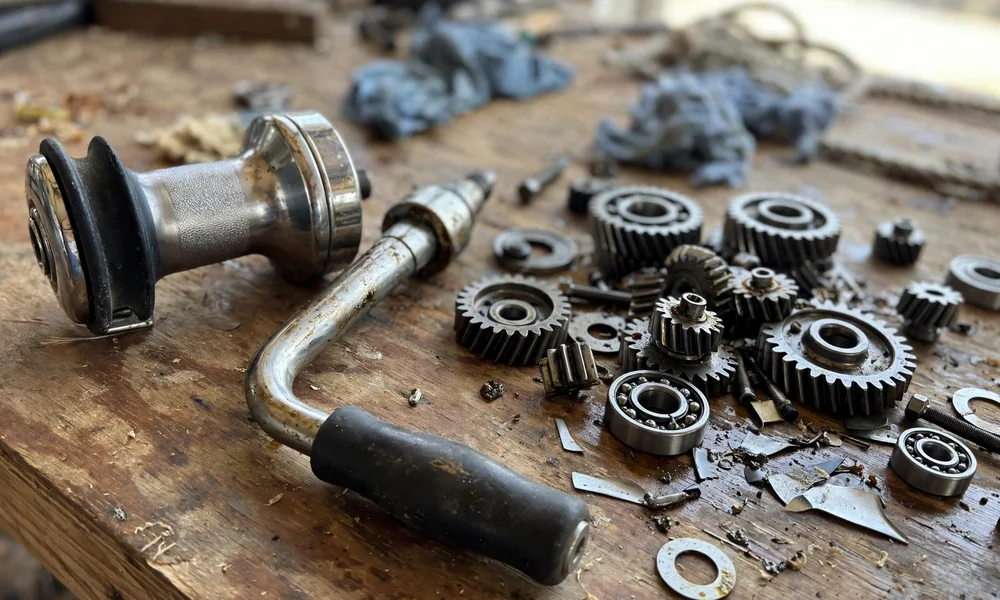
A winch looks like a polished drum on the deck, and most of the time that is all anyone sees. But under the chrome is hardened steel multiplying a sailor’s strength forty times, sealed bearings spinning through salt and grit, and grease keeping it all alive through winter after winter. When the wind rises and the sail must come in now, that hidden stack of materials is what stands between a controlled boat and a dangerous one.


