The climb had beaten him before. A steep, root-strewn track that rose out of the valley in a series of cruel switchbacks, it was the kind of ascent that turned strong riders into walkers, pushing their bikes up the last hundred metres with their heads down. This time was different. He stayed in the saddle the whole way, breathing hard but never broken, and when he reached the top he was laughing, not gasping. The difference was not fitness. It was the quiet machine beneath him, a luxury electric mountain bike that had turned the hardest part of the ride into the best part.
That is the promise of the modern luxury electric mountain bike: not a motorcycle pretending to be a bicycle, but a real mountain bike with an invisible helping hand. The motor only works when you pedal, the battery hides inside the frame, and the bike still handles like a mountain bike should. But the best of them cost as much as a small used car, so it is worth knowing exactly what the money buys. The numbers tell the story better than any sales pitch.
The Numbers That Matter
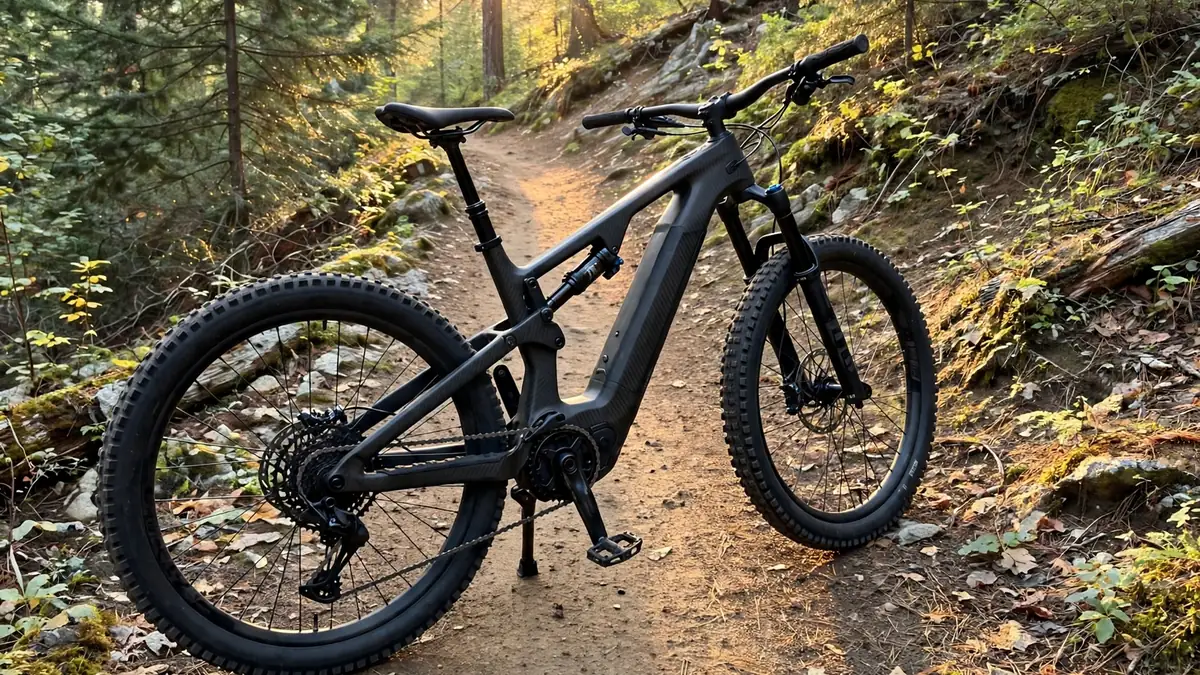
| Specification | Detail |
|---|---|
| Motor | Mid-drive motor mounted at the cranks, typically rated at 250 watts of continuous power, with peak output far higher on short climbs |
| Torque | Around 85 to 120 newton-metres at the cranks, enough to lift the bike and rider up gradients that would stop most riders |
| Battery | Integrated lithium-ion pack of roughly 625 to 900 watt-hours, hidden inside the down tube and removable on some models |
| Range | An estimated 60 to 120 kilometres per charge, depending on the assistance level, the rider’s weight and how steep the trails are |
| Weight | Around 19 to 24 kilograms complete, with the lightest carbon models dipping below 20 kilograms despite motor and battery |
| Frame | Full carbon fibre frame with internal cable routing, built to survive rock strikes, crashes and years of hard trail use |
| Suspension | Front fork with around 150 to 170 millimetres of travel and a rear shock with around 150 millimetres, both adjustable |
| Wheels | 29-inch wheels at the front with a 27.5-inch rear wheel on many models, a combination known as a mullet setup |
| Drivetrain | Twelve-speed electronic or high-end mechanical shifting, with a wide-range cassette for steep climbs |
| Display | Small handlebar display or a phone-connected unit showing battery, assistance level, speed and ride data |
| Price | An estimated $9,000 to $16,000 for a flagship luxury model, depending on the frame, motor and components |
How It Works
Step 1: A sensor reads how hard you are pedalling
Everything starts at the cranks, where a torque sensor measures the force of every pedal stroke many times per second. It does not guess or work on a timer; it knows exactly how hard you are pushing right now, and it tells the motor to match your effort in proportion. Push gently on flat ground and the motor adds a gentle push of its own. Stand up and stamp on the pedals for a steep root step and the motor answers instantly with full force.
Step 2: The mid-drive motor adds its power at the cranks
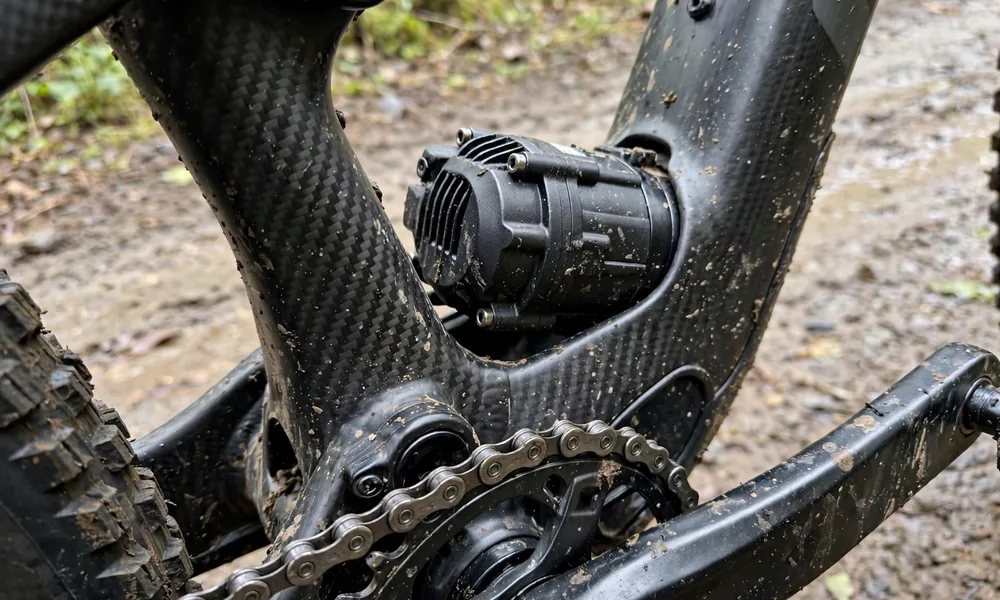
The motor sits low in the frame, around the bottom bracket, which keeps the bike’s weight centred and low. That position matters more than it sounds: a motor in the wheel would make the bike feel heavy and clumsy over rocks, while a mid-drive motor lets the suspension work freely and keeps the handling natural. Inside the motor, a compact electric unit drives the chainring through a set of reduction gears, multiplying its force before it reaches the chain.
Step 3: The battery feeds the motor from inside the frame
The battery is a long, slim pack of lithium-ion cells slotted inside the down tube, the thick tube that runs from the handlebars down to the pedals. Hiding it there protects it from rocks and rain and keeps the bike looking like a normal mountain bike rather than a science project. A battery management system watches every cell, balancing the charge and cutting power if anything gets too hot or too cold.
Step 4: The suspension keeps the wheels on the ground
An electric mountain bike is heavier than a normal one, and it hits obstacles faster because the motor lets the rider carry more speed into rough sections. That is why the suspension is so serious: a long-travel fork at the front and a shock at the rear, both with adjustable compression and rebound, soak up rocks, roots and drops so the tyres stay in contact with the ground. The best suspension on these bikes is borrowed directly from downhill racing, tuned slightly softer to suit the extra weight.
Step 5: The frame carries it all without flexing
Carbon fibre is the frame material of choice at the luxury end, not just because it is light but because engineers can tune it: stiff where the motor mounts, forgiving where the rider sits. The frame has to handle forces a normal bike never sees, because the motor can push the chain with far more force than any human leg. So the bottom bracket area is heavily reinforced, the head tube is built to survive hard landings, and the whole frame is tested to standards far beyond those for ordinary bikes.
Step 6: Software ties the whole bike together
Modern luxury e-mountain bikes are as much software as hardware. The rider chooses an assistance mode, from a gentle eco setting that stretches the battery for a full day to a full-power boost for the steepest climbs, and the bike adjusts how the motor responds. It is this tuning, more than any single part, that makes one brand’s bike feel alive and another’s feel flat.
For riders who want to understand the riding experience itself, our guide to how a luxury electric mountain bike works walks through the ride step by step, while the luxury electric bike specs explained puts these numbers beside other electric bikes. The build process is covered in how a luxury electric mountain bike is made, from the first carbon sheet to the finished machine.
What It Costs
A flagship luxury electric mountain bike costs an estimated $9,000 to $16,000, and the spread is mostly about the frame and the components. The motor and battery are the single most expensive parts of the bike, often accounting for close to a third of the total cost, and the carbon frame is the next biggest item. Then come the suspension, the electronic drivetrain and the wheels, each of which can cost as much as a whole mid-range bicycle on its own. The luxury models earn their price on the trail, not in the showroom.
A Rare Fact
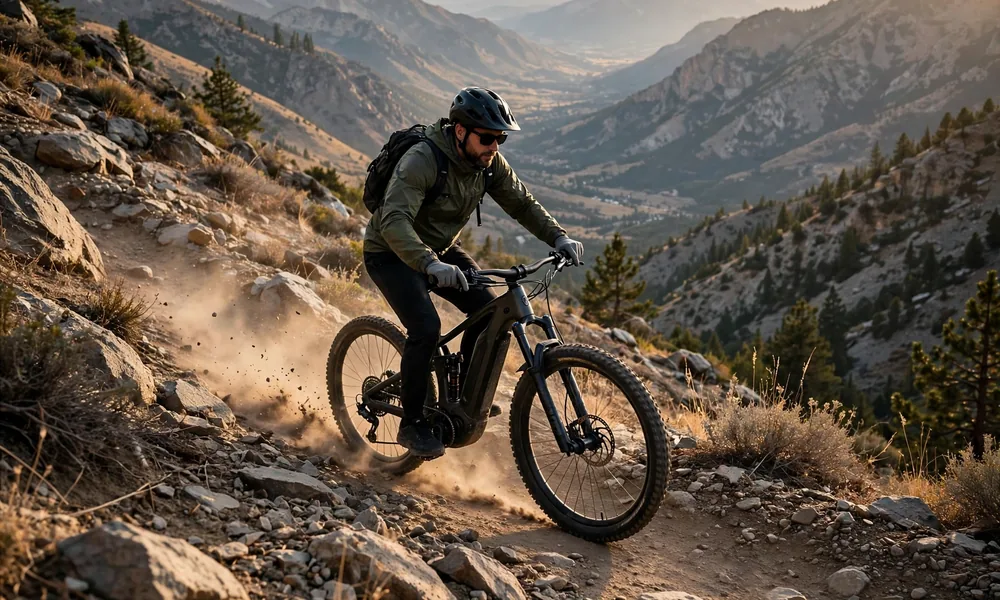
Here is something few riders know: the motor on a luxury electric mountain bike can produce more twisting force than the engine of many small city cars. A top motor’s 120 newton-metres at the cranks is more torque than a one-litre city car makes, and it is delivered instantly, with no waiting for the engine to rev up. That is why an electric mountain bike can climb slopes that would defeat a car, and why the first ride on one feels less like cycling and more like discovering a secret. The trail has not changed. The rider has simply been given a quiet, invisible advantage, and once you have felt it, an ordinary mountain bike feels like it is missing something.


