A luxury smart mirror looks, at first glance, like a television bolted to a bathroom wall. It shows the news, the weather and your calendar, and it costs several times what a good television costs. The answer is not the screen. It is the mirror itself, and everything that has to work behind it in the wettest room in the house.
A smart mirror has to be two things at once: a flawless mirror and a bright display, in a room full of steam, splashes and temperature swings. Every part of it is engineered against that contradiction, and the cost piles up in layers that are invisible once the mirror is hanging on the wall.
The Glass: A Mirror and a Screen at Once
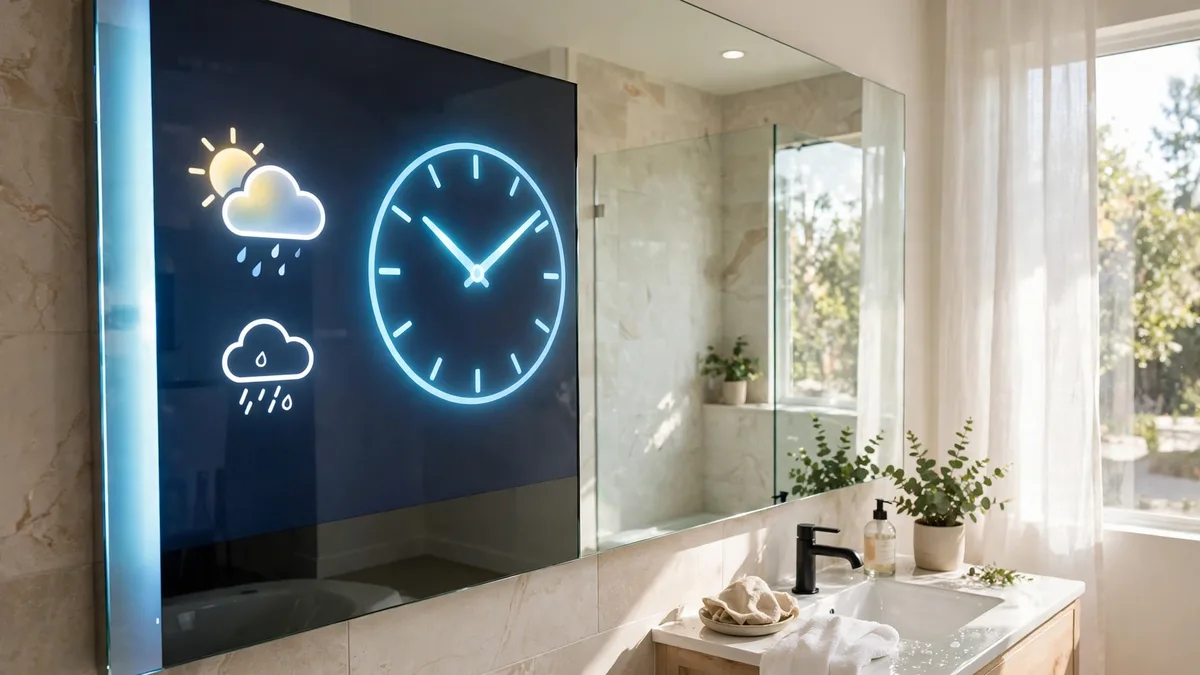
The single most expensive part of a luxury smart mirror is the glass. It is not ordinary mirror glass. It is a two-way mirror, coated so that it reflects like a perfect mirror when the display behind it is dark, and turns transparent enough to show the screen when the display lights up. Getting that balance right is difficult: too reflective and the display looks dim, too transparent and the mirror looks grey and dull when it is off.
The coating is applied in a vacuum chamber to glass that must be perfectly flat. Any ripple shows up twice, once in the reflection and once in the display, so the panels are made to optical standards closer to a telescope than to a bathroom fitting. The glass is then tempered for safety, because a sheet this size above a hard floor must not break into sharp shards. A large panel can cost several hundred dollars before anything is mounted behind it, and if the coating is imperfect the whole panel is scrapped.
The Display Behind the Glass
Behind the mirror sits a display that has to fight its own reflection. An ordinary screen would look dim through the two-way coating, so luxury mirrors use high-brightness panels, often two or three times brighter than a normal television. Those panels cost more, run hotter, and need careful thermal design so the heat does not fog the glass.
The display is usually a custom size, cut to match the mirror rather than bought off the shelf, and custom sizes carry custom prices. The touch layer adds another cost: many luxury mirrors respond to touch through the glass, which needs a sensor tuned to work through a thick mirror coating, or a gesture sensor that reads hand movements in the air. Both need to keep working when the glass is wet or steamed, which is the normal state of a bathroom mirror. The way the display and the mirror work together is described in how a luxury smart mirror works, where the layered construction explains why the assembly is so delicate.
Sensors, Cameras and the Steam Problem
A luxury smart mirror is full of sensors that have to survive steam. Light sensors adjust the display brightness as the bathroom light changes. Proximity sensors wake the mirror when someone steps in front of it and put it back to sleep when the room is empty. Some models add cameras for video calls or skin analysis, and a camera behind a mirror needs its own clear window in the coating.
Steam is the enemy of all of it. The mirror carries a heated demister pad bonded to the back of the glass, which keeps a clear patch free of condensation, and the electronics are sealed against humidity that would destroy an ordinary television in months. The seals, the coatings on the circuit boards, and the testing that proves the mirror can survive years of hot showers are all costs that never appear in a photograph. The same bathroom logic drives the price of the other fixtures, and why a luxury smart toilet is so expensive follows the same pattern of moisture-proof engineering.
Materials, Frames and the Bathroom Standard
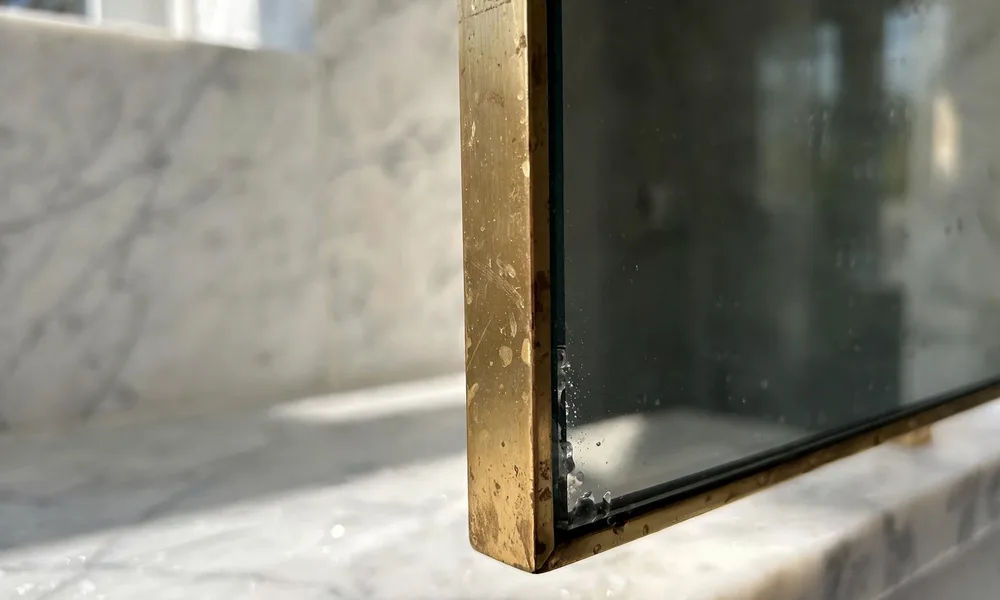
The frame and the backing are where the luxury positioning shows. A premium smart mirror is framed in brushed brass, matte black aluminium or solid oak, machined to hide every seam, because a mirror is looked at closely and any gap is obvious. The backing is a sealed aluminium tray that keeps moisture out, and the whole assembly is heavy: a large smart mirror can weigh twenty kilograms or more.
The Software and the Long Life Problem
The software is the part buyers notice first and the part that ages fastest. A luxury smart mirror runs apps for weather, news, calendars and fitness, and connects to the home’s voice assistant and lighting. That software must be maintained, updated and kept secure for the life of the mirror, which is expected to last a decade or more, far longer than a phone.
Manufacturers price in years of software support, cloud services and warranty cover, and the warranty on a premium mirror is often five years or more, covering the display, the demister and the electronics together. A long warranty on a device that lives in steam is a real liability for the maker, and it is priced into the mirror. The pattern is familiar across the home, and why a luxury smart shower is so expensive shows the same blend of electronics, water and long warranties.
What the Price Looks Like
A luxury smart mirror is estimated to cost between $1,500 and $5,000 for a large bathroom model, with the biggest panels and the most advanced features at the top of that range. The glass and the display together are estimated to account for roughly half of the price, the frame, sensors and moisture-proofing for another quarter, and the software, certification, warranty and installation for the rest. Smaller models are estimated to start at a few hundred dollars, but they use thinner glass and dimmer displays, and the difference is visible the moment the two are hung side by side.
Those figures are estimated, because manufacturers rarely break down their costs, and the price varies with size, finish and features. Every layer of the mirror costs more than the equivalent layer of a television, because every layer has to survive steam and still look like a perfect mirror.
A Rare Fact About Smart Mirrors
One detail few buyers ever learn is that the glass in a luxury smart mirror is made in the same kind of vacuum coating chamber used for telescope mirrors, and the coating is only a few hundred atoms thick. A speck of dust during coating can ruin the whole panel, so the work is done in a clean room where the air is filtered and workers wear protective suits. A bathroom mirror built like an instrument for looking at the stars is the reason the reflection looks so clear.

What the Price Means for You
The price makes sense when the mirror is judged as a bathroom fixture rather than as a television. Pay for the glass first: a clear, distortion-free reflection and a display bright enough to read through it are the two things you will notice every morning. Then check the demister and the moisture sealing, because a mirror that fogs or fails in steam is useless no matter how clever its apps are.
Be more sceptical about the software. Apps and voice features are pleasant, but they age, and a mirror bought for its apps can feel dated while its glass is still perfect. Choose the mirror for the glass, the brightness and the warranty, and treat the smart features as a bonus. A mirror that does those four things well earns its price every day.