Below the dining room of a luxury cruise ship, down a staircase the passengers never see, there is a kitchen the size of a restaurant, running at full speed while the ship rolls gently through the night. Cooks work at steel benches, ovens glow, and a line of plates moves from the pass to the lifts like a conveyor belt. A thousand meals will leave this room before morning, and the room that produces them can cost more than a house on land. The surprise is not the price of the ovens. It is the price of building a restaurant kitchen inside a moving steel box.
A luxury ship galley is the main kitchen of a large ship, built to feed hundreds of passengers and crew three times a day, every day, while the ship is under way. It costs far more than a land kitchen because its equipment, structure, ventilation and labour are all shaped by the sea. This is where the money goes, and how the room actually works.

Where the Money Goes
| Cost Driver | Typical Share | Why It Costs |
|---|---|---|
| Marine cooking equipment | 25–30% | Gimballed ranges, sealed ovens, marine-rated steel |
| Ventilation and fire safety | 20–25% | Extraction, grease traps, suppression systems |
| Structure and finishes | 15–20% | Steel decks, drains, cold rooms, insulation |
| Refrigeration and stores | 10–15% | Cold rooms, freezers, provision stores |
| Labour and yard time | 15–20% | Specialists, slow precise fitting |
These shares are indicative, drawn from how yards typically break down a ship galley project, not a quote for any one vessel. The proportions shift with the size of the ship and the standard of the dining room, but the equipment and the ventilation always lead.
The Equipment: A Kitchen That Cannot Spill
The first cost driver is the cooking equipment, which takes twenty-five to thirty percent of the budget. A ship galley is not fitted with restaurant equipment. It is fitted with marine equipment, built to keep working while the deck moves under it. Ranges are gimballed, mounted on pivots so they stay level while the ship rolls, and pots sit in fiddles, raised rims that stop them sliding off the hob. Ovens are sealed and bolted down, with doors that latch against a roll, and the fryers have lids that lock shut. Everything is stainless steel, because it resists salt air, survives constant washing and meets the hygiene rules for a kitchen that feeds a thousand people. The laundry that serves the same ship faces the same marine rules, as our guide to how a luxury ship laundry works explains.
Ventilation and Fire: The Room That Must Breathe
The second driver is ventilation and fire safety, which takes twenty to twenty-five percent. A galley produces more heat, steam and grease than any other room on the ship, and all of it must be pulled out before it fogs the room and coats the decks. The extraction system moves tens of thousands of cubic metres of air an hour through hoods over every range, with grease filters that are cleaned daily and ducts that run up through the ship to the funnel. The fire risk is real: hot oil, open flame and grease in a steel box at sea, so the galley has its own suppression system, with nozzles over the ranges that flood the area with foam or gas at the first sign of fire, and fire doors that seal the room shut. The crew mess beside the galley shares the same air plant, as our guide to how a luxury ship crew mess is made shows.

Structure and Cold: Steel, Drains and Ice
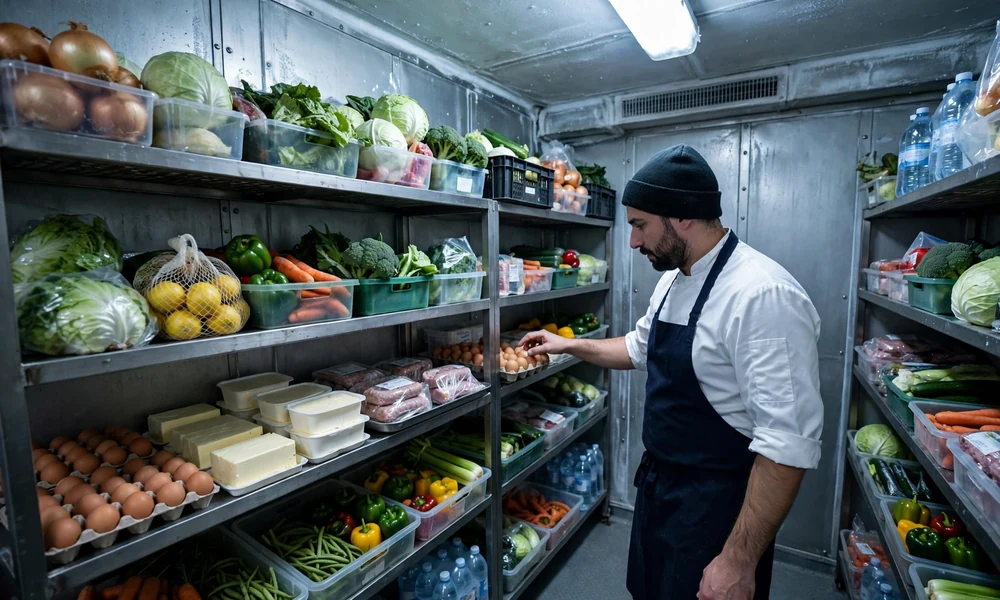
The third driver is the structure of the room itself. A galley floor is steel, coved up the walls so it can be hosed down, with drains that carry wash water away even when the ship is rolling. The walls are insulated against the heat of the ovens and the cold of the rooms next door, because the galley sits beside cold rooms that hold a week’s provisions. Refrigeration is the fourth driver: walk-in cold rooms and freezers the size of small bedrooms, holding meat, fish, dairy and vegetables for a thousand people, with backup compressors in case one fails at sea. The way the galley is organised day to day is covered in our guide to how a luxury ship galley works.
How It Works
A meal in the galley moves through seven steps, from the cold room to the dining room.
- Provisioning. Stores are loaded in port, checked against the menu plan and stowed in cold rooms, freezers and dry stores by section.
- Preparation. At dawn the prep team washes, peels and cuts, working at steel benches with sinks that drain even as the ship rolls.
- Cooking. Cooks work the ranges and ovens in sections, hot dishes on one side, cold dishes on the other, with the head chef calling the orders.
- Plating. Dishes are plated at the pass, checked for temperature and presentation, and set on heated trolleys.
- Service. Trolleys ride the lifts to the dining room, where waiters carry the plates to the tables in timed courses.
- Return. Used plates, cutlery and glass come back down on the same lifts, straight into the dishwashing line.
- Cleaning. The pot wash runs through the night, the floors are hosed and squeegeed, and the grease filters are cleaned before the next service.
The Specs at a Glance
| Specification | Typical Luxury Ship Galley | What It Means |
|---|---|---|
| Floor area | 300–500 square metres | Room for 40–60 cooks at once |
| Meals per service | 800–1,500 | Plates per sitting, passengers and crew |
| Ovens and ranges | 6–10 ovens, 4–6 ranges | Commercial marine cooking units |
| Air extraction | 20,000–40,000 cubic metres per hour | Heat and steam pulled out of the room |
| Cold storage | 100–200 cubic metres | A week of provisions for a thousand people |
| Power draw | 200–400 kW | Cooking, cooling and ventilation together |
Price: What a Luxury Ship Galley Costs
A luxury ship galley typically costs between 3 and 8 million dollars to fit out, depending on the size of the ship and the standard of the dining room. The cooking equipment and the ventilation plant take the largest shares, followed by the structure, the refrigeration and the labour. Against the price of the ship, which runs into hundreds of millions, the galley is a modest line. Against the price of a restaurant kitchen on land, it is a reminder that at sea, a kitchen must be a machine room as well as a kitchen.
A Rare Fact Worth Knowing
Here is a detail few people outside the industry know. On some large ships, the galley bakes bread through the night, because fresh bread is the one thing passengers notice first at breakfast and the ovens are already hot from dinner service. The bakers work while the ship is quiet, and the smell of baking drifts up through the ventilation shafts to the dining room before dawn.
So a luxury ship galley is expensive because it is a restaurant, a machine room, a cold store and a fire station in one steel box, all built to work while the floor moves. Any one of those would add cost; together, below the dining room, they make a kitchen cost as much as a house.


