Park a concours-winning classic car beside a brand-new supercar, and the older machine will draw the bigger crowd. It is not faster, it is not safer, and it is not more comfortable, yet people gather around it, lean in close, and ask what it is worth. The answer is often more than the supercar beside it, and sometimes several times more.
A luxury classic car is a motor car from an earlier era, usually at least thirty years old, built in small numbers and kept in exceptional condition, or restored to it. The price is not about transport. It is about history, craft, scarcity, and the simple fact that no one can build another one. Here is where that money goes.
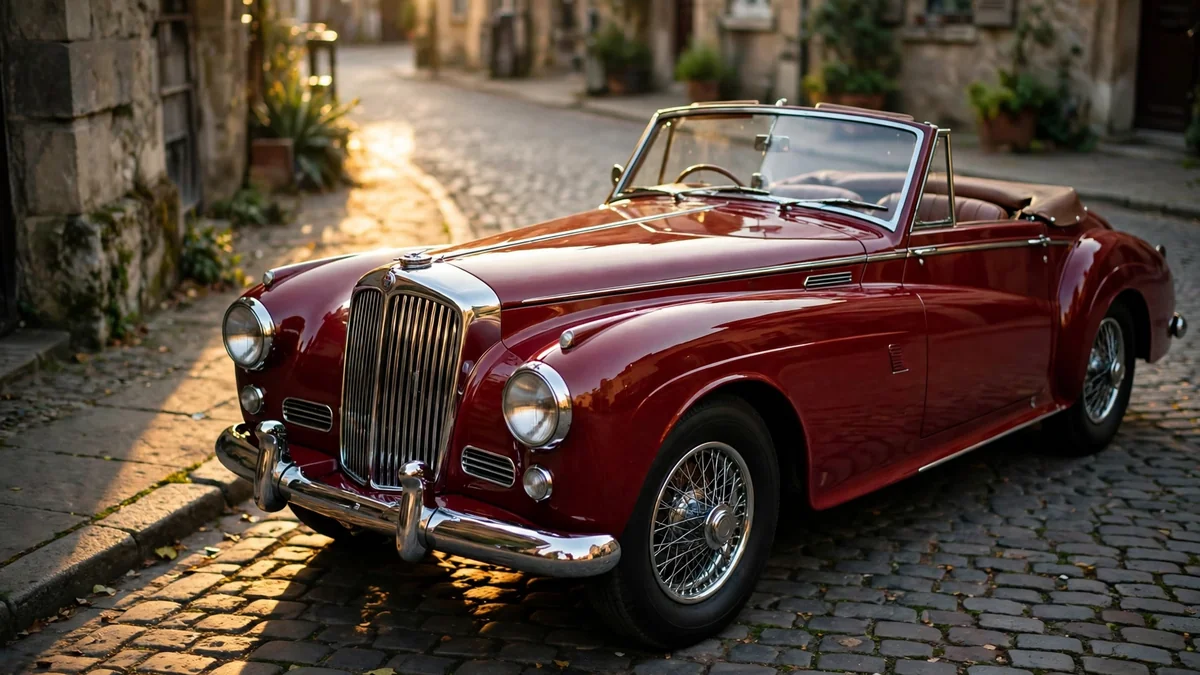
1. They cannot make any more
The first reason is the simplest: the factory stopped. A classic luxury car was built in a limited run, often a few hundred cars or fewer, and every year there are fewer of them left. Accidents, rust, neglect, and parts cars have thinned the ranks, so a surviving example in good condition is genuinely rare.
That scarcity is permanent. A manufacturer can build a new supercar tomorrow, but it cannot build a 1960s grand tourer, because the tooling is gone, the craftsmen are gone, and the company that built it may not even exist any more. Collectors know this, and they pay for the certainty that supply will never grow. A car that was rare when new is rarer still after half a century of use.
2. Restoration takes thousands of hours
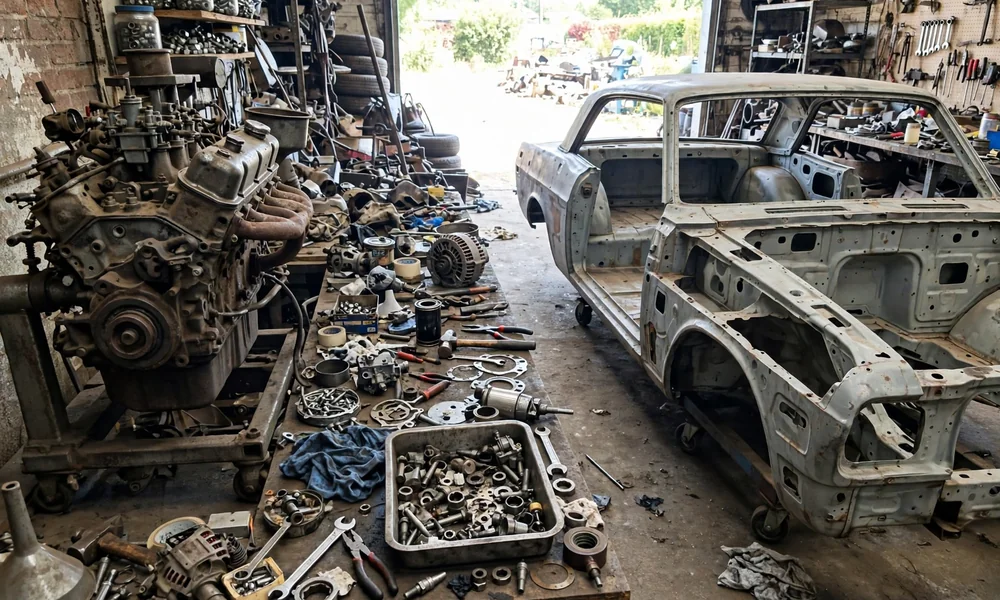
A proper restoration is one of the most labour-intensive jobs in the automotive world. A car is taken apart down to the last bolt, the body is stripped to bare metal, the engine is rebuilt, the interior is retrimmed by hand, and every part is cleaned, repaired, or remade. The work takes one to three years and thousands of hours of skilled labour.
Much of that labour is craft that no longer exists in mass production. Panel beaters shape metal by hand over wooden bucks, trimmers stitch leather interiors one seam at a time, and engine builders machine parts that have not been made in decades. The vintage car was originally built this way too, and restoring one means repeating the same slow work, at modern labour rates.
3. Parts are rare, and often remade by hand
When a part is missing or broken, there is no dealer to order from. Owners rely on a small network of specialists who hoard original parts, and when even those run out, the part must be made from scratch. A single casting, a set of carburettors, or a chrome trim piece can cost thousands of pounds and take months to produce.
That cost runs through the whole car. A complete restoration can require hundreds of remade parts, each one researched, measured, and fabricated, and the bill for parts alone can run into six figures. It is one of the reasons a car that looks simple from the outside can hide an enormous restoration invoice underneath.
4. Provenance adds a premium
A classic car with a known history is worth far more than an identical car without one. Ownership by a famous person, a racing history, a win at a major concours, or even a well-documented life with one careful owner can double or triple the value. Collectors are buying a story as much as a machine.
The paperwork matters too. A matching-numbers car, where the engine, gearbox, and chassis all carry the numbers they left the factory with, commands a premium, because it proves the car is original. A car with its original books, tools, and history file is worth more than the same car without them, and a gap in the history is a gap in the price.
5. The engineering was extraordinary
Many luxury classics were engineering showcases in their day. Hand-built V12 engines, aluminium bodies, experimental suspension, and coachwork from famous studios were all expensive when new, and they are expensive to maintain now. The vintage car in running order is a working piece of that engineering, and keeping it running takes specialists who understand carburettors, magnetos, and mechanical fuel injection.
That engineering also explains why the best classics still feel special to drive. The steering is heavy, the gearbox demands attention, and the engine sounds like nothing made today, and drivers pay for that experience. The best V12 engines ever built include several from classic luxury cars, and the sound and character of those engines is a large part of what collectors are buying.
6. A tiny market of determined buyers
The market for top classic cars is small, wealthy, and global, and that combination pushes prices up. When a rare car comes to auction, a handful of collectors may all want it, and the bidding reflects that. There is no mass market to absorb demand, and no alternative car to buy instead.
That demand is also patient. Collectors hold cars for decades, so the best examples rarely come up for sale, and when they do, the price reflects years of waiting. A modern luxury grand tourer shows how much of the appeal carries over, but the modern car will never have the classic’s one advantage: it is not, and never will be, from the past. Auction results prove the point. When a famous car crosses the block, the room knows there will not be another one like it for years, and the hammer price reflects that knowledge.
The spec sheet at a glance
| Specification | Typical luxury figure |
|---|---|
| Era | 1930s to 1970s |
| Production run | 100 to 2,000 cars |
| Engine | V8 or V12, 3.0 to 6.0 litres |
| Power output | 150 to 400 horsepower |
| Top speed | 110 to 160 miles per hour |
| Body | Hand-formed steel or aluminium |
| Gearbox | 4 or 5-speed manual |
| Weight | 1,200 to 1,800 kilograms |
| Interior | Hand-stitched leather and wood |
| Restoration time | 1 to 3 years |
| Survivors | Often fewer than half built |
Price
A top luxury classic car typically costs between an estimated $500,000 and $5 million, depending on rarity, condition, and provenance, with the most famous models reaching an estimated $10 million to $50 million at auction. That estimate covers the car itself, not the insurance, storage, or maintenance, all of which run well above ordinary car costs. A concours restoration alone can cost an estimated $300,000 to $1 million before the car is even driven.
A rare fact
One of the strangest details of the classic car world is that some cars are worth more taken apart than whole. A set of original parts from a rare model, a matching-numbers engine, or a single irreplaceable trim piece can be worth tens of thousands of pounds on its own, because somewhere there is a restorer who needs exactly that part and cannot make it.
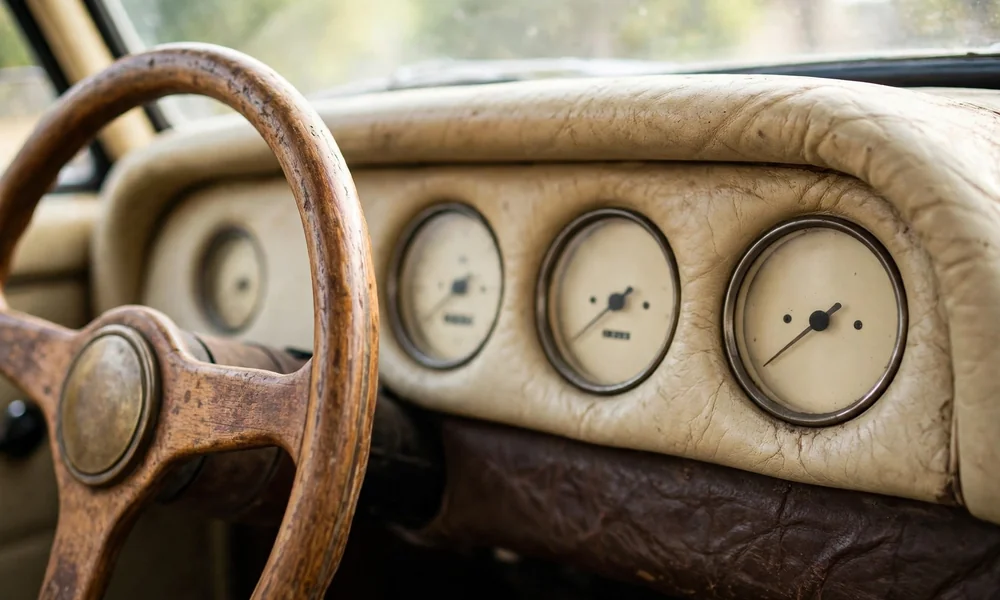
A luxury classic car is expensive because it is rare, because it takes years of skilled work to restore, because its parts are gone, and because its history cannot be repeated. The price is not a markup on an old car; it is the cost of keeping a piece of history alive and on the road.


