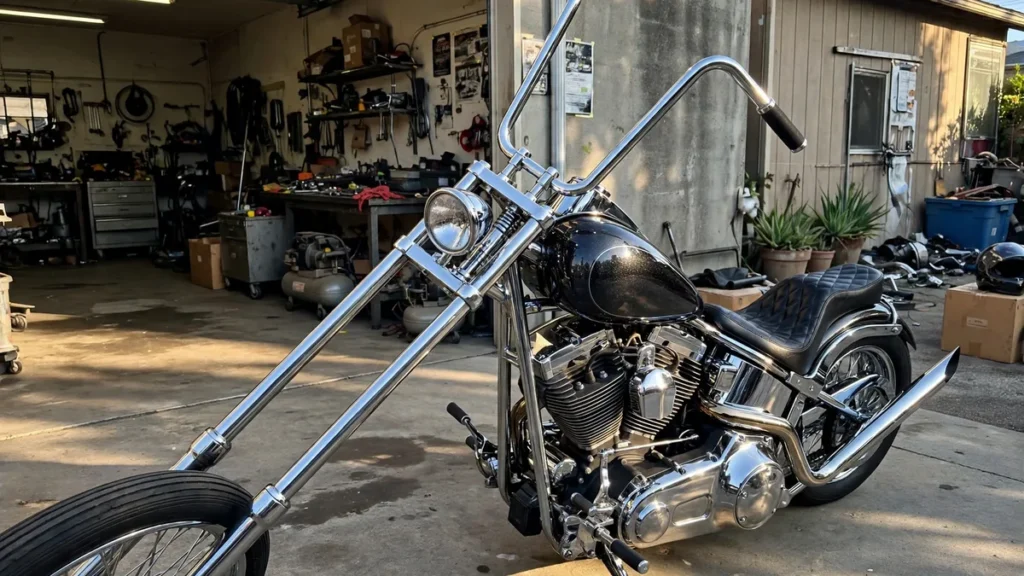
The bike was parked outside a small cafe on a London street, and it did not look like the other motorcycles around it. There was no fairing, no screen, no luggage and almost no seat, only a long petrol tank, a pair of low handlebars and a single hump where a passenger would sit on any other bike. The owner came out with his coffee, kicked the engine into life, and the sound that rolled down the street was not loud so much as deliberate, a deep thump that made the windows tremble. He did not wave. He just rode away, and everyone watching understood that the bike was not transport. It was a statement.
That is a cafe racer. It began in the 1960s, when young riders in London stripped their motorcycles down to make them faster, then raced each other between cafes on the North Circular road, and it has become one of the most expensive ways to own a motorcycle. A luxury cafe racer takes that stripped-down idea and rebuilds it by hand, with the best materials and the most skilled craftsmen, until a machine that looks simple costs as much as a small car. The price is not in what the bike has, but in what has been taken away and what has been perfected.
This article takes the price apart, reason by reason, so you can see exactly where the money goes. The engine is hand built, the frame is modified by hand, the tank is shaped by hand, and the result is a motorcycle that weighs less, goes faster and looks better than the bike it started from, while costing many times as much. The full picture of the machine it starts from is covered in the guide to why a luxury motorcycle is so expensive, where the same hand-built logic applies to a whole motorcycle.

1. A hand-built engine, tuned for character
The heart of a luxury cafe racer is an engine that is rebuilt by hand, often by a single technician who takes the standard engine apart and puts it back together with better parts. The pistons are forged rather than cast, the crankshaft is balanced to a finer tolerance, the camshafts are ground to a profile that gives more torque in the middle of the rev range, and every clearance is checked by hand. The work takes days, and the labour alone adds thousands to the price before the bike has a frame.
2. A frame cut down and rebuilt by hand
A cafe racer frame starts as a standard motorcycle frame, and then a builder cuts it, welds it and reshapes it by hand. The rear subframe is shortened, the seat loop is re-made, the footrests are moved back and the handlebars are dropped low, so the rider sits in a crouched, forward-leaning position that is uncomfortable for an hour and wonderful for ten minutes. The frame is then braced in places the factory never thought of, because the stiffer frame handles better at speed, and the welding is done by a person who can see the joint, not by a robot.
3. A fuel tank shaped by hand
The fuel tank is the signature of a cafe racer, and on a luxury build it is shaped by hand from aluminium, beaten over a form by a craftsman with a hammer and a wheel. The long, low tank with its knee dents is the first thing anyone sees, and a hand-made tank takes days to shape, weld and polish, because aluminium is unforgiving and a single mistake means starting again. The tank is then painted by hand, often in many thin coats with a stripe laid by a signwriter’s brush, and the paint is flatted and polished until the reflection is flawless.
4. Parts that are made, not bought
5. Rarity, and the name on the tank
The provenance adds to the price as well, because many luxury cafe racers start from a desirable donor bike, a classic motorcycle that is itself rare and expensive. The builder buys a good example, strips it, and rebuilds it, and the cost of the donor is part of the final price. A cafe racer built from a common bike is cheaper, but it is also less desirable, and the collectors who pay the highest prices want a bike with a story: a famous model, a famous builder and a famous first owner. The spec sheet of the machine it starts from is set out in the guide to luxury motorcycle specs explained, and the numbers there are only the beginning.

6. The cost of going without
The weight saving is real, and it is measured. A luxury cafe racer can weigh 40 or 50 kilograms less than the bike it started from, which is a huge difference on a machine that weighs 200 kilograms, and the lighter bike accelerates faster, brakes shorter and handles better. The weight is saved by replacing steel with aluminium and titanium, by removing parts and by making what remains as light as possible, and every kilogram saved costs money. The finished bike is a paradox: it looks like the cheapest motorcycle on the road, and it costs as much as a car, because the simplicity is the luxury.
The spec sheet at a glance
| Figure | Typical luxury cafe racer | What it tells you |
|---|---|---|
| Engine | 800 to 1,200 cc twin or four | How big the engine is |
| Power | 80 to 120 horsepower | How much power it makes |
| Weight | 170 to 210 kilograms dry | How light the bike is |
| Top speed | 180 to 220 kilometres per hour | How fast it can go |
| Fuel tank | 12 to 18 litres, hand-shaped aluminium | How far it can ride between stops |
| Build time | 3 to 6 months per bike | How long the build takes |
| Price | Roughly $30,000 to $120,000, as an estimate | What the bike costs |
What it costs
A luxury cafe racer costs roughly $30,000 to $120,000, as an estimate, and the range is wide because the bikes are wide. A build from a common donor with a good workshop can be had at the lower end, while a build from a rare classic by a famous name can cost far more, and the price is set by the donor, the builder and the specification rather than by a catalogue. The way such a machine is put together from the frame up is set out in the guide to how a luxury motorcycle is made, from the frame welding to the hand-finished paint.
A rare fact
The first cafe racers were ridden by young men who could not afford a fast motorcycle, so they made their own by stripping a cheap one down, and the fastest of them could do a hundred miles an hour, which was the magic number of the day. The riders called it doing the ton, and the bike that could do it was a ton-up bike. Sixty years later, the same stripped-down motorcycle costs more than a family car, and the riders who buy them are often the grandchildren of the men who built the first ones, paying for a machine their grandfathers made because they could not afford anything else.