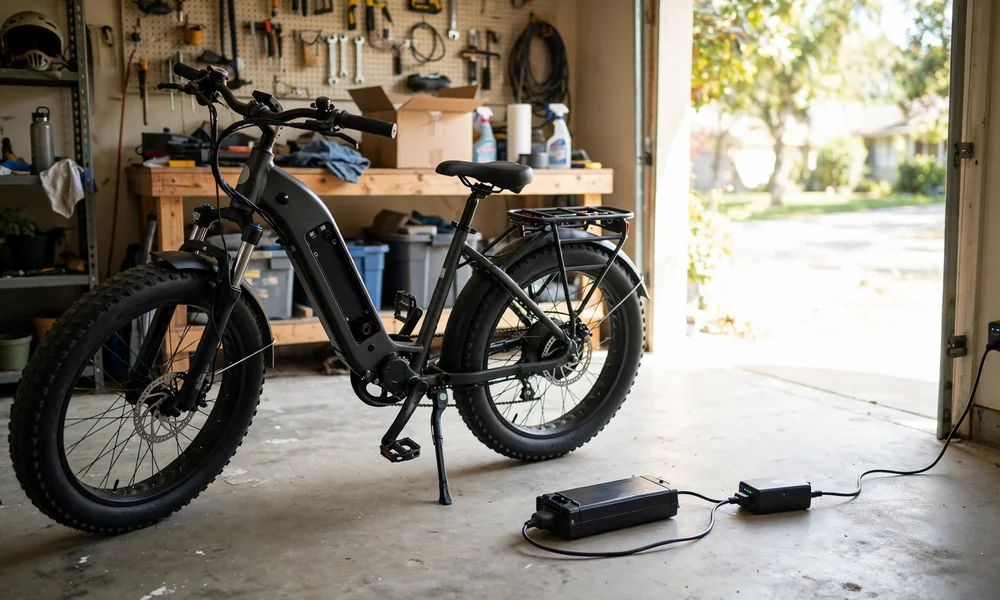
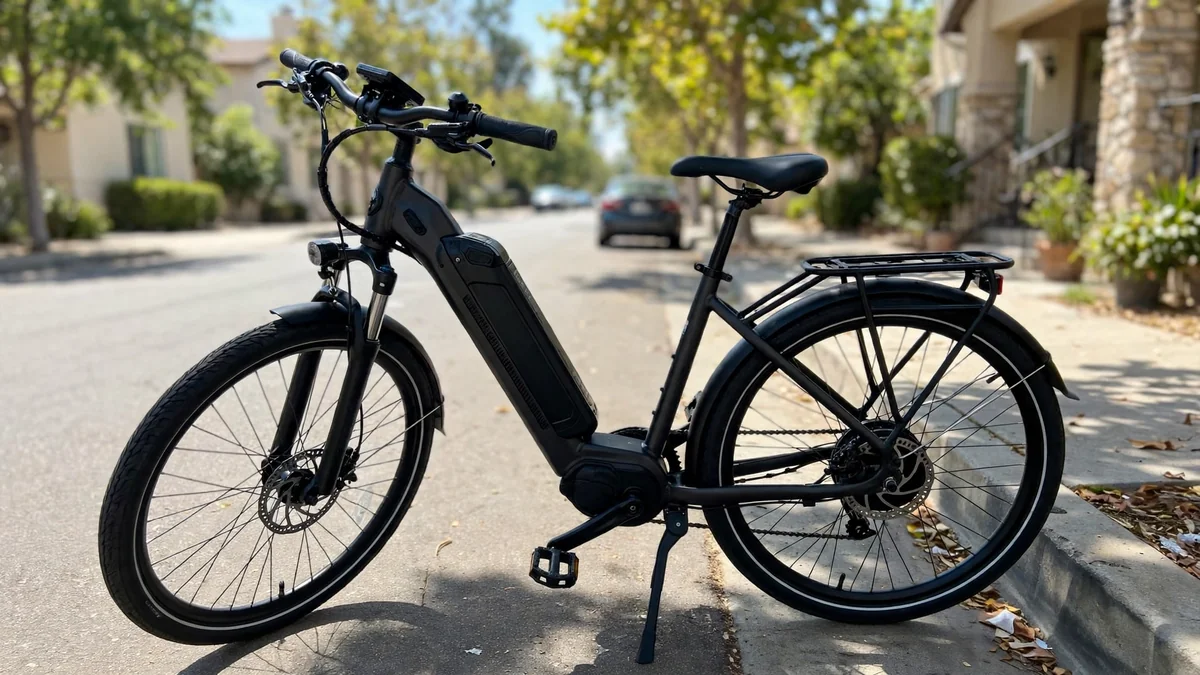
The hill is steeper than it looks, the kind that turns a normal bike ride into a slow, sweating grind. The rider on the electric bike does not stand up, does not strain, does not even change gear with any urgency. She just keeps pedalling, and the bike keeps climbing, quietly, as though the hill had been politely asked to move. The secret is the battery, a slim pack of chemistry hidden in the frame, holding enough energy to flatten a city.
An e-bike battery is a remarkable piece of materials engineering. It has to pack as much energy as possible into a small, light, weatherproof box, deliver it smoothly for years, survive being charged hundreds of times, and never, ever catch fire. A battery is not a box of power. It is a system, and every part of it exists to keep the energy in and the danger out.
Here is what is actually inside an e-bike battery, and why each material earned its place.
The Materials Behind the Machine
1. Lithium-ion cells
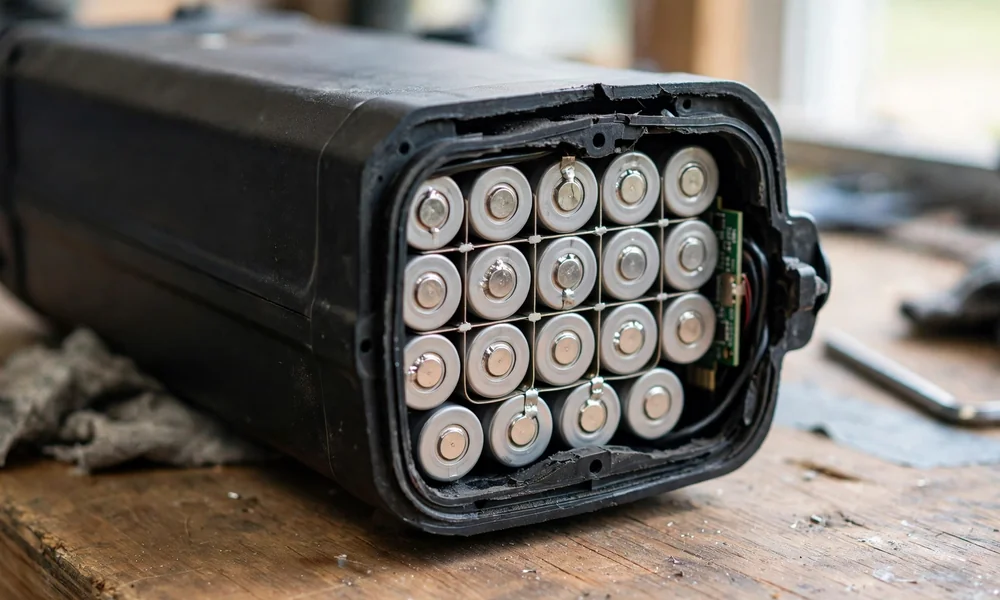
The heart of the battery is a set of lithium-ion cells, usually the cylindrical 18650 or 21700 format, the same type used in power tools and many electric cars. Inside each cell, lithium ions shuttle between a graphite anode and a metal-oxide cathode through a liquid electrolyte, and that movement is what stores and releases energy. The cathode is usually a nickel-manganese-cobalt blend, chosen because it packs a lot of energy into a small space, while the anode is graphite, sometimes blended with a little silicon to squeeze in more capacity. A typical e-bike pack holds 40 to 60 cells, wired together to give the voltage and capacity the motor needs.
2. The cell casing and separators
Each cell is wrapped in a steel or aluminium can, which gives it its strength and keeps the chemistry sealed away from air and water. Inside, a thin separator made of polyethylene or polypropylene sits between the anode and the cathode, letting lithium ions pass while keeping the two electrodes from touching. If they touched, the cell would short-circuit, so the separator is one of the most important safety parts in the whole battery.
3. Nickel strips and busbars
The cells are joined together by nickel strips, spot-welded to the ends of each cell, and thicker copper or aluminium busbars that carry the combined current to the motor. Nickel is used because it welds cleanly to the steel cell cans and resists corrosion, while copper is used for the main paths because it carries current with the least loss. Every weld is a potential failure point, so the strips are sized to carry far more current than the motor will ever draw, and the layout is designed so that if one cell fails, its neighbours are not dragged down with it. How the pack is assembled is shown in our guide to how an e-bike battery is made.
4. The battery management system
Watching over the cells is the battery management system, a small circuit board that measures the voltage of every group of cells, the temperature in several places, and the current flowing in and out. It is built on a fibreglass circuit board with copper traces, and its chips are silicon, like any computer. Its job is to stop the battery from being overcharged, over-discharged, or charged when it is too cold, all of which damage lithium cells. If it detects a fault, it opens a switch made of MOSFET transistors and cuts the power.
5. The housing: aluminium and engineering plastic
The cells and electronics live in a housing that has to be light, tough, waterproof and fire-resistant all at once. Most e-bike batteries use an extruded aluminium case, sometimes with a plastic shell over it, because aluminium sheds heat, resists impacts, and does not burn. The housing is sealed with rubber gaskets rated to keep out rain and road spray, and the inside is often filled with a fire-retardant potting compound or foam that holds the cells in place and slows the spread of heat if one cell fails. The numbers behind capacity and range are explained in our guide to e-bike battery specs.
6. Thermal materials and insulation
Heat is the enemy of every battery. It ages the cells, reduces capacity, and in the worst case starts a thermal runaway. So packs use thermal interface materials, usually silicone pads or gap fillers, to move heat from the cells to the aluminium housing, where the passing air carries it away. Between the cells, thin sheets of mica or ceramic-coated material act as fire barriers, stopping heat from jumping from one cell to the next. These materials add weight and cost, but they are the reason a quality battery can be fast-charged on a hot day without drama.
7. Connectors, wiring and the charger
The last part of the system is the most handled and the most abused. The connectors are brass or copper with gold or nickel plating, chosen because they resist corrosion and keep a low-resistance connection after hundreds of plug-ins. The wiring is stranded copper in silicone or PVC insulation, flexible enough to survive being plugged in daily and thick enough to carry the charging current without heating up. The charger itself is a separate box of electronics, with its own capacitors, transformers and cooling, and it talks to the battery management system to set the right charging speed. How the battery delivers its power on the road is covered in our guide to how an e-bike battery works.
Key Specs at a Glance
| Part | Typical material | Why it is used |
|---|---|---|
| Cells | Lithium-ion, NMC cathode, graphite anode | High energy density |
| Separator | Polyethylene or polypropylene | Prevents short circuits, shuts down when hot |
| Cell connections | Nickel strips, copper busbars | Clean welds, low resistance |
| Management system | Fibreglass board, silicon chips | Monitors every cell, prevents damage |
| Housing | Extruded aluminium, rubber gaskets | Light, tough, waterproof, fire-resistant |
| Thermal control | Silicone pads, mica barriers | Moves heat out, stops it spreading |
| Typical capacity | 400 to 750 Wh | 40 to 100 km of assisted range |
What It Costs
A good e-bike typically costs around $1,500 to $3,500 (estimates, prices vary by brand and specification), and the battery is the single most expensive part, often a third of the price of the whole bike. A replacement battery usually costs $400 to $900, depending on capacity and brand. A battery should last 500 to 1,000 full charges, which for most riders is three to five years, before its capacity drops to about 80 percent of new.
A Rare Fact
Here is a fact that puts the engineering in perspective: the cells inside an e-bike battery are so precisely made that the thickness of the coating on their electrodes is controlled to a few microns, thinner than a human hair, and a single pack contains tens of metres of electrode foil wound into cells no bigger than your thumb. The next time your e-bike carries you up a hill without breaking a sweat, remember that the effort is not coming from the motor alone. It is coming from a box of chemistry that was designed, above all, to be boring: to work, quietly and safely, every single day.