A rider sets off before sunrise, the road empty and the air cold enough to see her breath. The battery gauge reads full, but the route is long: ninety kilometres of rolling hills, a headwind on the way home, and no charger at the halfway cafe. Halfway through the ride, the little box mounted under the frame wakes up, hums almost too quietly to hear, and starts feeding power back into the system, stretching the remaining charge a little further with every turn of the pedals.
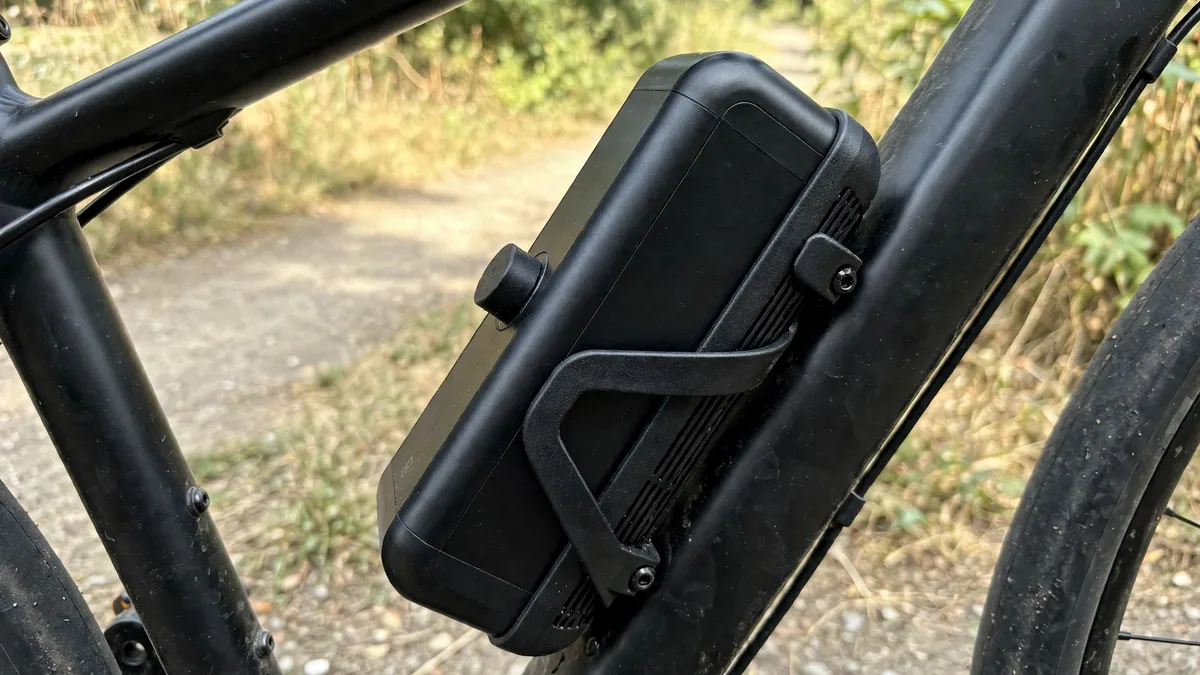
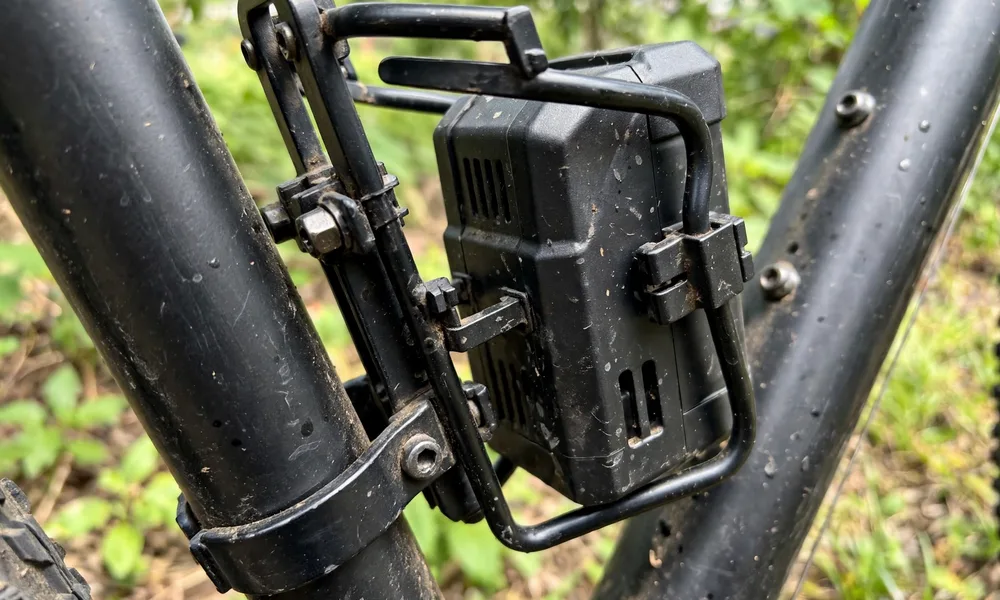
That box is the e-bike range extender, and it is a clever piece of engineering disguised as a spare battery. It may be an auxiliary battery pack that slots into a bottle cage, or a compact generator unit with a tiny motor that tops the main battery up while you ride. Either way, it must be light, tough enough for rain and vibration, and safe beside the rider’s legs, while holding a surprising amount of energy in a very small space.
The secret is a set of materials, each chosen for one job and shaped to make failure unlikely. Here is what they are, why engineers picked them, and what goes wrong when they reach the end of their life.
The Materials Behind the E-Bike Range Extender
1. Aluminium alloy, the light shell that takes the knocks
The outer case of most range extenders is made from 6000-series aluminium alloy, the same family of metal used in bicycle frames. Engineers choose it because it is light, resists rust, and can be extruded or cast into the slim shapes that fit a bike frame. It is extruded into slim profiles, machined at the mounts, and anodised against scratches. When aluminium fails, it usually does so slowly: repeated vibration opens tiny fatigue cracks around bolt holes and mounting points. That is why a dented or cracked extender case should be checked, not ignored.
2. Lithium-ion cells, the energy hidden inside
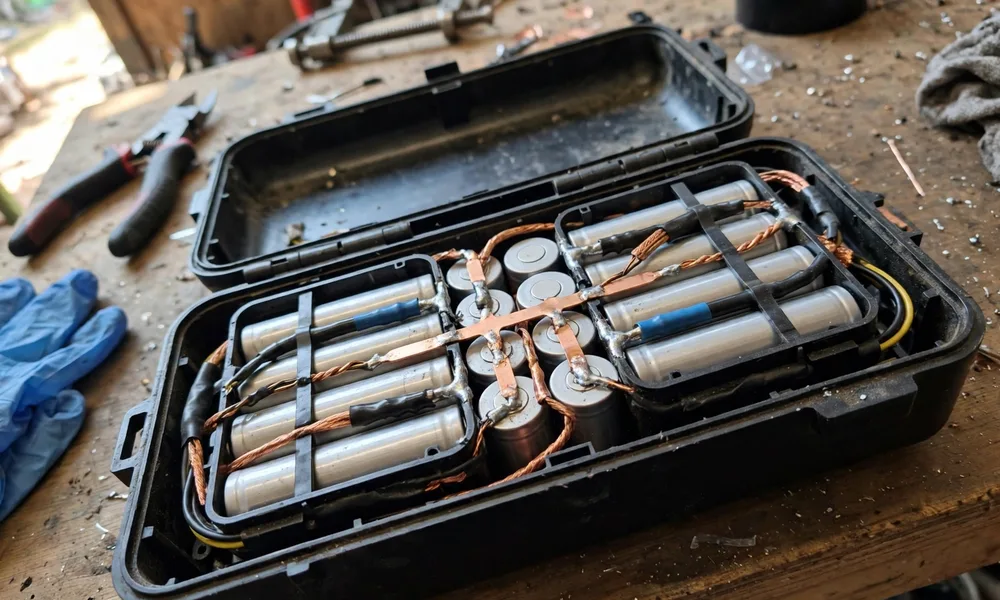
At the heart of a battery-type range extender are lithium-ion cells, usually nickel manganese cobalt chemistry, known as NMC, chosen for their high energy density. They pack more range into each kilogram than any other rechargeable chemistry a rider can sensibly carry. The cells are made by coating thin foils with active material, rolling them into a jelly roll, and sealing them in a metal can or pouch. When these cells fail, the causes are usually age, damage, or heat. A cell that has been dropped or punctured can short-circuit internally, and a very hot cell can enter thermal runaway, releasing gas and heat faster than the case can vent it. A battery management system watches every cell, cutting power long before that point.
3. Copper windings, the quiet workhorses of the generator
In generator-type range extenders, a small electric motor works in reverse, and its stator is wound with enamelled copper wire. Copper is chosen because it carries current with very little resistance, which matters when every watt of recovered energy counts. The wire is wound around laminated steel teeth, then coated and baked to hold its shape. When copper windings fail, the enamel insulation is usually the culprit. Heat and vibration wear it thin, adjacent turns touch, and the winding shorts. The generator then produces less power and more heat, and the unit shuts itself down.
4. Hardened steel gears, the tiny transmission
A generator extender needs gears to step a small fast-spinning motor down to a useful speed, and those gears are cut from hardened steel. Steel is chosen because the teeth must survive millions of meshing cycles without wearing away, and no plastic or aluminium gear lasts as long under the same load. The gears are ground to shape, case-hardened, and run in light grease. When steel gears fail, they usually wear gradually: the teeth thin, the backlash grows, and the unit starts to whine. A chipped tooth is worse, and it sends metal fragments through the gearbox, which is why the grease is inspected when an extender is serviced.
5. Engineering plastic, the brackets and covers that save weight
Not every part needs to be metal. Mounting brackets, covers and internal spacers are often injection-moulded from engineering plastics such as glass-filled nylon or acetal, known as POM. These plastics are chosen because they are light, cheap to mould into complex shapes, and quiet, damping the buzz of a spinning generator. It is injection-moulded into shape in seconds. When engineering plastic fails, it usually creeps: under constant load and summer heat, it slowly deforms, and a bracket that once gripped firmly starts to loosen. Ultraviolet light from the sun also makes it brittle over years, which is why covers eventually crack at their screw holes.
6. Silicone seals, the thin line against rain
A range extender lives outdoors, so its case is sealed with silicone rubber gaskets and O-rings. Silicone is chosen because it stays flexible from freezing mornings to hot afternoons, resists water, and does not harden as quickly as natural rubber. They are moulded to shape and compressed between the case halves. When silicone seals fail, they do so quietly: years of heat and compression set make them flatten and lose their spring, and a gap opens just wide enough for a jet of rainwater from a passing lorry to find its way in.
E-Bike Range Extender Materials
| Material | Where it is used | Why it is chosen |
|---|---|---|
| 6000-series aluminium alloy | Outer case | Light, rust-proof, easy to extrude and machine |
| Lithium-ion NMC cells | Energy storage | High energy density per kilogram |
| Enamelled copper wire | Generator windings | Low resistance, efficient power transfer |
| Hardened steel | Gearbox gears | Wear-resistant under millions of cycles |
| Glass-filled nylon, POM | Brackets and covers | Light, quiet, moulded into complex shapes |
| Silicone rubber | Seals and O-rings | Flexible across temperatures, waterproof |
E-Bike Range Extender Specifications
| Specification | Typical value |
|---|---|
| Type | Auxiliary battery pack or compact generator unit |
| Added capacity | About 160 to 250 watt-hours |
| Added weight | About 1.5 to 3 kilograms |
| Mounting | Bottle cage bosses or frame cradle |
| Case material | Anodised 6000-series aluminium alloy |
| Cell chemistry | Lithium-ion NMC |
| Weather rating | Rain-resistant sealed case, typically IPX5 or better |
| Extra range | Roughly 30 to 60 kilometres, depending on assist level |
The battery at the heart of the system is explored in the materials behind the e-bike battery, from its cells to its cooling, while the motor it feeds is covered in the materials behind the e-bike mid-drive motor. The way a whole extender unit is put together is described in how an e-bike range extender is made.
A Rare Fact
The earliest range extenders were not sleek frame-mounted units at all. They were second batteries squeezed into a standard water-bottle shape so they would fit the bottle cage every bicycle already had, and riders called them bottle batteries. The idea worked so well that some modern extenders still borrow that familiar cylinder, simply because it fits anywhere a bottle fits.
A range extender is easy to overlook, a quiet box that only matters on the longest rides. But inside it, aluminium takes the knocks, lithium-ion cells hold the energy, copper turns motion into charge, steel gears spin without complaint, plastic keeps it light, and a thin silicone seal holds the rain at bay.


