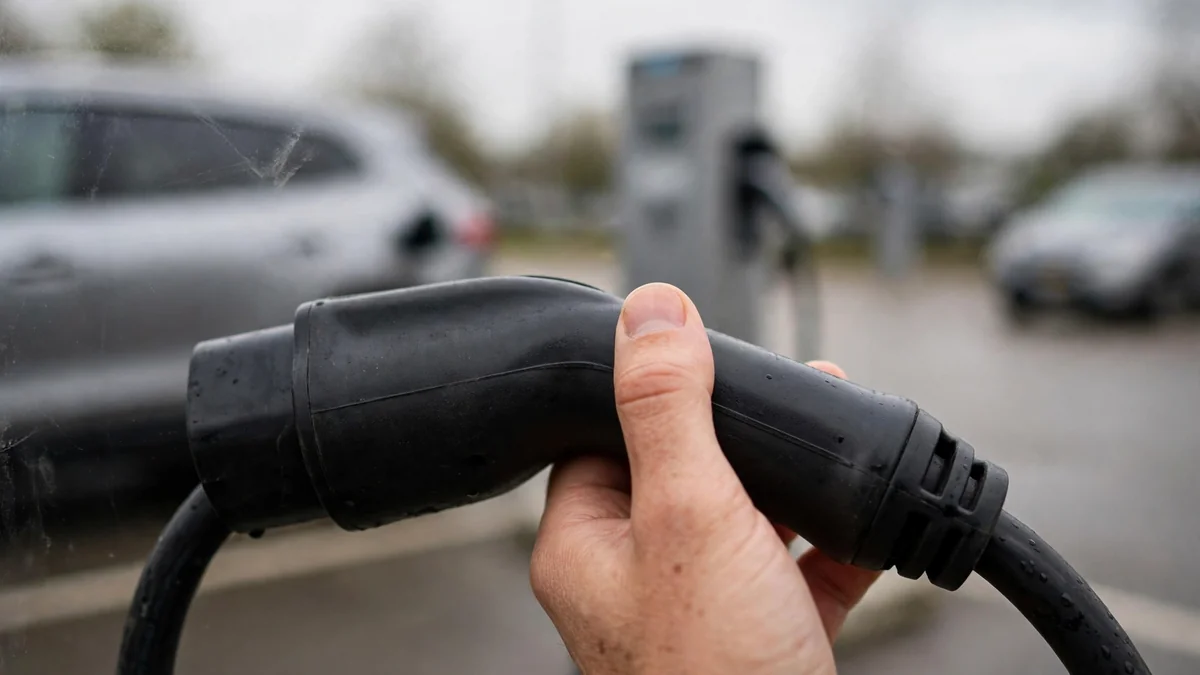
It is raining at the motorway service station, and the driver has ten minutes before the next leg of the journey. She lifts the charging cable from its holster and it surprises her every time: thick as a garden hose, heavy enough to need two hands, warm already from the car before hers. She plugs it in, the car clicks, and the dashboard shows 250 kilowatts pouring into the battery. The cable in her hands is carrying more power than a whole street of houses uses at once.
That cable is one of the most underrated parts of the electric car revolution. It has to carry hundreds of amps of direct current, survive being dropped on concrete and dragged through puddles, and stay cool enough to hold. A 350-kilowatt fast charger pushes about ten times the power of an old 50-kilowatt unit through a cable that is barely thicker. The trick is not just more copper. It is cooling, clever materials and sensors that watch the temperature every second.
The numbers on a fast charging cable tell the story: voltage, current, power, conductor size, weight and length. This guide explains them in plain English, so the next time a cable feels heavy in your hands, you will know exactly why — and what the numbers mean for how fast your car can charge.
How an EV Fast Charging Cable Works
Step 1: The copper conductor
At the centre of the cable is the conductor, almost always copper, because copper carries current with very little resistance. A cable rated for 500 amps needs a conductor with a cross-section of roughly 95 to 120 square millimetres — about as thick as a thumb. More copper means less resistance and less heat, but also more weight and cost, so makers balance the two carefully. The copper is made from many fine strands rather than one solid core, which keeps the cable flexible enough to bend and coil. The battery the cable feeds is explained in our guide to EV battery pack specs.
Step 2: Liquid cooling
The cleverest part of a modern fast charging cable is its cooling. Running 500 amps through copper generates serious heat, and a thick enough uncooled cable would be too heavy to lift. So high-power cables circulate a coolant — usually a water-glycol mix — through small channels inside the cable, carrying heat away from the conductor and back to a radiator in the charger. Liquid cooling is what allows a 350-kilowatt cable to stay slim enough for one person to handle, and it is the main reason charging speeds have risen so fast in the last few years.
Step 3: The connector
At the end of the cable is the connector that plugs into the car. In Europe the standard is CCS, which combines the familiar Type 2 plug with two extra large pins for direct current. In North America, Tesla’s NACS connector is now being adopted by most makers, and it is smaller and lighter than CCS while carrying the same power. The connector has its own temperature sensors and a locking mechanism that holds it firmly in the car’s socket while charging, releasing only when the session ends. A worn or dirty connector is one of the most common causes of slow charging, which is why chargers with damaged plugs should be avoided.

Step 4: Voltage and current
Power is voltage multiplied by current, and fast charging cables exploit both sides of that equation. Most fast chargers deliver 400 volts, while newer 800-volt cars — such as the Porsche Taycan and Hyundai Ioniq 5 — can charge at 800 volts, which halves the current needed for the same power and halves the heat. A 350-kilowatt charger at 800 volts carries about 440 amps, while the same power at 400 volts would need nearly 900 amps and a far heavier cable.
Step 5: Length and weight
A fast charging cable is usually 3 to 5 metres long, long enough to reach a car’s charging port from either side, but no longer than necessary. Every extra metre adds weight, resistance and cost. A liquid-cooled 350-kilowatt cable weighs roughly 8 to 12 kilograms including the connector, and much of that weight is the copper and the cooling channels.
Step 6: Safety systems
Safety is built into every layer of the cable. Temperature sensors sit in the connector and along the cable, and if any of them reads too hot, the charger cuts the power in milliseconds. The insulation is rated for 1,000 volts and is tough enough to resist abrasion, oil and ultraviolet light. If the cable is damaged or the connector is not fully seated, a pilot signal tells the charger not to start. The cable also carries a separate thin communication wire, so the car and charger can talk throughout the session — negotiating power and stopping the charge the moment anything looks wrong. The port on the car side is covered in our guide to how an EV charging port works.
EV Fast Charging Cable Specs
| Specification | Typical range |
|---|---|
| Maximum power | 150 to 350 kilowatts at a modern fast charger |
| Operating voltage | 400 volts, or 800 volts on newer cars and chargers |
| Maximum current | About 400 to 500 amps |
| Conductor | Stranded copper, about 95 to 120 square millimetres |
| Cooling | Liquid-cooled on cables above about 200 kilowatts |
| Cable length | About 3 to 5 metres |
| Weight with connector | About 8 to 12 kilograms |
| Connector types | CCS in Europe; NACS in North America |
What Does an EV Fast Charging Cable Cost?
A replacement liquid-cooled fast charging cable for a public charger is estimated to cost roughly $1,500 to $4,000, including the connector, while a simpler uncooled 50-kilowatt cable is estimated at $500 to $1,500. Prices are estimates only and vary by power rating, length and connector type. The cable is a small part of a fast charger’s total cost — a 350-kilowatt charging unit itself is estimated at $100,000 to $200,000 installed — but it is the part drivers touch every time, and the part that wears out first. For the charger as a whole, see our guide to EV charging port specs.
A Rare Fact
The first electric cars charged from ordinary household sockets, and a full charge could take a whole day. The leap to 350 kilowatts happened in less than a decade, and the cable was the bottleneck for most of it. The rare detail is how close the engineering runs to the edge: at full power, a liquid-cooled charging cable carries more current than the cables that feed a small factory, yet the surface a driver holds stays close to skin temperature because the coolant is doing its job. If the cooling pump fails, the charger drops the power to a trickle or stops entirely, which is why a faulty charger sometimes charges slowly rather than not at all.
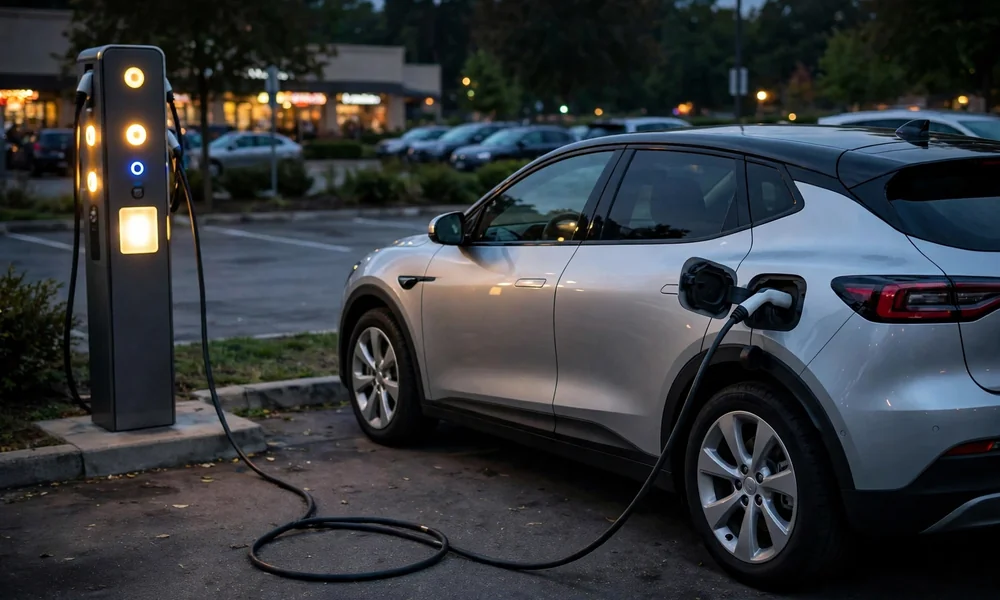
The next time you lift a fast charging cable, notice its weight. That weight is copper and coolant and sensors, all working to move an enormous amount of energy safely through something you can hold in your hands. The numbers in the table above are the reason a ten-minute stop can now add hundreds of kilometres of range — and the reason the humble cable, not the battery, was for years the hardest part of fast charging to get right.


