Pick up a forged aluminium wheel, a bicycle crank or the suspension arm of a sports car and the first thing you notice is how light it feels for how strong it is. Forging does not just shape aluminium — it rearranges it from the inside out.
Aluminium forging works by heating a solid billet of aluminium until it is soft, then squeezing it between shaped dies so the metal flows into the shape of the part. As it flows, the grain structure of the metal stretches and aligns along the shape, which makes the finished part far stronger and tougher than the same shape cut from a block or poured into a mould. It is one of the oldest ways of working metal, and still one of the best, because no other process gives aluminium the same combination of strength, lightness and resistance to fatigue.
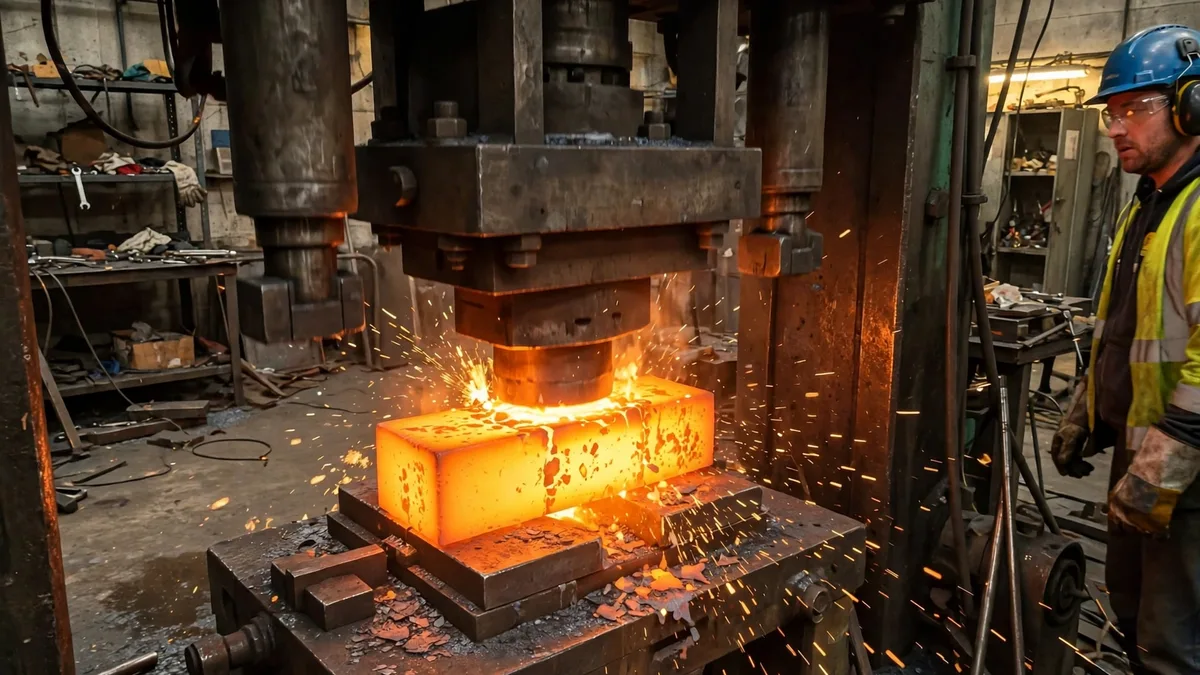
How Aluminium Forging Works
Step 1: Heating the billet
Everything starts with a billet, a solid cylinder or bar of aluminium alloy cut to the exact weight of the finished part plus a small allowance for the metal that will be trimmed away. The billet is heated in a furnace to around 400 to 500 degrees Celsius, hot enough for the aluminium to flow under pressure but well below its melting point of about 660 degrees.
Step 2: Squeezing the metal between dies
The hot billet is placed between two shaped steel dies and a press — hydraulic or mechanical — closes on it with a force measured in hundreds or thousands of tonnes. The aluminium has nowhere to go but into the shape of the die cavity, so it flows sideways and upwards, filling every corner. This pressing stage is the heart of the process, and the same force-and-flow logic appears in other heavy metalwork, from how aluminium forging is made to the presses that shape steel parts.
Step 3: Aligning the grain flow
Here is where forging earns its reputation. Inside any piece of metal, the crystals are arranged in a grain structure, and when aluminium is squeezed through a die, those grains stretch and line up along the direction the metal flowed — following the curves of the part like the grain in a bent piece of wood. A part that is bent in service then has its strongest direction exactly where the load runs, instead of across it. That alignment is invisible to the eye, yet it is the reason a forged part can outlast a cast one by years.
Step 4: Trimming the flash
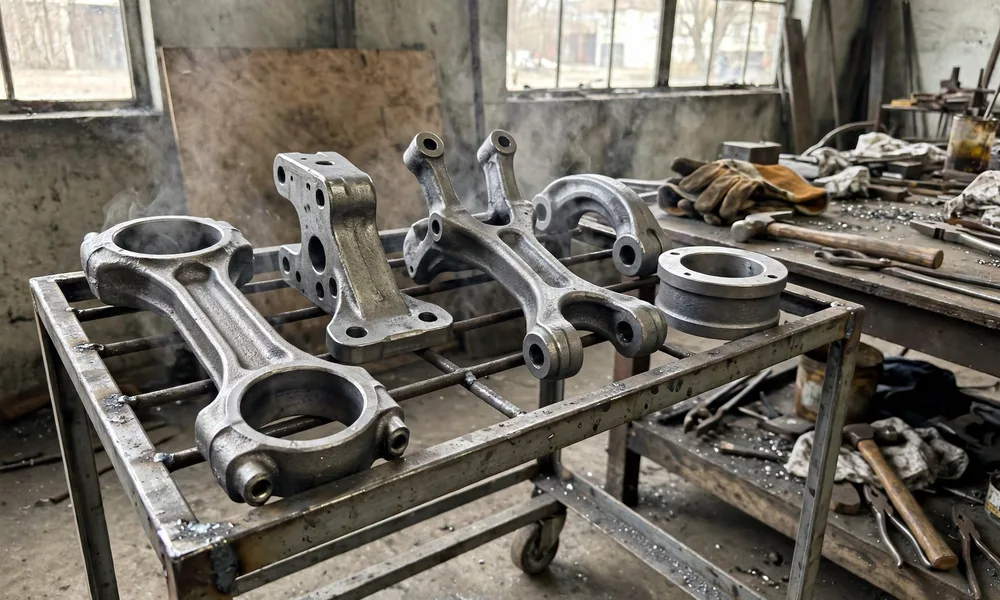
As the dies close, a thin ribbon of excess metal squeezes out around the edge of the part. That ribbon is called flash, and it is not waste in the usual sense — it is deliberate. The flash acts as a valve, letting the last of the metal escape so the die cavity fills completely, and it also helps cool the outer edge of the part. Once the part has cooled, the flash is trimmed off in a separate press with a sharp cutting die, leaving a clean outline.
Step 5: Heat treating for strength
A forged part straight from the press is strong, but it is not yet at its best. Most forged aluminium is heat treated to the T6 condition: first heated to dissolve the alloying elements into the metal, then quenched in water to freeze them in place, then aged at a lower temperature for hours so tiny strengthening particles form throughout the grain. The result is a dramatic jump in strength — a 7075 aluminium forging in T6 can be nearly twice as strong as the same alloy left untreated. Heat treatment is where a good forging becomes a great one.
Step 6: Machining to final tolerance
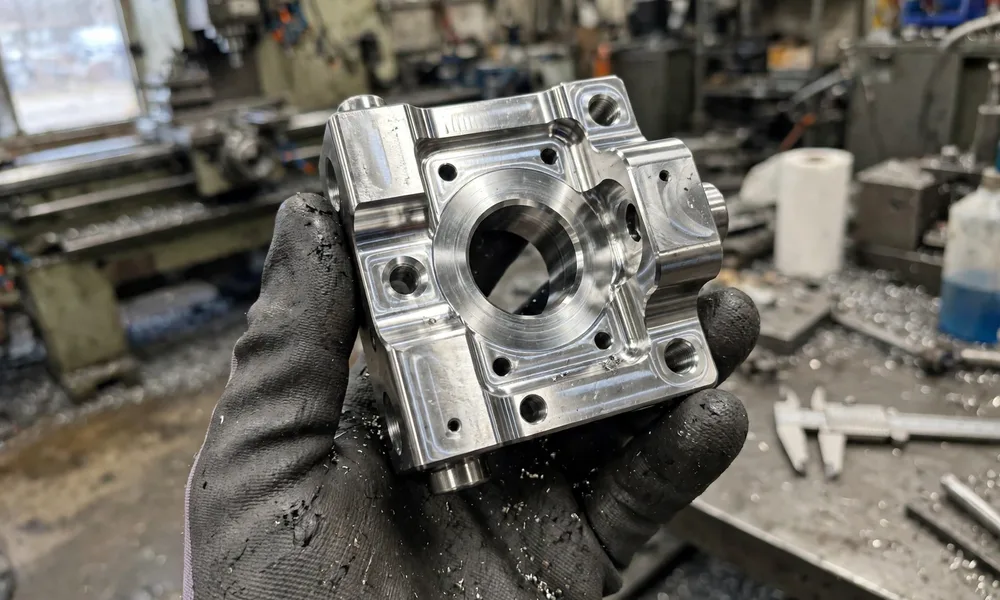
Forging gets the shape right but not the precision, so the part is machined — milled, turned, drilled and tapped — on the surfaces that matter. Bearing seats, bolt holes and mating faces are cut to tolerances of a few hundredths of a millimetre, while the forged surfaces that carry no load are left as they are. The combination is the point — forge for strength and shape, machine for precision — and the same pairing runs through modern manufacturing, including the layer-by-layer building in how additive manufacturing works, where printed parts are machined to final tolerance just like forgings.
Step 7: Finishing and inspecting
The last step is the surface. Forged aluminium parts are often anodised, a process that grows a hard oxide layer on the surface that resists corrosion and takes colour well, or they are shot-peened, blasted with tiny steel balls that compress the surface and improve fatigue life. Then comes inspection: the part is measured, checked for cracks with dye penetrant or ultrasound, and sometimes X-rayed if it will fly or carry a load. The thinking behind the surface and the alloy is set out in the materials behind aluminium forging, where the choice of alloy decides how the part is forged, treated and finished.
Aluminium Forging at a Glance
| Specification | Detail |
|---|---|
| Common alloys | 6061 and 7075 most common; 2014 and 5083 for specialist uses |
| Forging temperature | About 400 to 500 degrees Celsius for most aluminium alloys |
| Press force | From a few hundred tonnes for small parts to over 10,000 tonnes for large ones |
| Strength gain | Forged parts typically 20 to 30 percent stronger than cast equivalents |
| Typical heat treatment | T6: solution heat treat, quench, then artificial ageing |
| Weight saving | About one third the weight of steel for the same strength in many parts |
| Main drawback | Higher tooling cost than casting; best for medium to high volumes |
| Main uses | Aircraft fittings, car wheels and suspension, bicycle parts, motorsport components |
What Does It Cost?
Forging is not the cheapest way to shape aluminium, but for parts that take a beating it is often the cheapest way to keep them alive. As rough estimates, a forged aluminium car wheel typically costs around $300 to $800 each, compared with $100 to $300 for a cast equivalent, while a forged bicycle crankset is estimated at $150 to $400. Those figures are estimates, not quotes — the real number depends on alloy, size, volume and how much machining the part needs afterwards.
A Rare Fact
The largest aluminium forgings ever made were for aircraft: the main landing gear beams of large airliners are forged from single billets weighing several tonnes, pressed in machines so powerful they can exert more force than the weight of a fully loaded jumbo jet. No casting or machined block could match it, which is why the most heavily loaded part of an airliner is also one of the oldest kinds of metalwork in the sky.
Aluminium forging looks like brute force — a hot billet, a giant press, a shower of scale — but the real work is invisible. It is the grain of the metal, lined up by the flow of the press, that gives a forged part its strength, and it is the careful heating, trimming and ageing around that squeeze that turns a rough shape into a component you can trust your life to.


