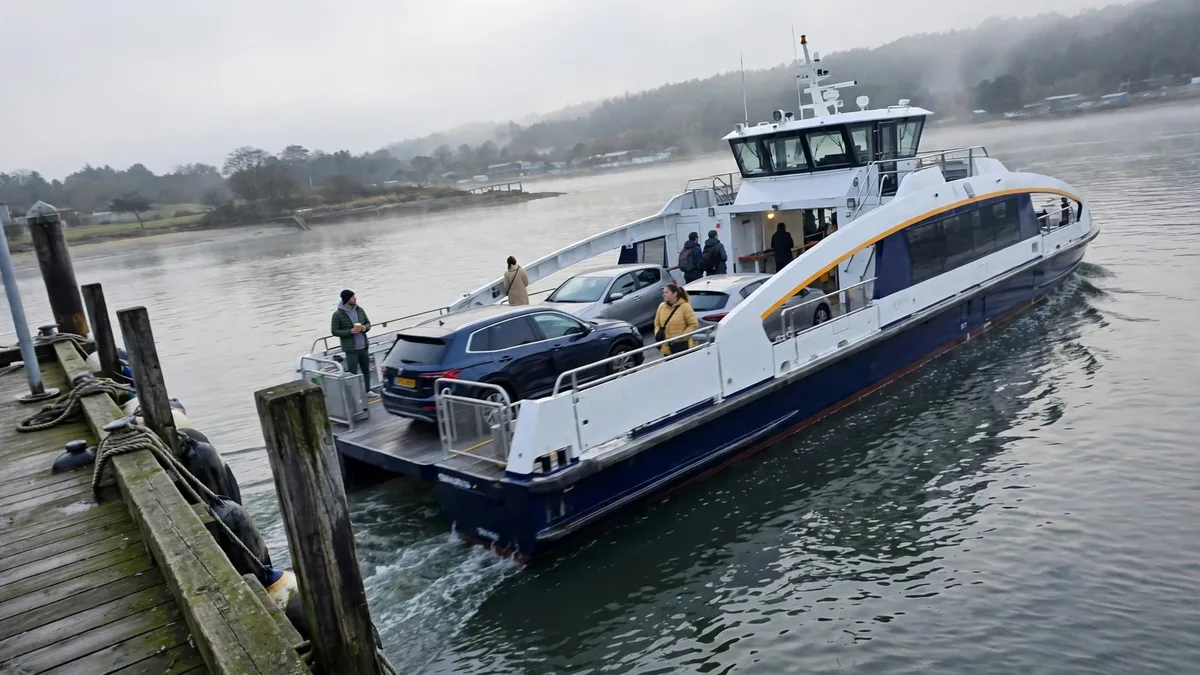
A hybrid electric ferry is a ferry that carries two sources of power: a battery bank and a diesel generator. Either one can drive the propellers, and on most routes they work together. The ferry runs on battery power when it is quiet and clean that matters most, near the shore and in port, and the diesel generator takes over or tops up the batteries when the crossing is longer or the load is heavier. It is the same idea as a hybrid car, scaled up to a vessel that weighs hundreds of tonnes and carries hundreds of people.
The point of the hybrid setup is not to remove diesel entirely. It is to use diesel far less, and to use it only where it is most efficient. A conventional ferry runs its diesel engines at whatever speed the crossing demands, which is often far from the speed where the engine burns fuel most cleanly. A hybrid ferry lets the generator run at its most efficient point, or not at all, while the batteries handle the uneven work of accelerating, manoeuvring, and holding position. The result is lower fuel use, lower exhaust emissions, and a much quieter ship in the places where people live and work near the water.
How the power flows
Everything on a hybrid ferry starts with the battery bank. These are large lithium-ion battery packs, usually housed in a dedicated room below deck, built from the same cell chemistry used in electric cars and buses but assembled into racks the size of shipping containers. A medium-sized coastal ferry might carry between one and five megawatt-hours of storage, enough to run the crossing on battery power alone for a short route, or to cover the most demanding parts of a longer one. The batteries feed a direct-current bus, which is the electrical heart of the ship.
From that bus, power goes to the propulsion motors. Most hybrid ferries use electric motors to turn the propellers, either through a shaft or through podded propulsors that hang below the hull and can rotate to steer. There is no mechanical link between the diesel engine and the propeller. The diesel generator only makes electricity. That separation is the key to the whole design, because it means the generator can sit anywhere in the ship, run at one steady speed, and shut down completely when it is not needed.
Charging happens in two ways. The first is shore power: when the ferry is in port, it plugs into a charging connection on the quay, much like an electric bus at a depot, and tops up the batteries while passengers and vehicles load. On short routes with a few minutes at each end, that turnaround charging is what makes the system work, and some ports now install megawatt-scale chargers for exactly this purpose. The second is the onboard generator, which charges the batteries while the ferry is under way. The ship’s control system decides, moment by moment, which source to use.
The series hybrid
Not every hybrid ferry is built the same way, and the differences come down to how the diesel engine connects to the propeller. In a series hybrid, the diesel engine never touches the propeller at all. It drives only a generator, which makes electricity for the motors or the batteries. This is the most common arrangement on ferries, because it is simple, flexible, and lets the engine run at a single efficient speed. The case for hybrid ferries rests largely on this flexibility, since the same hull can be tuned for different routes by changing how the power is managed rather than rebuilding the machinery.
What the energy management system does
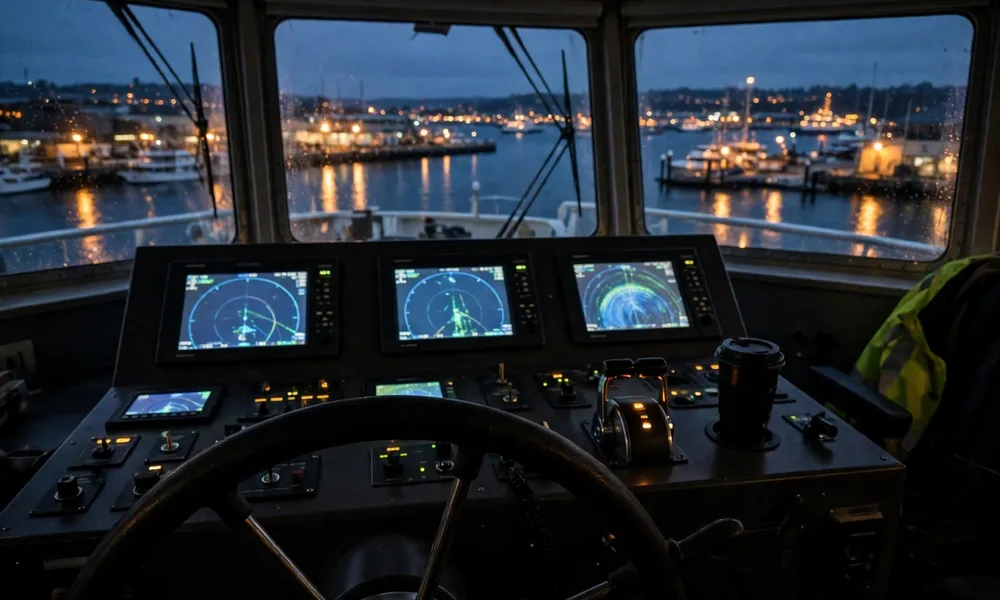
The part passengers never see is the energy management system, the software that decides when to use battery power, when to run the generator, and when to charge. It watches the state of charge of the batteries, the load on the motors, the timetable, and even the weather, and it picks the cheapest and cleanest combination for each part of the crossing. Leaving port, the ferry usually runs on battery power, because manoeuvring is slow, uneven work where diesel engines are at their worst. At cruising speed on open water, the generator starts and carries the steady load while topping up the batteries. Coming into port, the ferry switches back to battery for the quiet, low-emission approach.

Where the batteries live, and what they weigh
Battery placement is one of the biggest design decisions on a hybrid ferry. The packs are heavy, often tens of tonnes, and they need to sit low in the hull to keep the ship stable. They also need cooling, fire protection, and ventilation, because a large battery bank generates heat when it charges and discharges, and a fault in one cell must not spread to the next. Most designs put the batteries in a dedicated compartment with its own cooling loop and fire-suppression system, separated from passenger spaces by fire-rated bulkheads.
Hybrid versus fully electric ferries
It is easy to confuse a hybrid ferry with a fully electric one, but the difference is simple: a fully electric ferry has no diesel engine at all, while a hybrid keeps one as a generator. The fully electric ferry is cleaner and cheaper to run, but it depends entirely on shore charging. If the crossing is long, the weather is bad, or the charger at one end is out of service, a fully electric ferry has no fallback. A hybrid ferry can keep running on its generator, which is why operators on routes with uncertain infrastructure or long distances still choose hybrid designs.
What it feels like on board
For passengers, the most noticeable difference is the sound. A hybrid ferry running on battery power is quiet in a way that surprises people used to diesel vessels. There is no engine rumble under the deck, just the sound of water against the hull and the hum of ventilation. Vibration is lower too, because electric motors turn smoothly and there is no diesel engine shaking the structure. On short crossings, the ferry may be silent for the entire trip. The hybrid catamaran uses the same principles on a smaller, faster hull, showing how widely the idea now applies.
Where hybrids make sense, and where they do not
Hybrid ferries make the most sense on short, busy routes with frequent stops: island services, harbour crossings, and river ferries. These routes have exactly the profile that suits batteries, with plenty of time in port to charge, low average speeds, and lots of manoeuvring. They also tend to run near towns and cities, where the lower emissions and noise matter most to the people living nearby. Several of the busiest ferry routes in northern Europe now run hybrid vessels for exactly these reasons. The best electric ferry interiors show how far the new generation of vessels has come.
The honest summary is that a hybrid electric ferry is a practical compromise, not a halfway house. It uses batteries where batteries are best, diesel where diesel is best, and software to keep the two in balance. On the right route, it cuts fuel use by a meaningful amount, cuts emissions where people breathe them, and gives passengers a quieter crossing. On the wrong route, it is extra weight and cost for little gain. That is why the ferry industry is adopting hybrids route by route, rather than all at once.