Open the bonnet of an electric car and you will find something missing: there is no engine, no gearbox tunnel, and no exhaust. What you will find, tucked low between the wheels, is a single compact unit about the size of a suitcase. That unit is the electric axle, and it does the job that an engine, a gearbox, and a differential used to do between them. It is the reason electric cars can be so quiet, so quick, and so spacious inside, and it is one of the most important inventions in the modern car.
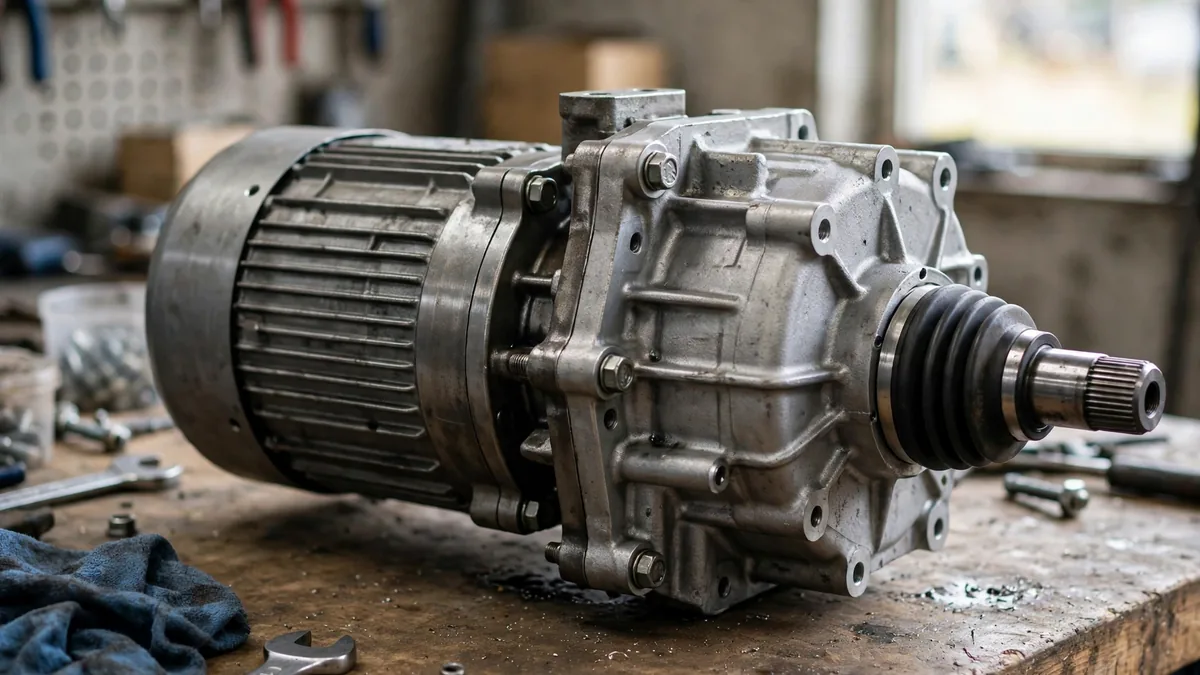
The idea is simple, but the engineering is not. An electric axle packs a motor, a gearbox, and the power electronics into one housing that bolts directly onto the axle it drives. There is no driveshaft and no wasted space, which means the car can be shorter, lighter, and cheaper to build. Carmakers from Tesla to Porsche to Hyundai all use some version of it now, and the differences between their designs are where the real competition happens.
The electric axle is also the reason electric cars accelerate the way they do. An electric motor makes its full torque from a standstill, so there is no waiting for revs to build, and the single-speed gearbox means there is no pause while the car changes gear. Here is how it works.
How It Works
Step 1: Turning electricity into spin
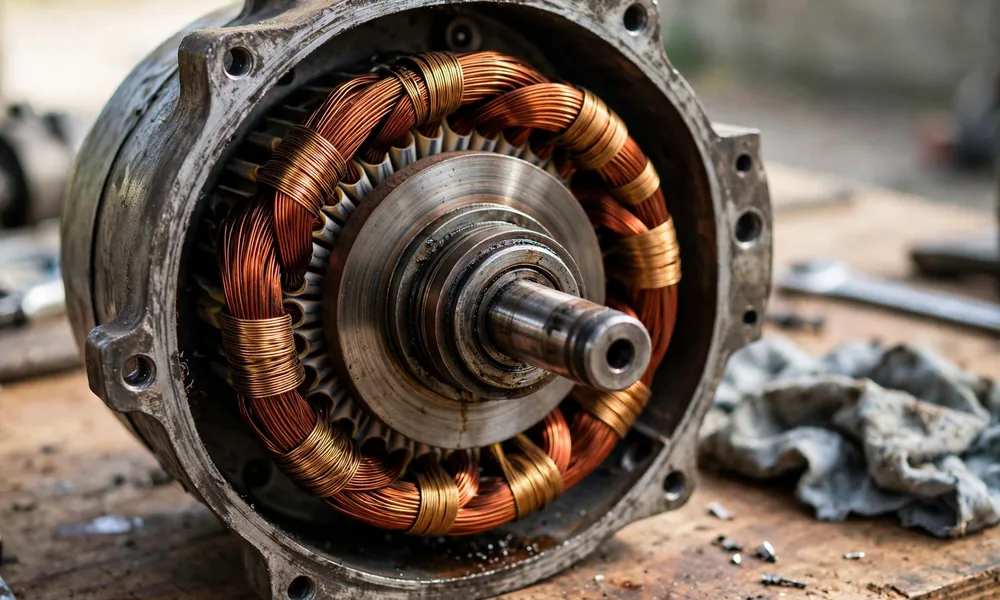
At the heart of the axle sits an electric motor, usually a permanent-magnet synchronous motor, which turns electrical energy into rotation. When current flows through the motor’s coils it creates a magnetic field that pulls the rotor around, and because the rotor is a magnet itself, the pull is strong and instant. The motor can spin to 15,000 revolutions per minute or more, far faster than any petrol engine, and it makes its maximum torque from the moment it starts turning. That is why an electric car can launch so hard from a standstill.
Step 2: Converting the battery’s power
Before the motor can spin, the battery’s direct current must be turned into alternating current, and that job belongs to the inverter, which is built into the same housing. The inverter switches the current on and off thousands of times per second, shaping it into the smooth waves the motor needs, and it also controls how much power the motor receives. Press the accelerator gently and the inverter delivers a trickle; floor it and the inverter opens the taps. Modern inverters use silicon carbide semiconductors, which waste less energy as heat than older silicon parts. The principles are the same ones explored in how an EV inverter works.
Step 3: Gearing the speed down
An electric motor spins far too fast to drive a wheel directly, so the axle includes a single-speed reduction gearbox that slows the motor down and multiplies its torque. A typical ratio is around nine to one, which means the motor turns nine times for every turn of the wheel, and the wheel gets nine times the motor’s torque in return. There is no need for multiple gears, because an electric motor works well across a huge speed range, from crawling in traffic to cruising at motorway speed. The gears are bathed in oil, which cools and lubricates them.
Step 4: Splitting power between the wheels
From the gearbox, the power goes to the wheels through a differential, which lets the left and right wheels turn at different speeds when the car goes around a corner. In many electric axles the differential is a compact unit inside the same housing, while some cars use two motors, one for each wheel, and skip the differential entirely. Two-motor axles can send different amounts of power to each wheel, which helps the car turn and keeps it stable on slippery roads. That torque-vectoring ability is one of the biggest advantages of electric drive, and it is managed by software that reacts far faster than any mechanical system could.
Step 5: Keeping everything cool
All of this work generates heat, and heat is the enemy of efficiency, so the axle is cooled by oil that circulates through the motor and the gearbox. The oil picks up heat from the copper windings, which are the hottest part of the motor, and carries it to a heat exchanger connected to the car’s cooling system. Some designs spray oil directly onto the windings for faster cooling, which lets the motor deliver full power for longer without overheating. The windings themselves are wound from hairpin-shaped copper bars, a design explained in EV motor winding specs explained.
Step 6: Recovering energy when you slow down
Finally, the electric axle works in reverse. When the driver lifts off the accelerator or presses the brake, the motor becomes a generator, turning the car’s motion back into electricity and feeding it into the battery. This is regenerative braking, and it can recover a large share of the energy that a petrol car would waste as heat in its brakes. The driver can often adjust how strong the regeneration feels, from a gentle coast to a firm slowdown that brings the car almost to a stop. The same compact, integrated thinking appears in smaller vehicles too, as shown in how an e-bike mid-drive motor works, where one unit also does several jobs at once.
EV Electric Axle Specs
| Specification | Typical range |
|---|---|
| Motor type | Permanent-magnet synchronous, sometimes induction |
| Motor speed | Up to about 15,000 to 20,000 rpm |
| Power output | About 150 to 300 kilowatts per axle |
| Gear ratio | Single-speed reduction, about 8 to 10 to 1 |
| Inverter | Silicon carbide, integrated into the housing |
| Cooling | Oil circulation, sometimes direct winding spray |
| Efficiency | About 90 percent or more from battery to wheel |
| Unit weight | About 90 to 150 kilograms complete |
| Regeneration | Recovers energy under braking to the battery |
What Does an EV Axle Cost?
An electric axle is never sold on its own to drivers, so there is no showroom price. As a component, a complete e-axle unit is estimated to cost a carmaker roughly $3,000 to $8,000 depending on power and materials, and that figure is falling as production scales up. Prices are estimates only. For drivers, the number that matters is the price of the car around it: electric cars using e-axles are estimated to start from around $35,000 to $45,000, and the axle is a large part of why those cars are now cheaper to build than they were five years ago.
A Rare Fact
The first mass-market electric axle was so compact that engineers could fit the entire drivetrain of a car into the space once occupied by a single petrol gearbox. On some cars the whole unit, motor, inverter, and gearbox together, weighs less than the gearbox of a comparable petrol car on its own. That packaging is what lets electric cars have a flat floor, a front boot, and a cabin as roomy as a car from the class above, and it is the quiet reason electric cars feel so spacious inside.
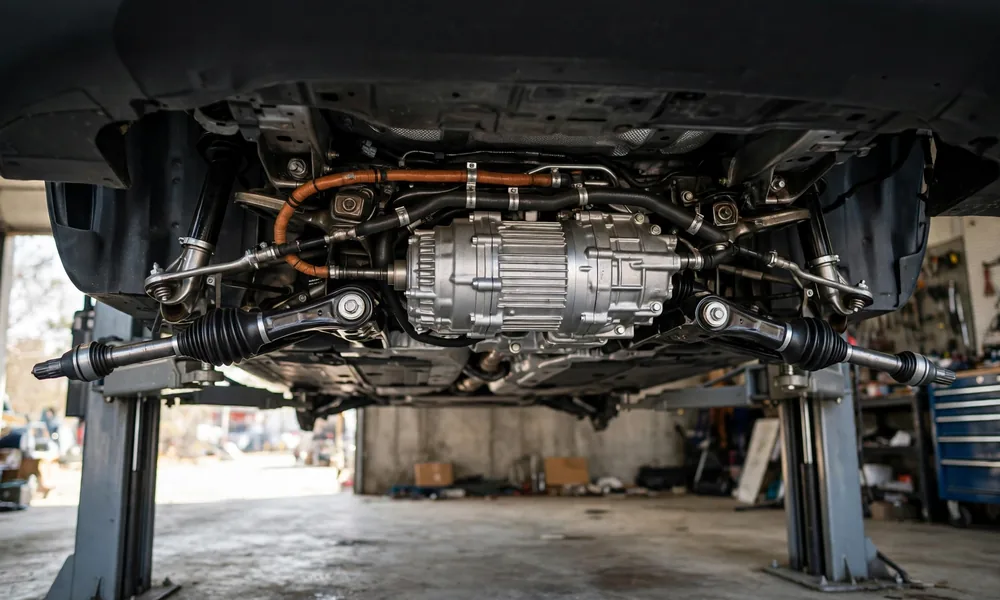
The electric axle is easy to overlook, because it is hidden under the car and has no sound to announce itself. But it is the part that turned the electric car from a curiosity into the default. One unit, three jobs, no noise — and the whole future of driving bolted to the axle.


