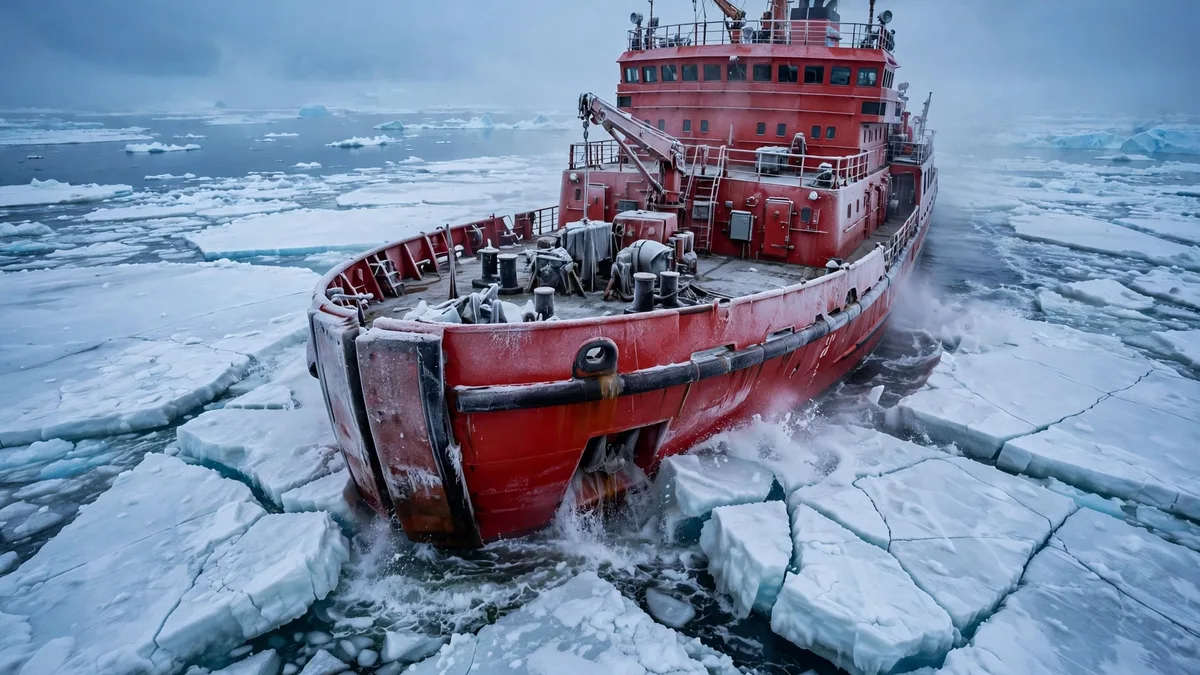
There is a sound that only icebreakers make: a long, grinding crack, then a deep boom that runs through the whole ship, then silence as a slab of ice the size of a car park slides away to either side. The ship has not sailed around the ice. It has climbed onto it and broken it with its own weight, and the only thing between the crew and the frozen sea is the hull — a curved shell of steel so thick, so carefully shaped, and so heavily reinforced that it treats two metres of solid ice as a minor inconvenience.
Icebreaker hulls are not just thicker versions of ordinary ship hulls. Their shape is different — spoon-like at the bow, sloping so the ship rides up onto the ice instead of smashing into it. Their steel is different — grades that stay tough at minus 50 degrees, where ordinary steel turns brittle as glass. And their structure is different — frames packed close together, an ice belt of extra-thick plating, and a double hull that can take a puncture and keep the ship afloat. Building one is the hardest job in commercial shipbuilding, and it starts long before the first plate is cut.
How It’s Made
Step 1: Designing the icebreaking shape
The design starts with the ice, not the ship. Naval architects model the thickness, strength, and temperature of the ice the ship must break — first-year ice of a metre or two for most commercial icebreakers, multi-year ice of three metres or more for polar research vessels — and then shape the bow to defeat it. An icebreaker’s bow is sloped, typically at 25 to 30 degrees, so the ship slides up onto the ice sheet and its weight presses down until the ice cracks and the slabs are pushed down and aside. Model tests in refrigerated ice tanks refine the shape for months before construction begins. The approach echoes the structural thinking behind modular ship construction, where the ship is conceived as a system of purpose-built sections rather than a single shell.
Step 2: Choosing steel that will not shatter
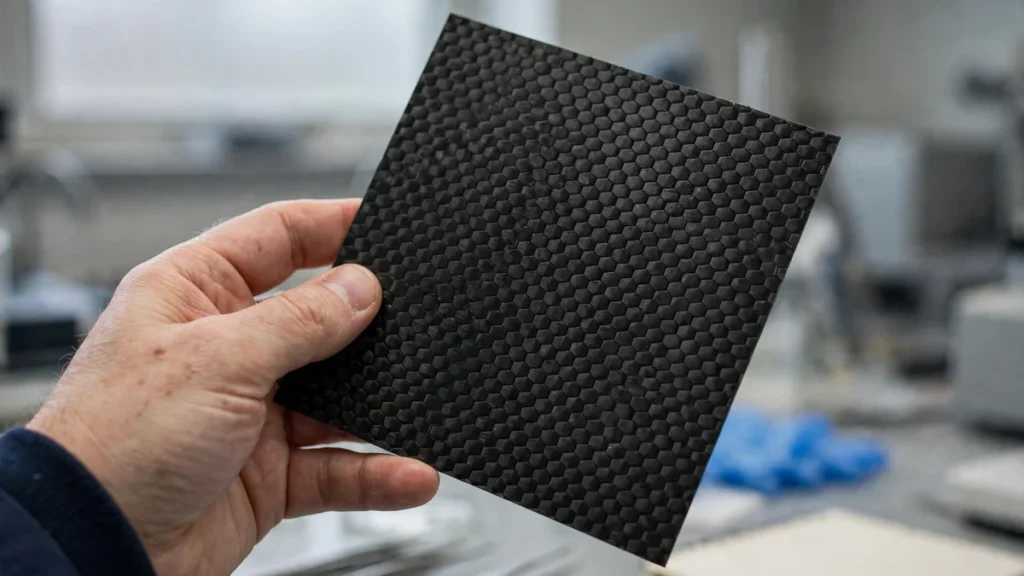
Ordinary ship steel becomes brittle in extreme cold: at minus 40 degrees it can fracture like glass under impact, which is precisely what an icebreaker must never do. Icebreaker hulls are built from high-strength, low-temperature steels — grades such as EH36 and specially developed Arctic steels — with fine grain structure, low sulphur content, and carefully controlled alloying elements like nickel that keep the steel ductile when the thermometer plunges. Every batch is tested with Charpy impact tests at minus 50 degrees Celsius, where a notched sample must absorb a specified amount of energy without shattering. The steel is the ship’s first and last line of defence, and there is no margin for compromise.
Step 3: Cutting and forming the plates
The hull plates, some up to 50 millimetres thick in the ice belt — roughly twice the thickness of an ordinary cargo ship’s plating — are cut by plasma or laser and then formed to the hull’s curves. Thick plate is shaped in huge hydraulic presses and by line heating, where a torch coaxes the metal into shape as it cools, a craft that takes years to learn. The bow sections are the hardest, with compound curves that must match the design exactly: a bow a few centimetres out of shape will ram the ice instead of riding up onto it.
Step 4: Building the ice belt and framing
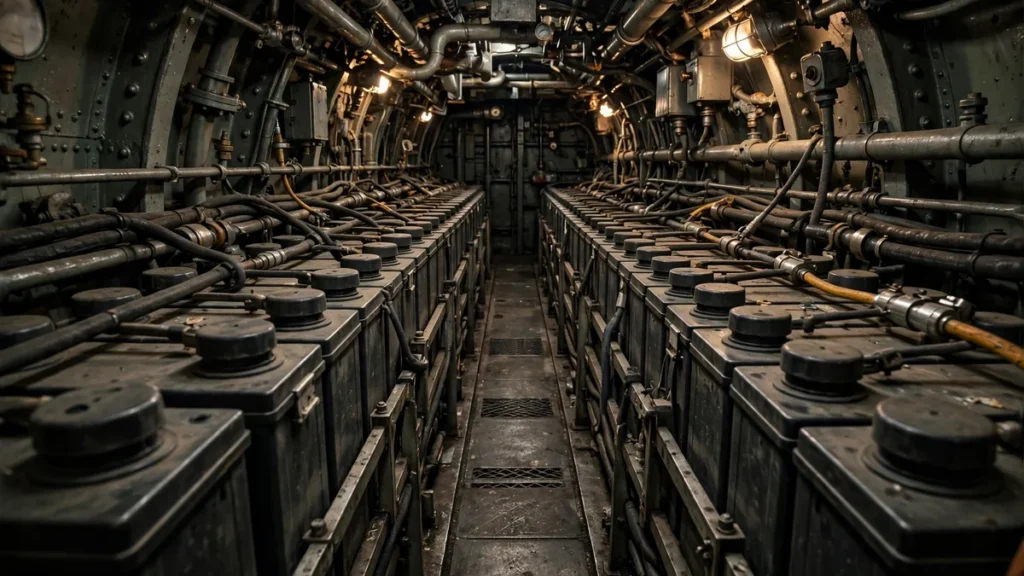
The hull is built in blocks, and the critical zone is the ice belt: the band of plating around the waterline where the ship meets the ice. Here the plating is thickest, and the framing is packed far closer than on an ordinary ship — frame spacing of 400 millimetres or less — with deep web frames and stringers spreading the load of each impact. The welding in this zone is inspected with ultrasound and X-ray, because a weld in the ice belt is the most stressed weld on the ship. The discipline is the same as in a submarine pressure hull, where the weld is the structure and a flaw is not an option.
Step 5: Fitting the ice protection systems
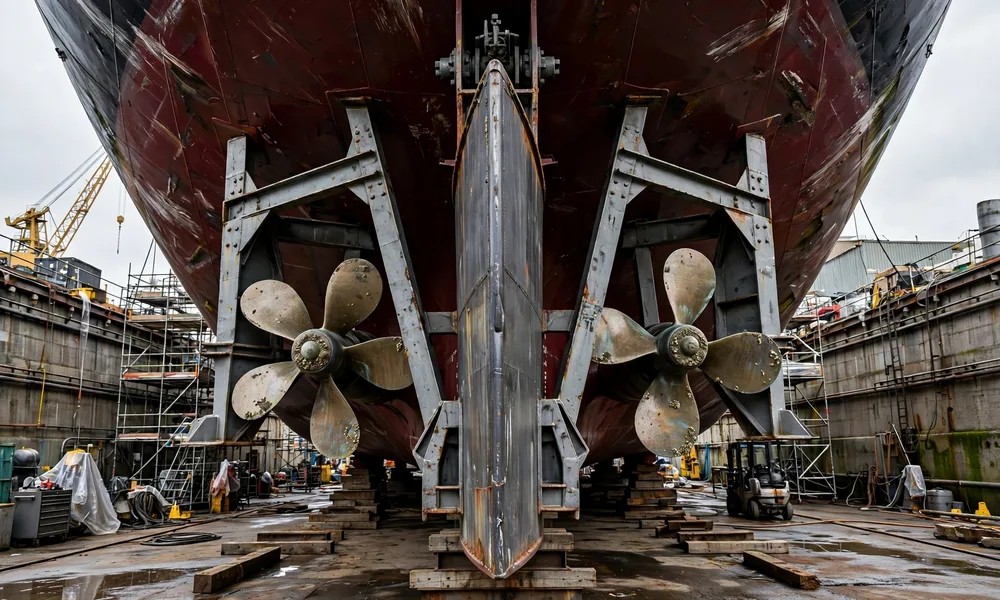
Steel alone is not enough. Icebreakers are fitted with systems to protect the hull and keep it moving: stainless-steel ice belts or low-friction coatings on the bow that let the hull slide over the ice instead of gripping it, and air-bubbling systems that pump compressed air along the hull to lubricate the interface and wash broken ice away from the sides. The propellers and rudders are protected by ice horns — skegs that deflect ice away from the blades — and the propellers are made from high-strength bronze or stainless steel.

Step 6: Assembling the hull in the dry dock
The blocks are craned into the dry dock and joined, one seam at a time, until the full hull stands complete — often weighing thousands of tonnes before a single engine is fitted. Once whole, the hull is coated with specialist ice-resistant paints, including low-friction epoxy on the bow that reduces the force needed to break ice by as much as a fifth. The coatings are applied in climate-controlled conditions, because a coating applied badly in the cold will peel off in the first season, and re-coating an icebreaker means a dry dock and months out of service. The scale of the assembly recalls the heavy steelwork of superyacht steel hull construction, but the icebreaker’s plates are thicker, its frames closer, and its tolerances just as tight.
Step 7: Ice trials
No icebreaker is delivered without ice trials: the ship is taken to real ice — the Baltic in winter, or the Arctic — and driven into it at increasing speeds while engineers measure everything. Strain gauges record the loads and the crew record the speed the ship sustains through ice of a given thickness. If it cannot, the yard goes back to the hull: a different coating, a tweaked bow, a change in trim. Only when the ship has broken ice, backed through its own channel, and freed itself from a deliberate besetting does it earn its ice class notation — the certificate that says, in the language of the classification societies, that this hull can go where other ships cannot.
Specifications
| Property | Typical Polar Icebreaker |
|---|---|
| Length | 100–170 m |
| Ice belt plating | 35–50 mm |
| Hull steel grade | EH36 / Arctic low-temp grades |
| Frame spacing (ice belt) | ~400 mm |
| Icebreaking capability | 2–3 m level ice |
| Bow slope | 25–30° |
| Charpy test temperature | −50°C |
| Hull form | Double hull, ice belt, ice horns |
Price
A polar icebreaker is one of the most expensive ships of its size ever built. A medium icebreaker costs an estimated $300 million to $600 million, while the largest polar icebreakers — such as the Russian Arktika class or the US Coast Guard’s planned Polar Security Cutters — cost an estimated $1 billion to $2 billion each. The low-temperature steel, thick ice belt, and close framing cost far more than an ordinary cargo ship’s hull. All prices here are estimates, not quotes.
Rare Fact
The most powerful icebreaker ever built, Russia’s 50 Let Pobedy, is nuclear-powered and can break ice more than two metres thick without stopping — and its hull is so heavily built that when it was launched, the shipyard had to flood the dry dock with extra care because the vessel displaced more water than the dock’s pumps were designed for.