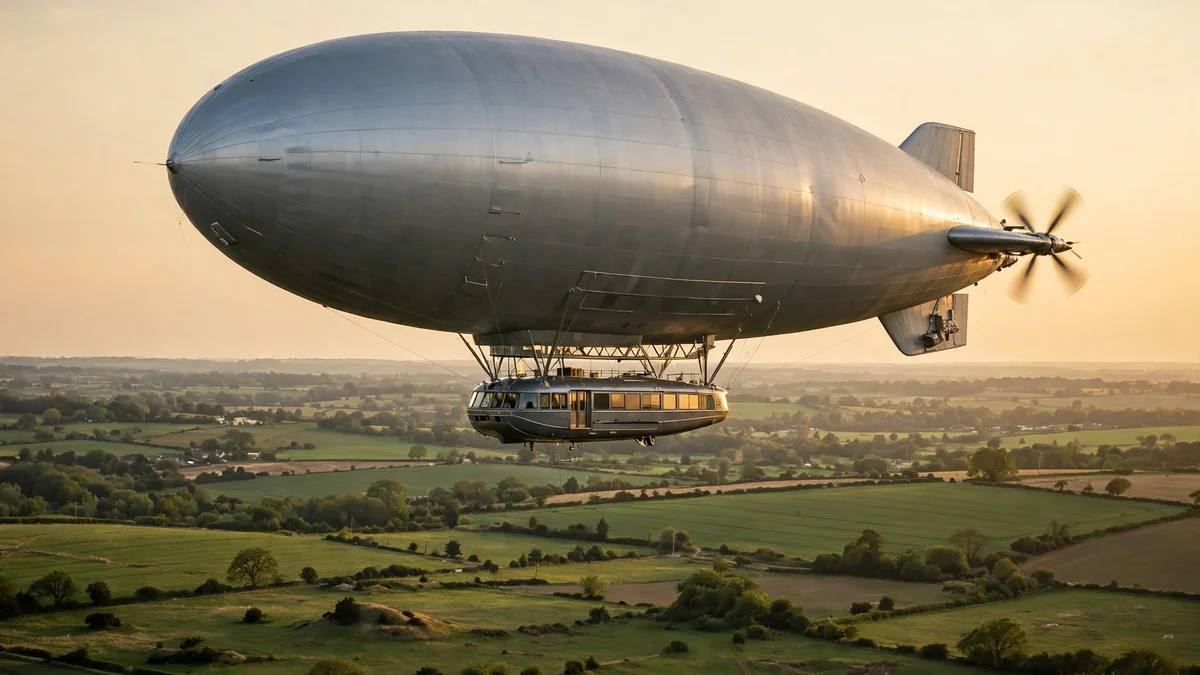
From the ground it looks like a slow, silent whale, drifting across the sky at the pace of a bicycle, its silver skin catching the sun. There is no roar, no trail of smoke, no hurry. Then it turns, almost lazily, and you see the gondola beneath it, the small fins at the tail, and the propellers turning at the back. It is doing something no aeroplane can do: flying without rushing, and staying in the air for days at a time.
A luxury airship is a lighter-than-air aircraft, a great gas-filled envelope with a cabin slung beneath it, built for slow, comfortable travel over land and sea. It needs no runway and no speed, and it can hover over a place for as long as its crew wishes.
How a Luxury Airship Works, Step by Step
Step 1: The gas that lifts it
An airship flies because it is filled with helium, a gas lighter than air, inside a huge envelope of strong, light fabric. The helium pushes the airship up with a force equal to the weight of the air it displaces, so a big enough envelope can lift a cabin, engines, crew and passengers. The envelope is divided into separate gas cells, so a leak in one cell cannot empty the whole airship, and the helium is kept pure and dry, because dirty or damp gas lifts less. The pilot controls lift by adding or releasing air from ballonets, bags inside the envelope that change the total weight without touching the helium.
Step 2: The envelope and the frame
The envelope is the airship’s skin, made from layers of fabric coated to keep helium in and weather out. On a rigid airship, a frame of aluminium girders holds the envelope in shape, like the skeleton of a whale. On a modern non-rigid airship, the pressure of the gas itself holds the shape, and the gondola hangs from it on cables. Either way, the envelope must be strong enough to survive wind, rain and sun, and light enough that the helium can lift it. The fabric is inspected constantly, because a small tear at altitude can become a big one quickly, and the way the whole envelope is put together is described in the guide to how a luxury airship is made.
Step 3: The gondola and the cabin
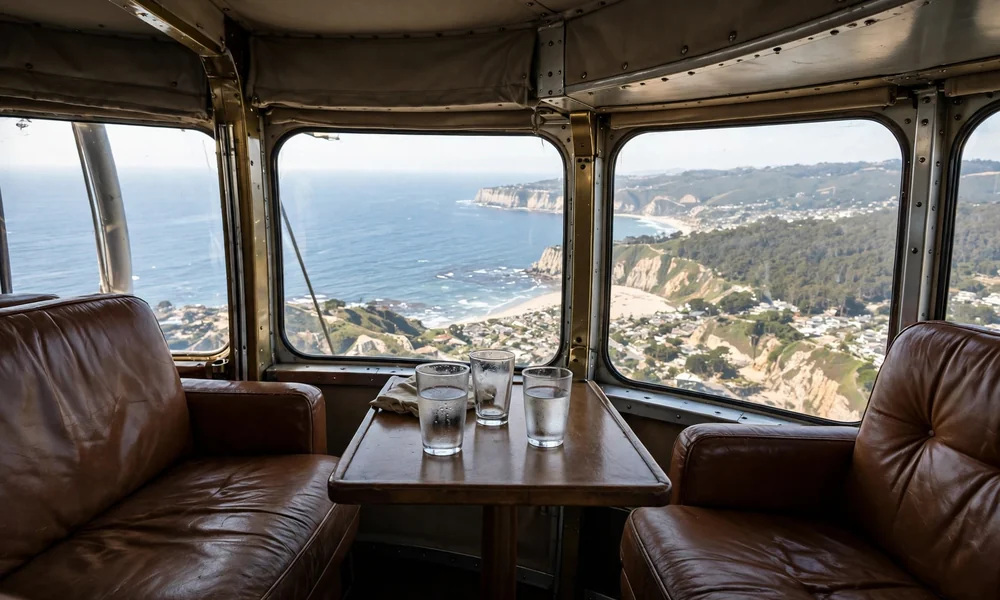
Under the envelope hangs the gondola, the cabin where crew and passengers sit. In a luxury airship the gondola is a small lounge: panoramic windows on all sides, comfortable seats, a dining area and a viewing deck, all finished in wood and leather. The pilot sits at the front, with the controls and the instruments, and the passengers sit behind, watching the world drift past below. The low, slow view from the gondola is the same pleasure that draws people to the water, as the guide to how a luxury seaplane works shows from above a lake. The gondola is attached to the envelope by a strong frame, and it carries the engines on either side.
Step 4: The engines and the propellers
An airship does not need much power, because it is already floating, and its engines are small for an aircraft. Two or four engines are mounted on the gondola, driving propellers that can tilt, so the airship can move forwards, backwards, up or down. The engines are quiet, which is part of the luxury, and they sip fuel, which is why an airship can stay in the air for days. The thrust is modest, but it is enough, because the airship is in no hurry, and the journey is the point. The same quiet-engine thinking appears in other slow, graceful machines, including the luxury sailboat, where the engine is a helper, not the heart of the trip.
Step 5: Steering with fins and thrust
Steering an airship is a slow, gentle business. The tail has fins, like a fish, with rudders and elevators that turn it left and right and up and down. The pilot uses the fins for long, graceful turns, and the tilting propellers for fine control, pushing the airship sideways or holding it steady over one spot. The airship is stable by nature, and a gust that would shake an aeroplane only nudges an airship. The crew watches the weather carefully, because a strong wind is the one thing that can spoil an airship’s day, and they plan their routes around it.
Step 6: Ballast, trim and staying level
An airship is a balancing act, and the crew keeps it level with ballast. Water or sand is carried as weight, dropped or taken on to match the fuel burned and passengers moved. The ballonets inside the envelope are filled with air to make the airship heavier, or emptied to make it lighter, and the crew shifts weight around the gondola to keep the nose level. It is a quiet, constant job, done with valves and pumps, and it lets the airship hover in one place for hours, steady as a building, while the passengers eat dinner and watch the sunset.
Step 7: Landing and mooring
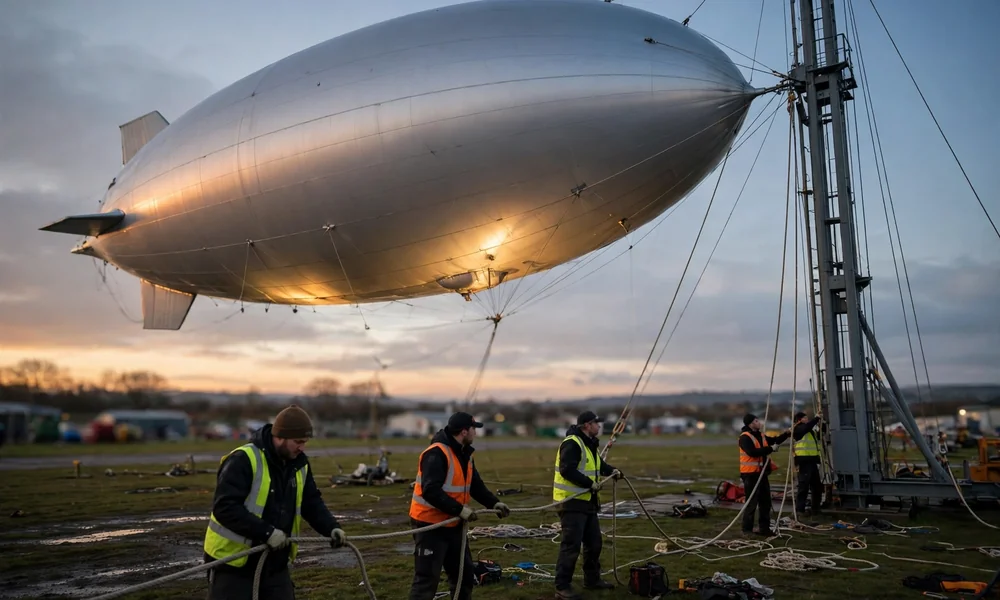
Landing is the most delicate part of the flight. The pilot brings the airship down slowly over a mooring mast, a tall pole with a nose cone the airship’s nose is attached to, and a ground crew of a dozen people catches the handling lines and walks it down to the ground. Once moored, it can be held by the mast overnight, nose into the wind, or walked into a hangar big enough to hold a ship. A smooth landing is a team effort, from the first line thrown down to the last knot tied.
Specifications at a Glance
| Feature | Typical Luxury Airship |
|---|---|
| Length | 75 to 130 metres |
| Envelope volume | 8,000 to 20,000 cubic metres |
| Lifting gas | Helium, in separate cells |
| Passengers | 12 to 20, plus crew |
| Cruising speed | 60 to 100 kilometres per hour |
| Engines | Two to four, with tilting propellers |
| Endurance | Up to 3 days in the air |
| Cabin | Panoramic windows, lounge and dining area |
What a Luxury Airship Costs
As an estimate, a modern luxury airship might cost roughly $20 million to $50 million to build, depending on its size, the finish of the gondola, and its engines and controls. A ticket for a multi-day cruise could cost an estimated $5,000 to $15,000 per person, with meals, a cabin and guided sightseeing included. Those are estimates, and the running costs are high: helium is expensive and must be topped up, the envelope needs regular inspection, and a large ground crew is needed for every landing. For the passengers, the value is in the slowness itself: a journey measured in days, not hours, over scenery no aeroplane ever shows.
A Rare Fact
The largest aircraft ever built were airships, and the most famous, the Hindenburg, was longer than three football fields and carried passengers across the Atlantic in cabins with a dining room, a lounge and a smoking room. The great airships of the 1930s were the luxury liners of the sky, crossing oceans in days, in comfort that aeroplanes of the time could not match. The modern luxury airship descends from those giants, built with helium instead of flammable hydrogen, and with engines and materials the old airships could only dream of. The old giants flew with piano bars and promenades; the new ones fly with panoramic glass and quiet engines, but the idea is the same.
A luxury airship is the slowest way to cross the sky, and the most civilised. It does not fight the air, it floats in it, and the passengers come home with the same memory: days spent drifting over the world, with nowhere to hurry to, and nothing to do but look out of the window.