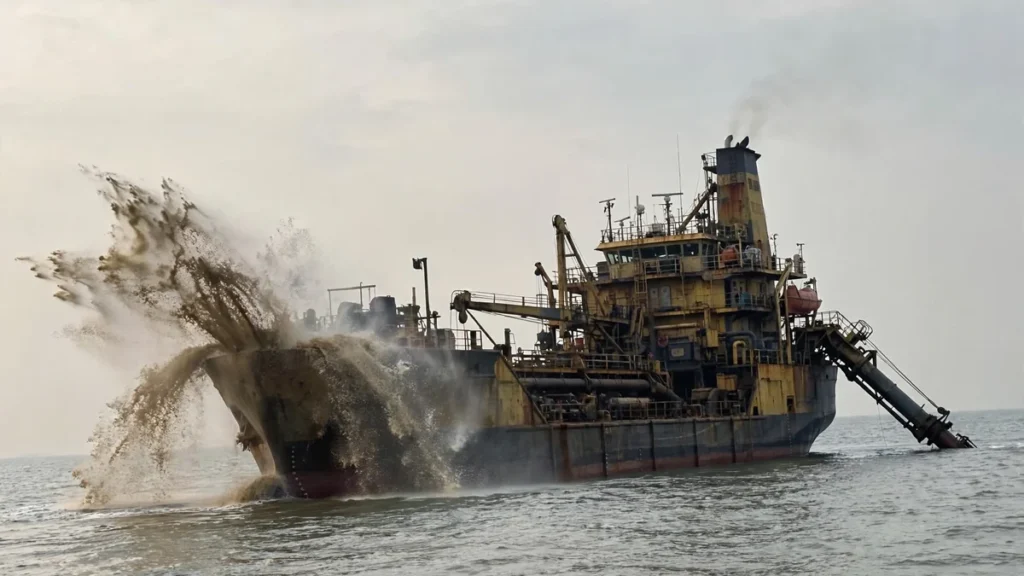
At first light the harbour looks wrong. Where yesterday there was open water, today there is a steel island, grey and angular, with a ladder of buckets descending into the murk and a long plume of brown water pouring from a pipe on its far side. The dredger arrived overnight, and by breakfast she is already reshaping the seabed.
The luxury in a modern dredger is not marble and brass. It is a bridge with a full view of the cutting head, cabins quiet enough to sleep in while the dredge pump roars below, dynamic positioning that holds the vessel still to within a metre in a current, and automation that lets a handful of operators do work that once needed fifty men.

How a Luxury Dredger Is Made
Step 1: Design for the seabed it will eat
Every dredger is designed backwards from the ground it will dig. Soft silt needs a different machine from hard rock, and a harbour that must be deepened by two metres needs a different dredger from a reclamation project that must move millions of cubic metres of sand. The naval architects start with the dredging depth, the soil type and the discharge distance, then size the cutter head, the pumps and the hull around those numbers. The dredging cycle itself, from cut to discharge, is simulated thousands of times before construction, because a dredger that cannot hit its cubic metres per hour is a commercial failure, no matter how well she sails.
Step 2: Building the hull and the dredging ladder
The hull is built from heavy steel plate, thicker than on a cargo ship of the same size, because a dredger’s life is a long argument with the seabed. The keel and frames go up on the building berth, and the shell plating follows, with extra reinforcement around the ladder well where the dredging equipment passes through the hull. The ladder itself is built alongside the ship: a long steel truss, sometimes forty metres long, carrying the cutter head at its far end and the suction pipe along its length.
Step 3: Pumps, pipelines and the heart of the machine
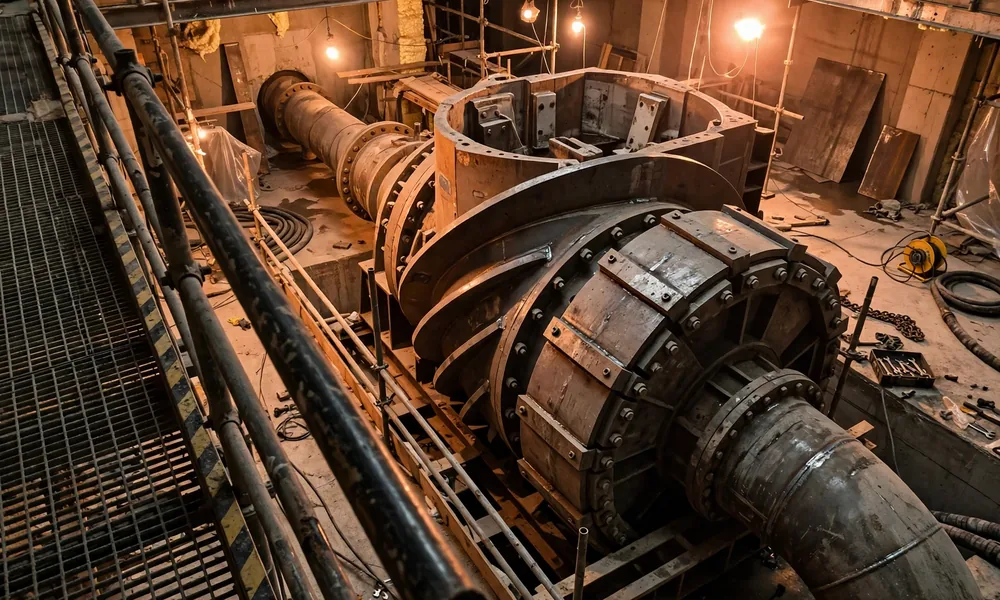
Below deck, the dredger’s real power is installed: the dredge pumps. These are enormous centrifugal pumps, some with impellers two metres across, built to move a slurry of water and sand that would destroy an ordinary pump in hours. The winches that control the ladder and the spuds, the great steel legs that anchor the dredger to the seabed while she works, are installed at the same time. The same hydrodynamic care that shapes a ship bow bulb is applied to the dredger’s underwater fittings, because a hull that drags through the water inefficiently costs fuel on every transit between jobs.
Step 4: Power, positioning and the bridge
A modern luxury dredger is essentially a floating power station. Diesel generators produce the electricity that drives the dredge pumps, the winches, the thrusters and the accommodation, and the total installed power can exceed that of a small town. The accommodation is fitted out far above the old dredger norm: quiet cabins, a proper mess room, a gym and an office, because crews work twelve-hour shifts for weeks and a rested crew dredges more safely. Much of this fitting out is finished in the ship dry dock, where the vessel is stable and accessible for months after launch.
Step 5: Trials, the first cut and handover
Sea trials for a dredger are unlike those for any other ship, because the vessel must be tested at her actual job. After the usual speed, manoeuvring and safety trials, the dredger is taken to a test area and put to work: the ladder is lowered, the cutter head spins up, and the pumps begin moving real seabed material. Only then is the vessel accepted. The river cruise ship may share the same yard and some of the same trades, but no cruise ship is ever tested by digging a hole in the bottom of a harbour. That first cut is the dredger’s true launch, the moment the machine proves it can do the only thing that matters.
Step 6: Working life and constant maintenance
A dredger’s working life is measured in cubic metres moved, and the numbers are staggering: a large cutter suction dredger can move several thousand cubic metres of material an hour, enough to fill an Olympic swimming pool in minutes. Maintenance is relentless, because the slurry wears everything it touches: cutter teeth are replaced daily, pump liners weekly, and the ladder and pipelines are inspected constantly. The luxury of a modern dredger is that this maintenance is designed in, with wear parts that can be swapped quickly and systems that warn the crew before a failure happens. A well-built dredger can work for thirty years, and by the end of her life she will have moved more earth than most civil engineering projects on land.
Luxury Dredger Specifications
| Specification | Typical figure |
|---|---|
| Length overall | 100 to 160 metres |
| Beam | 22 to 30 metres |
| Dredging depth | 25 to 45 metres |
| Cutter power | 2,000 to 7,000 kilowatts |
| Dredge pump capacity | 4,000 to 12,000 cubic metres per hour |
| Total installed power | 15,000 to 30,000 kilowatts |
| Hull steel | Heavy plate, reinforced double bottom |
| Positioning | Dynamic positioning with spuds |
| Crew | 30 to 50 people |
| Build time | 24 to 36 months |
How Much Does a Luxury Dredger Cost?
A luxury dredger is priced by her power and her depth. A mid-size cutter suction dredger with a dredging depth of around 30 metres and a modern automation suite carries an estimated price of $120 million to $180 million. A flagship vessel capable of dredging to 45 metres, with the largest cutter power in her class, dynamic positioning and premium accommodation, is estimated at $220 million to $320 million. Owners pay it because the alternative is worse: without dredgers, ports silt up, channels close, and the ships that carry world trade cannot reach the quays.
A Rare Fact About Luxury Dredgers
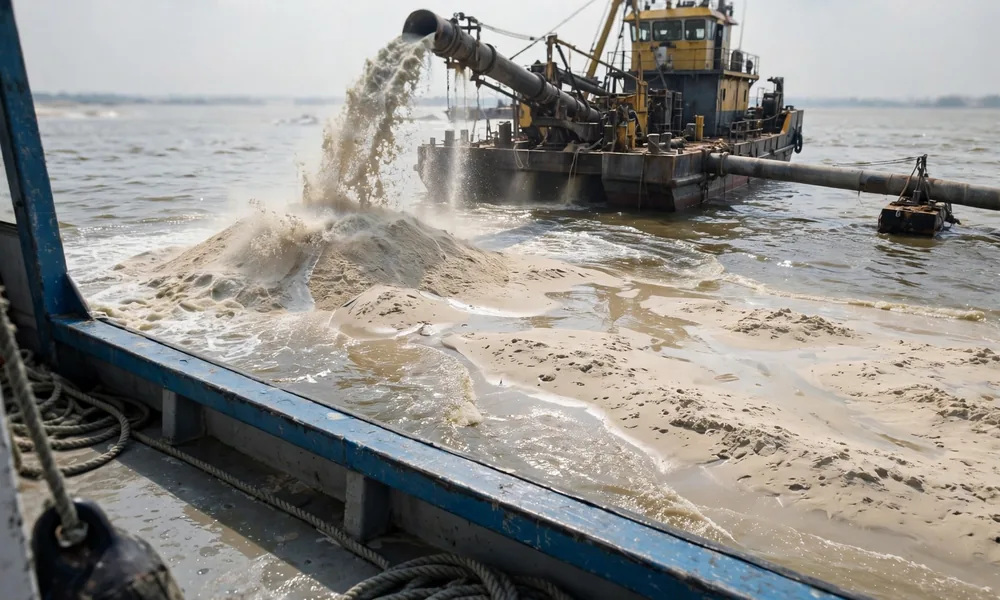
Here is a detail that surprises even sailors: the largest dredgers can build entirely new islands. In land-reclamation projects, a dredger pumps sand through a floating pipeline for kilometres and rains it down onto a marked area of shallow sea, and over months a new island rises from the water, layer by layer, until it is high enough to build on. Some of the world’s most famous new waterfront districts and airport islands began exactly this way, as slurry pouring from a dredger’s discharge pipe. It is the only shipbuilding story in which the vessel’s product is not a cargo or a voyage, but dry land itself.
The luxury dredger will never be the prettiest ship in the harbour, and she will never carry passengers in evening dress. But she is one of the most consequential machines ever built, a vessel that literally reshapes the coastline and keeps the ports of the world open. Her build is a triumph of heavy engineering: a hull armoured against the seabed, pumps that move mountains of sand, and a bridge where a handful of operators command a machine of astonishing power. The next time you walk along a reclaimed waterfront or watch a container ship glide into a deep-water port, spare a thought for the dredger. She was there first, digging the way.