Every great ship, sooner or later, needs to stand on dry land. Hulls foul, propellers bend, paint peels, and the only way to fix the parts that live underwater is to lift the whole ship out of the sea. The place where that happens is the dry dock — a concrete basin big enough to hold a cruise liner, with gates that hold back the ocean and pumps that can empty it in hours. Building one is less like building a building and more like digging a small harbour and then teaching it to be dry on demand.
A dry dock is one of the largest structures a shipyard ever builds. It is civil engineering at ship scale, and it starts with a hole in the ground and a great deal of concrete.
This is how a ship dry dock is made, from the first excavation to the first ship settling onto its blocks.
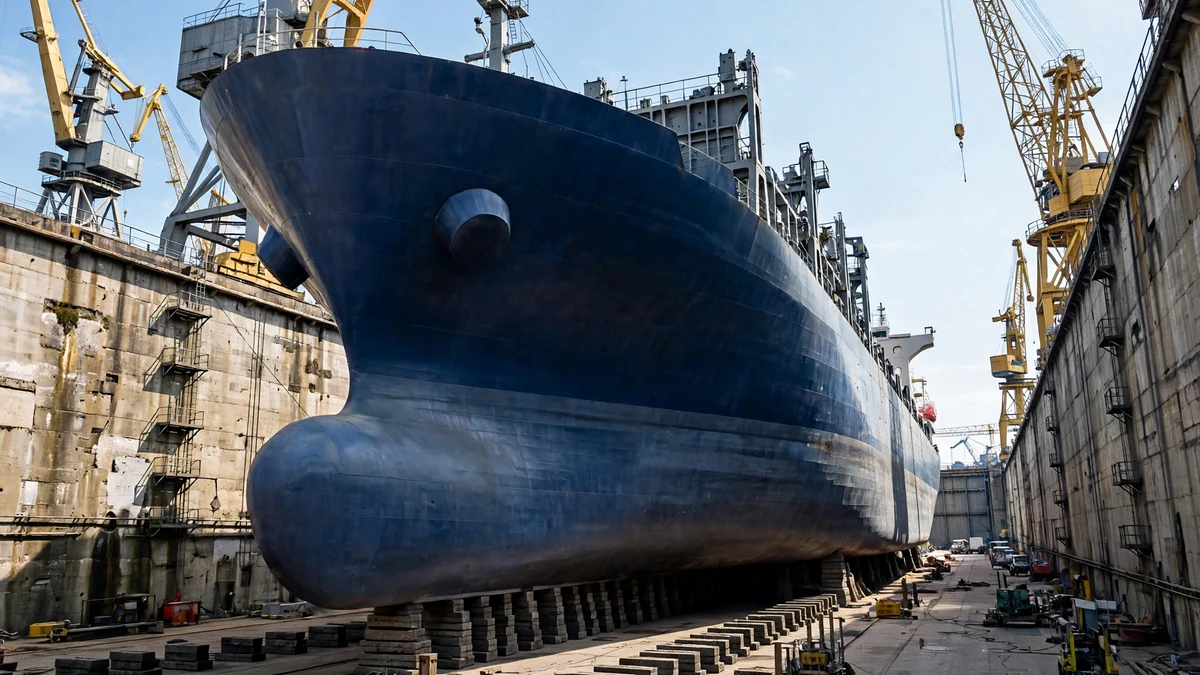
How a Ship Dry Dock Is Made
It starts with the site. A dry dock needs deep water at its entrance, firm ground beneath it, and room for cranes and workshops along its sides. Engineers drill boreholes to learn what lies below — rock, clay, sand, or soft silt — because the ground decides everything that follows. Getting this wrong means a dock that cracks, leaks, or slowly sinks, so the survey work alone can take months.
1. Excavating the basin
Excavation is the biggest earthmoving job most shipyards ever undertake. Diggers, dredgers, and sometimes explosives cut a basin hundreds of metres long and tens of metres deep, working behind a temporary dam or cofferdam that keeps the sea out while they dig. Pumps run day and night to keep groundwater out, and surveyors check the shape constantly, because a basin dug a metre too shallow can never take the ships it was built for.
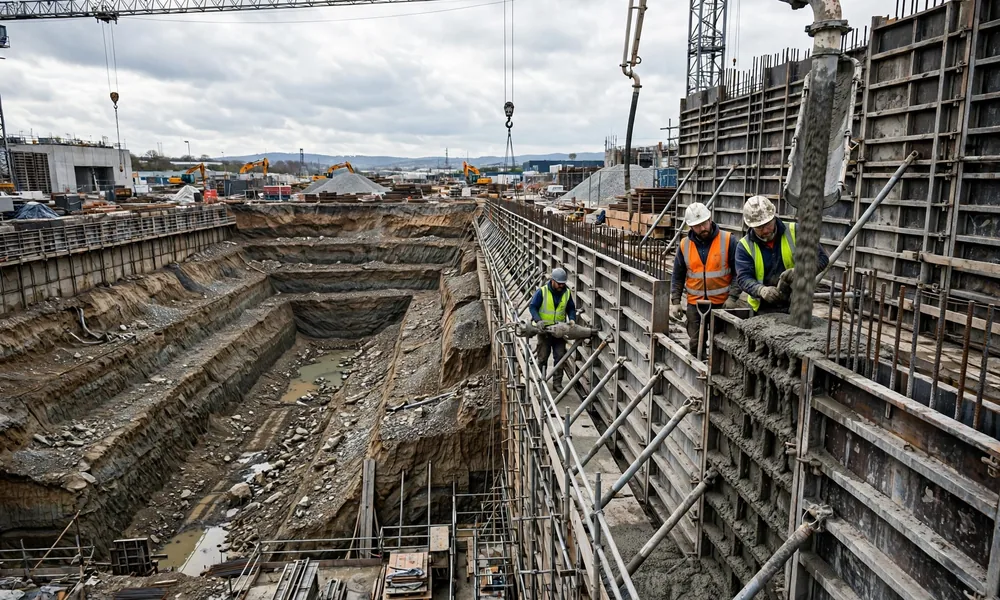
2. Pouring the floor and walls
Once the hole is dug, the concrete work begins. The floor is poured first, often more than a metre thick, reinforced with steel bars and laid in sections so it can expand and contract without cracking. Then the walls rise, poured in lifts of a few metres at a time inside steel formwork, with waterstops — rubber or metal strips — set into every joint to block seepage. The concrete is a special marine mix, dense and low in cracks, because ordinary concrete lets seawater through and the steel inside it would rust. Curing takes weeks.
3. Fitting the keel blocks and side supports
A ship does not sit on the bare concrete floor. It rests on keel blocks — stacks of timber and concrete that run down the centreline of the dock — and on side blocks and shores that hold it upright. The keel blocks are built from hardwood, often oak, capped with softwood that crushes slightly under the ship’s weight and spreads the load evenly. They are set out to match the shape of the ship’s keel, and each block is levelled to within millimetres. A ship lowered onto uneven blocks would bend its hull, so this quiet carpentry is among the most precise work in the whole dock. The care echoes the precision of a container ship hull, where a millimetre out of true shows up at sea.
4. Building the gate
The entrance to the dock is closed by a gate, and the most common type is the caisson — a huge steel box, shaped like a ship’s bow, that floats into place and is then flooded so it sinks onto a sill and seals the dock. The caisson is built in a shipyard like a small vessel, with watertight compartments, pumps, and valves, and its sealing faces are fitted with rubber gaskets and timber rubbing strips. Some docks use flap gates that hinge down, or sliding gates on rails, but the principle is the same: a door as big as a building, that must seal against the sea every single time.
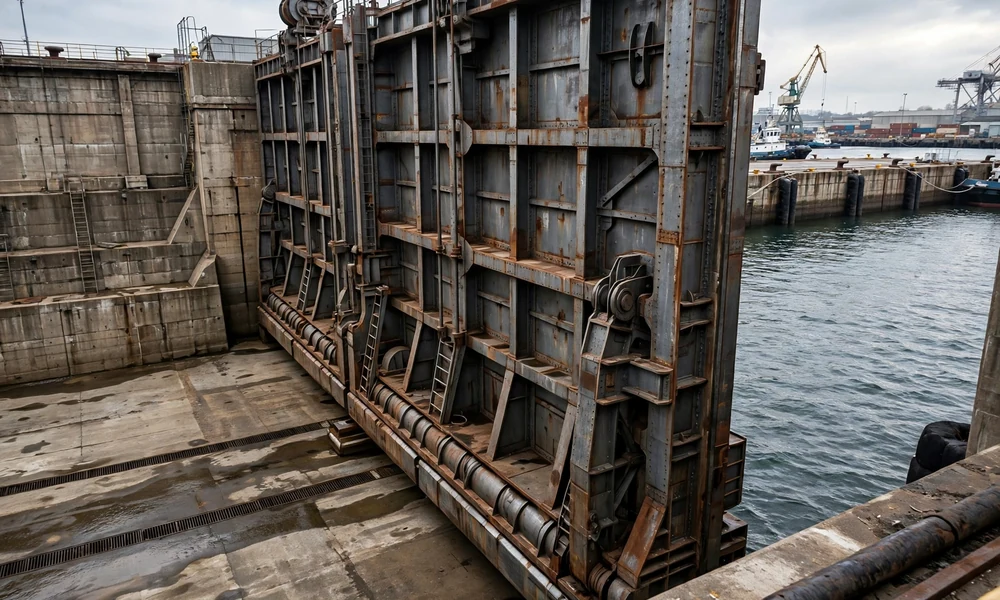
5. Pumps, cranes, and services
A dry dock is useless without its pumps. Great pumps, often several metres across, sit in a pump house beside the dock, and they must empty the whole basin — tens of thousands of tonnes of water — in a few hours, working against the sea pressing in from outside. Along the dock edges run rails for travelling cranes that lift propellers, rudders, and steel plates, plus supplies of compressed air, electricity, and fresh water for the workers below. Stairways and tunnels are built into the walls so crews can reach the dock floor.
6. Flooding, testing, and the first docking
Before any ship enters, the dock is tested. The gate is closed, the pumps are run, and the dock is emptied and refilled while engineers watch every joint and wall for leaks. The pumps are timed, the cranes are load-tested, and the keel blocks are checked one more time. Then comes the first docking: a ship is towed in, lined up over the blocks, and the dock is pumped dry while divers and dockmasters watch the hull settle. It is a slow, tense operation — the ship must come down exactly on its marks — and when it finally rests, level and steady, the dock is in business. The same methodical testing governs a cruise ship engine installation, where the first run is watched by everyone who built it.
Ship Dry Dock Specifications
| Feature | Typical Value |
|---|---|
| Length | 200–500 metres |
| Width | 30–70 metres |
| Depth | 10–15 metres below water level |
| Floor thickness | 1–2 metres of reinforced concrete |
| Gate type | Floating caisson, flap, or sliding gate |
| Pumping time | 2–6 hours to empty the basin |
| Crane capacity | 50–300 tonnes per travelling crane |
| Design life | 50–100 years with maintenance |
Those numbers describe a large commercial dock; smaller docks for fishing boats and yachts are a fraction of the size, and the biggest docks in the world can take ships longer than three football fields. The keel and blocking logic is the same at every scale, and it draws on the same structural thinking as a yacht keel, where the whole weight of the vessel comes down on a narrow line of steel and timber.
What a Ship Dry Dock Costs
A dry dock is one of the most expensive single structures in shipbuilding. As an estimate, a large commercial graving dock can cost from around $100 million to more than $500 million, depending on size, ground conditions, and the cranes and pump systems fitted. Smaller docks cost far less, but even a modest yard dock runs into tens of millions. The money goes mostly into excavation, concrete, and the gate, and into the years of work before a single ship ever enters. It is an investment a yard makes once in a generation, and it pays for itself one docking at a time.
A Rare Fact
Here is a detail that surprises most visitors: the world’s oldest dry dock still in use was built in the eighteenth century, and it works on exactly the same principle as a brand-new one — a basin, a gate, and pumps. The early docks used hand pumps and wooden gates, and emptying one could take days of back-breaking work. Today the pumps do it in hours, but the dockmaster’s job has barely changed: he still walks the floor, checks the blocks by eye, and decides, with a tap of his boot, whether the ship will sit true.