Long before a luxury electric SUV ever turns a wheel, it exists as a lump of clay. In a design studio, modellers shape a full-size clay body by hand, shaving millimetres off a shoulder line here, deepening a curve over the rear wheel there, until the shape looks right from every angle. The clay is scanned, the scan becomes a digital model, and the digital model becomes the car. It is an old craft at the start of a very new machine.
The SUV is the hardest vehicle to make electric and luxurious at the same time. It must be big enough for a family and their luggage, tall enough to see over traffic, quiet enough to feel expensive, and still efficient enough to travel hundreds of miles on a charge. Every part of the car is a compromise between those demands, and the way it is made is a compromise too, between hand finishing and machine precision. This is how a luxury electric SUV is made, from clay to the street.

How It Is Made
Step 1: The design is sculpted in clay
The process begins in the studio, where designers draw hundreds of sketches and build a clay model at full size. The clay is shaped over a wooden frame, and the modellers work with steel tools and their hands, checking the reflections in the surface under strong lights, because a shape that looks good on a screen can look wrong in three dimensions. Once the clay is approved, it is scanned with lasers to a fraction of a millimetre, and the digital surface is handed to the engineers, who must fit a battery, two motors, five seats and a boot into the shape without changing how it looks.
Step 2: The skateboard platform is assembled
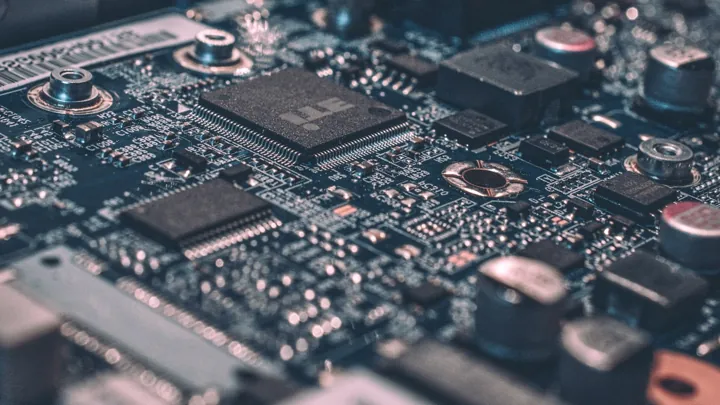
Underneath every modern luxury electric SUV sits a flat platform, often called a skateboard, that carries the battery between the axles and the motors at each end. The battery is built first, in a clean room where cells are stacked into modules and sealed into a crash-proof case with its own cooling system. The motors, suspension and steering are then bolted to the platform, and the whole assembly is tested on its own before a body ever touches it. This is the great advantage of the electric layout: the heavy parts sit low and flat, and the body on top is free to be shaped for people rather than around an engine.
Step 3: The body is stamped and welded
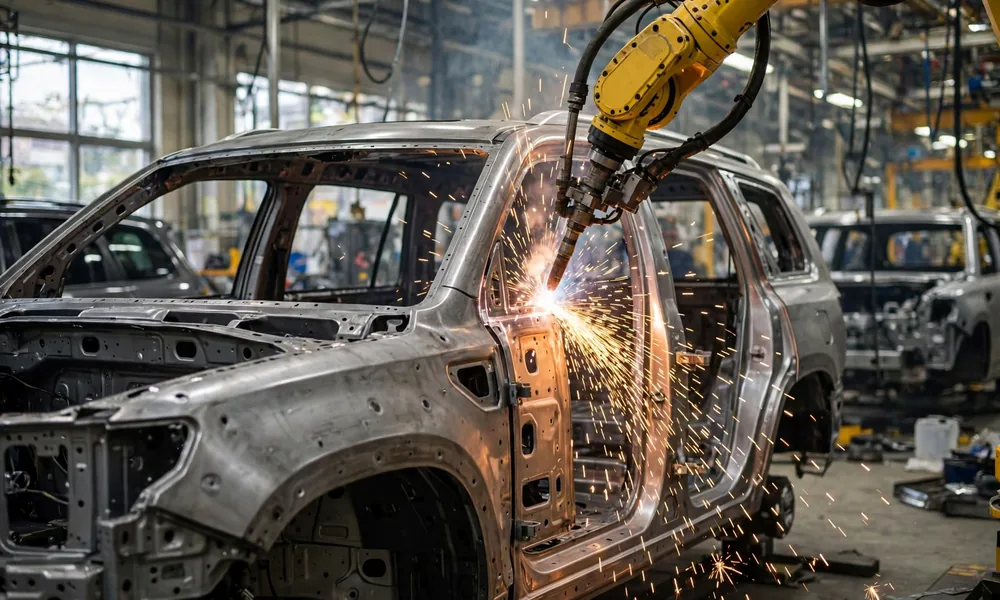
The body panels are stamped from sheets of steel and aluminium in presses that strike with thousands of tonnes of force, shaping a flat sheet into a door or a bonnet in a single blow. Robots then weld the panels together, placing hundreds of spot welds with a precision no human hand could repeat, and lasers check the finished body shell for gaps and alignment. With no engine noise to hide behind, the body gets extra bracing around the doors and roof, then a rust-protection dip.
Step 4: The interior is trimmed by hand
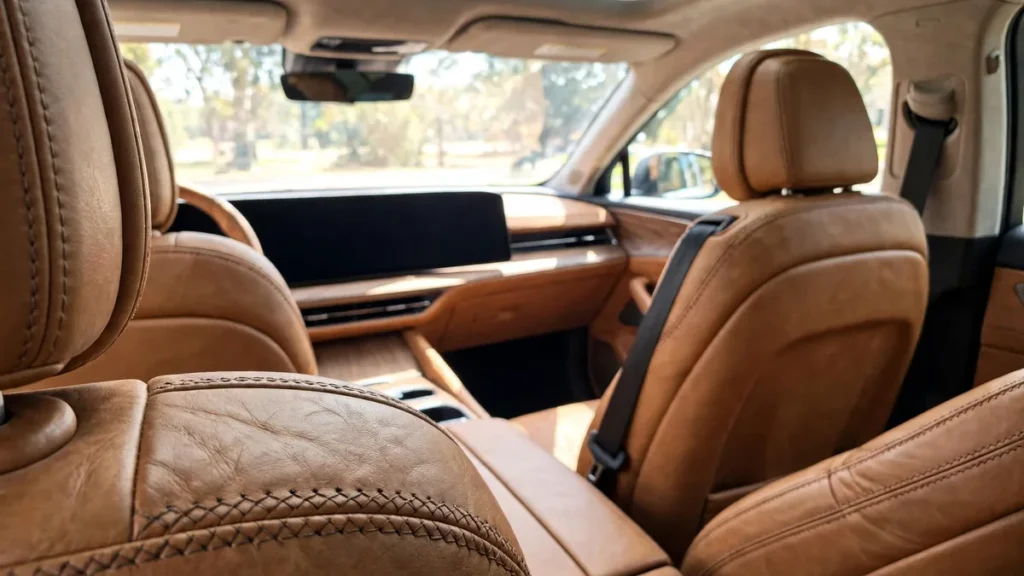
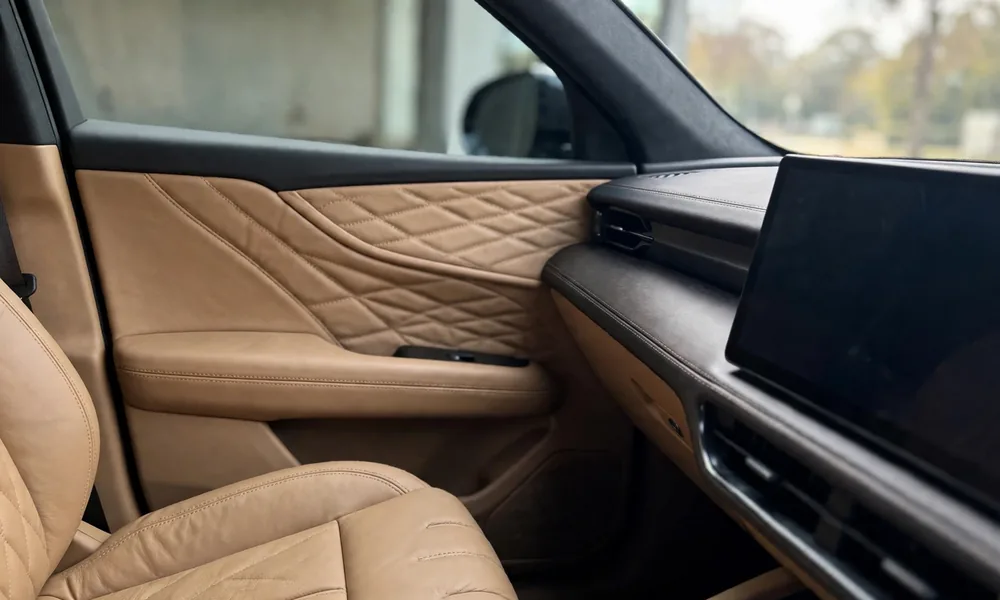
While the body is being painted, the interior is prepared in a separate workshop. Leather hides are inspected, cut by machine and stitched by hand, because the pattern of a seat is too complex to leave entirely to automation. Wood veneers are sliced thin, matched for grain across the dashboard, and polished until they feel like glass. The seats, the dashboard, the screens and the carpets are then fitted into the body as complete units, and a team checks every switch, every stitch and every gap, because the inside of a luxury SUV is where the buyer spends all of their time.
Step 5: The motors and electronics are connected
With the body and interior in place, the high-voltage wiring is connected, linking the battery to the motors, the charger and the climate system. The car is filled with software: the battery manager that watches every cell, the traction control that decides how much power each wheel gets, and the driver-assistance systems that read the road through cameras and radar. Each car is then put through a full electrical test, where every circuit is checked and the software is updated to the latest version, because a luxury electric SUV is as much a computer as it is a car.
Step 6: The SUV is painted, tested and driven
Paint comes late in the process, in a sealed booth where robots spray layer after layer and the body is baked until the finish is deep and hard. Then the car is driven, first on rollers inside the factory and then on a test track, where it is checked for noise, for water leaks and for the way it handles a full load. The suspension is calibrated and the car is inspected under bright lights for the smallest flaw. Only then is it washed, charged and released. From clay to the street, the journey can take months, but the car that emerges is expected to feel new for years.
| Specification | Typical figure |
|---|---|
| Battery | Around 100 to 120 kWh, giving the SUV its range and its weight |
| Range | An estimated 300 to 350 miles on a full charge in normal driving |
| Motors | Two motors, one per axle, for all-wheel drive and instant traction |
| Acceleration | An estimated 0 to 60 mph in about 4 seconds for the quicker models |
| Towing | An estimated 2,500 to 3,500 kg, depending on the model and battery |
| Charging | 800-volt fast charging, adding around 100 miles of range in about ten minutes |
| Seats | Five seats as standard, with seven-seat versions in the larger models |
| Time to make | Months from the first clay model to a finished car, with days on the line |
What One Costs
A luxury electric SUV typically costs an estimated $70,000 to $130,000, and the battery is again the biggest single cost, followed by the interior and the driver-assistance systems. The price is set by the hours of hand finishing, the battery size and the technology in the car. The difference from the way a luxury petrol SUV is made is instructive, because the petrol article is about fitting an engine into a tall body, while this one is about building the car around a flat battery, and how a luxury electric SUV works explains the motors and battery in more detail.
A Rare Fact
Some luxury electric SUVs carry cameras that read the road ahead and tell the air suspension what is coming, so the car can soften itself for a bump before the wheel ever reaches it. The suspension adjusts in milliseconds, raising or lowering each corner on its own, and the result is a ride that feels as if the road has been smoothed out in advance. The car is, in effect, seeing the future and preparing for it, one pothole at a time.
A luxury electric SUV is a machine of contradictions held together: big but efficient, heavy but quick, silent but powerful. It is made that way on purpose, by people who sculpt clay by hand and then bolt a computer to a battery and call it a car. The result can carry a family across a country without a drop of fuel, in a cabin quiet enough for a whisper. For the numbers behind the machine, the luxury electric SUV specs lay out the battery, motors and charging in full.