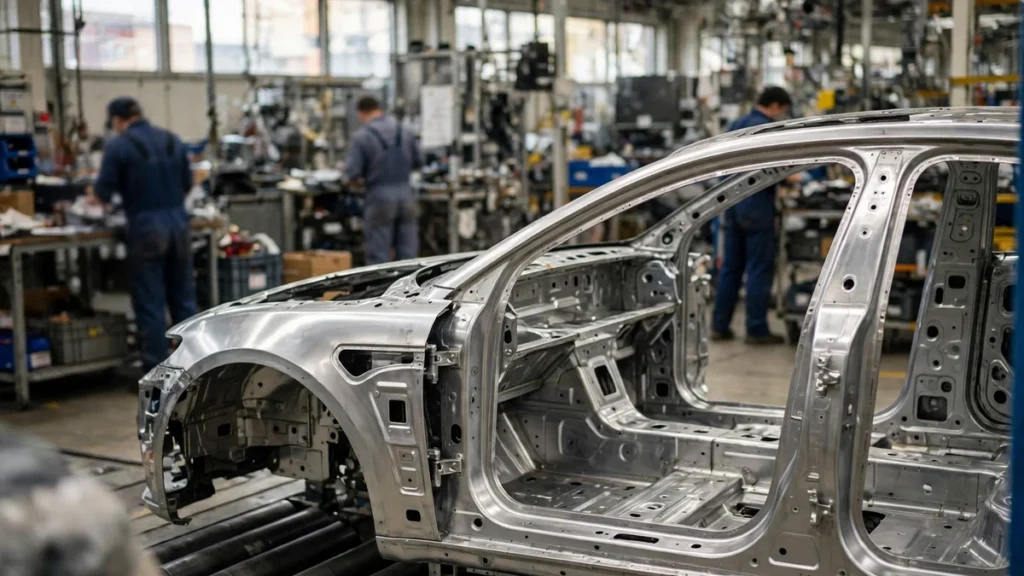
At two in the morning, the factory floor is almost silent. A single carbon tub sits on a low dolly under white light, and a technician in gloves runs a fingertip along its edge, checking a seam no wider than a hair. A luxury electric hypercar is not built the way ordinary cars are built. It is assembled slowly, by a small team, in a room that feels more like a workshop for racing yachts than a car plant — and the car that rolls out of it can out-accelerate almost anything on the road without burning a drop of fuel.
The numbers alone explain the obsession. The quickest electric hypercars now produce close to 2,000 horsepower, reach 60 mph in under two seconds, and carry battery packs bigger than those in most family SUVs. This is how a luxury electric hypercar is made, from bare tub to final sign-off.
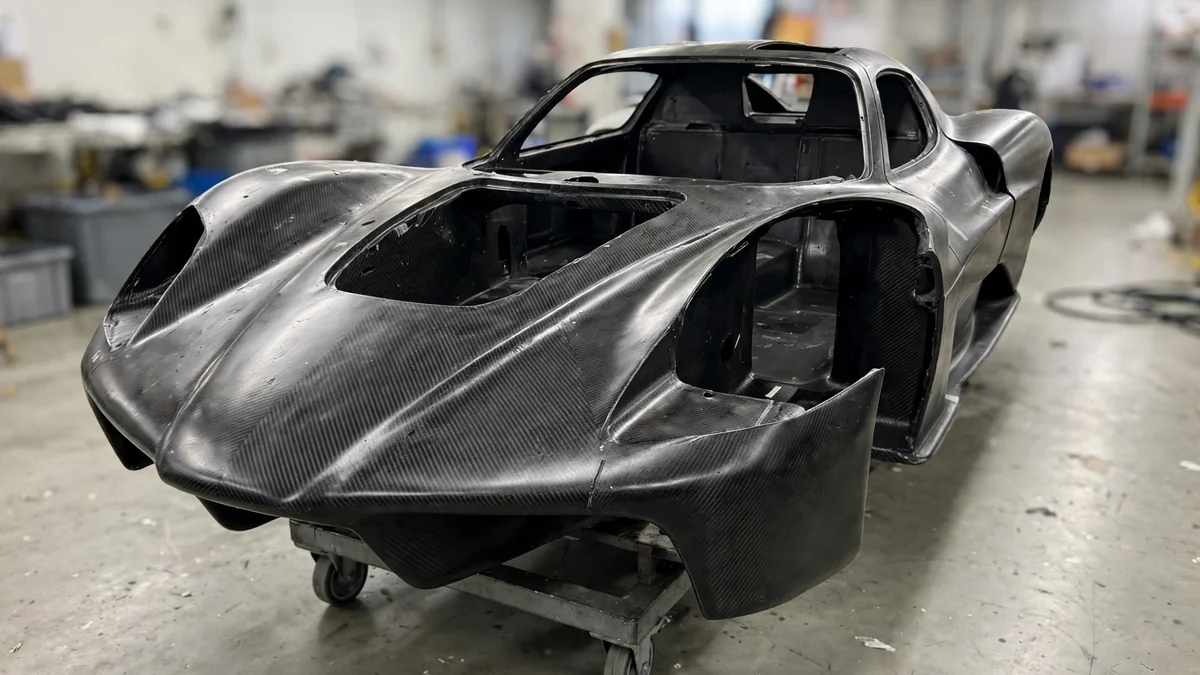
Step 1: The carbon monocoque
Every electric hypercar starts with its spine: a single-piece carbon fibre monocoque. Layers of woven carbon cloth are laid by hand into a mould, each sheet placed at a precise angle so the finished tub is stiff in exactly the directions that matter. Resin is infused under vacuum, and the whole piece is cured in an autoclave — a giant pressurised oven — at temperatures that would melt most plastics.
The result weighs roughly as much as a large dog, yet it is strong enough to protect its occupants in a crash and rigid enough that the suspension can do its work without the body flexing underneath it. Technicians inspect every tub with ultrasound, hunting for voids or delamination invisible to the eye.
Step 2: The battery pack, built like a vault
Where a combustion hypercar hides a fuel tank, an electric hypercar carries its energy in a structural battery pack bolted into the floor of the monocoque. Thousands of cylindrical or pouch cells are grouped into modules, wired together, and sealed inside a crash-proof aluminium and composite case.
Cooling is the hard part. At full throttle, a hypercar battery can dump heat faster than a household kettle boils water, so thin cooling plates snake between the modules, carrying a water-glycol mix to radiators at the front. Each module is tested for voltage, temperature, and insulation before it is allowed near the car. What really goes into an EV battery pack shows how much engineering hides inside a component most drivers never see.
Step 3: Motors at each wheel
Most electric hypercars use one motor per wheel, or one per axle with clever differentials, and each motor is a precision instrument in its own right. Copper windings are wound by machine and finished by hand, rotors are balanced to tolerances measured in microns, and the whole unit is sealed against dust and water. A single motor in a car like this can produce more power than an entire family hatchback.
Four motors mean the car can send a different amount of torque to each wheel many times per second. That is torque vectoring: the car can rotate itself into a corner, catch a slide before the driver feels it, and put power down on a wet road without drama. It is a very different kind of performance from the old hand-built V12s, and the V12 engine, built by hand shows just how far the craft has travelled.

Step 4: Chassis, suspension, and brakes
With the tub, battery, and motors in place, the car becomes a rolling chassis. Pushrod suspension, borrowed from racing, connects the wheels to the tub through machined aluminium rockers. Dampers are set by hand for each car, and the ride height is measured with lasers.
Stopping that mass falls to carbon-ceramic brakes, discs the size of dinner plates gripped by multi-piston calipers. Regenerative braking does much of the everyday work, turning the motors into generators to slow the car and feed energy back to the battery, but the friction brakes are there for the moments that matter. Why carbon-ceramic brakes cost more than a car explains the exotic materials behind them.
Step 5: The aerodynamic body
The body panels are carbon fibre too, cured in the same autoclaves and trimmed by hand. Every vent, duct, and wing is shaped in a wind tunnel, and the final bodywork is a compromise between beauty and physics: air is channelled through the front, over the floor, and out through a rear diffuser, pressing the car into the road as speed rises. Some cars generate more downforce than their own weight at top speed.
Active aero adds another layer. Flaps and wings move on their own, flattening for straight-line speed and tilting up under braking like an airbrake.
Step 6: The interior, trimmed by hand
Inside, the car is trimmed like a piece of luggage. Leather is cut from hides inspected for a single blemish, stitched by craftspeople who work on one car at a time, and fitted over seats that are often moulded to the buyer’s body. Screens replace most switches, but the few physical controls that remain are machined from aluminium and finished to a standard closer to watchmaking than car-making.
Sound is a deliberate choice. With no engine note to fill the cabin, makers either let the faint whine of the motors speak for itself or tune the cabin with subtle synthetic sound.
Step 7: Testing and the final sign-off
A finished hypercar is not handed over on trust. It spends days on a rolling road, where engineers check every system at full power without moving an inch. Then comes the shakedown: laps of a test track, hard braking, fast charging, and repeated launches, with sensors recording temperatures, vibrations, and voltages across the whole car.
Only when the data is clean does a senior engineer sign the build sheet — often by hand — and the car is washed, photographed, and prepared for its owner. From first carbon sheet to final signature, the process can take months, and only a handful of cars leave the factory each year.

Typical specifications
| Specification | Typical figure |
|---|---|
| Power output | 1,500–2,000 horsepower |
| 0–60 mph | Under 2 seconds |
| Battery capacity | 100–120 kWh |
| Top speed | 220–260 mph |
| Motors | Three or four, one per wheel or axle |
| Chassis | Carbon fibre monocoque |
| Kerb weight | 1,900–2,300 kg |
| Range | 250–350 miles (estimate) |
What does one cost?
A luxury electric hypercar typically costs an estimated $2 million to $3 million before options, with the most exclusive limited runs reaching higher still. That price reflects the hand-built carbon tub, the huge battery, four motors, and the months of labour — not to mention the years of development behind a car that may only ever exist in the dozens. All prices here are estimates, and they vary widely with specification and production numbers.
A rare fact
Some electric hypercars can charge so quickly that a ten-minute stop at a high-power charger adds more range than most petrol cars gain from a full tank of fuel in the same time. The fastest cars on the planet, built a few at a time, in rooms quiet enough to hear a fingertip on carbon.