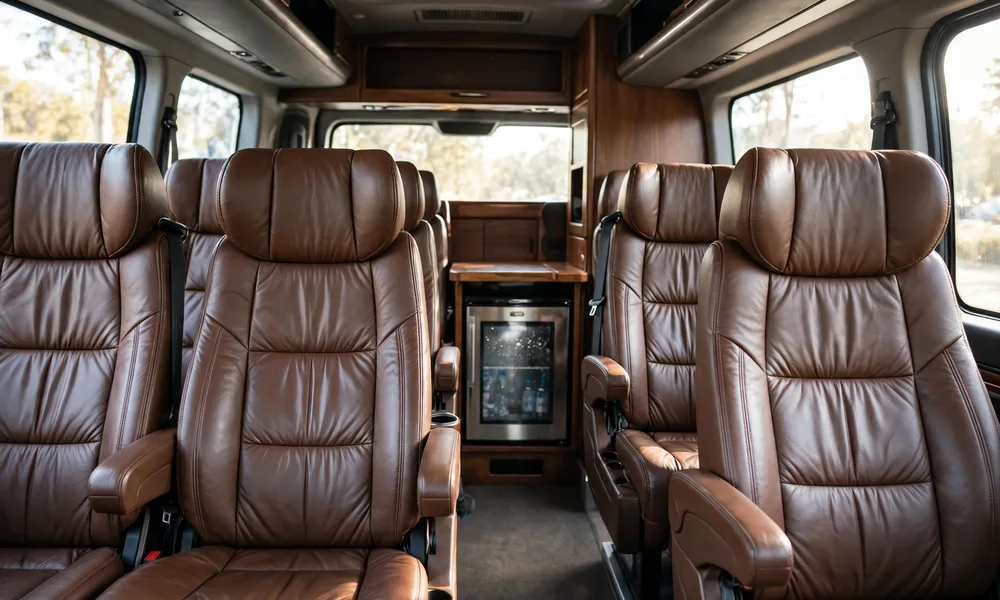
The minibus pulled up outside the boutique hotel at seven in the morning, and the eight guests who stepped out did not look like people who had just spent an hour in a van. They looked rested, uncreased and unhurried, as if they had been sitting in a lounge rather than a vehicle. The driver opened the sliding door, and inside were eight wide leather chairs, a small fridge, a coffee machine and a floor so quiet you could hear the air conditioning. From the outside it was a van with tinted windows. Inside, it was a private lounge that happened to have wheels, and it had cost more than the hotel suite the guests were about to check into.
A luxury minibus is a small shuttle with a large job: moving a handful of people in first-class comfort, on short runs, all day, every day. Here are seven reasons why it costs so much.

1. The body: a van shell, rebuilt for eight people, not fourteen
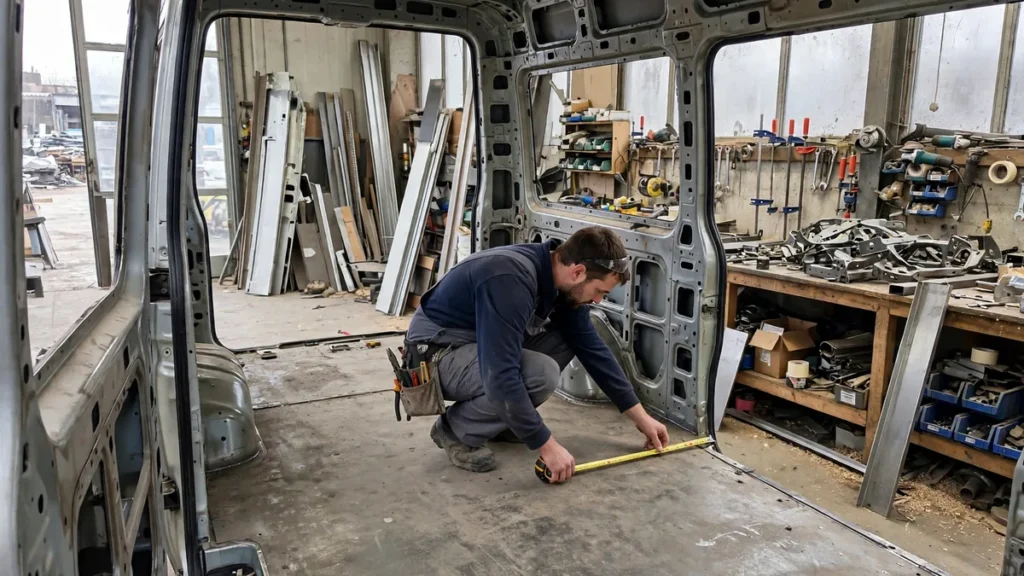
A normal minibus is built to carry fourteen or more people as cheaply as possible, with thin seats, hard floors and windows that rattle. A luxury minibus starts with a similar van shell and throws away the capacity. Instead of fourteen seats, it carries eight, and the space saved becomes legroom, wider chairs, a small lounge and a fridge. The shell is strengthened and soundproofed, the floor is raised and carpeted, and the roof is lined, so the inside feels like a room rather than a vehicle. The difference from a larger luxury coach is the scale: everything has to fit into a van, which means every centimetre is fought over, and every fitting is made to order. A minibus that carries eight people in first-class comfort is a harder design problem than a coach that carries twenty-four, because there is nowhere to hide a compromise. The minivan, the minibus’s closest cousin, shows the same logic at an even smaller scale, as set out in how a luxury minivan works, where a family car becomes a lounge one panel at a time.
2. The seats: eight first-class chairs, and nothing else
Each seat in a luxury minibus is closer to a first-class airline seat than to a van seat. It is wide, it reclines deeply, it has a leg rest, a heater, and sometimes a massage function, and it is trimmed in leather that is cut and stitched by hand. There is a personal reading light, a power socket and a small table, and the seats are spaced far enough apart that a tall passenger can stand up without disturbing anyone. The shuttle difference is time: a minibus passenger sits for an hour or two, but the seat has to feel first-class from the first minute, because the journey is the product. A hotel shuttle that feels like a van loses the booking, and a corporate shuttle that feels cheap loses the contract. The figures behind a smaller luxury vehicle are set out in the luxury minivan spec guide, where seat size and legroom are only the beginning of the story.
3. The interior: a lounge, a fridge and a desk, in a van
Past the seats, the minibus becomes a small lounge. The work takes weeks, and it is done by coachbuilders, not by a factory line, which is why it costs so much. The double-decker buses that share this interior problem are covered in how a luxury double-decker bus works, where the same lounge logic appears at a much larger scale.
4. The ride: silence and smoothness in a small vehicle
A van at motorway speed is a noisy, shaking place unless a great deal of work has gone into stopping it being one. The test is simple: if you can hold a normal conversation in the back row at full speed, the money was well spent. The air suspension is inspected and serviced regularly, because a minibus that leans on a corner is a minibus that frightens its passengers, and frightened passengers do not book the next shuttle.
5. The systems: power, air and water for a day of shuttling
Eight people, each charging a phone and a laptop, with screens, lights, a fridge and air conditioning running, need far more power than a standard van can supply. All of these systems are fitted by hand, and they are fitted into a space that was never designed for them, which means every cable, every pipe and every bracket is made to order.
6. The economics: a shuttle earns by the booking, not by the seat
A luxury minibus is a business, and its price reflects how that business works. A normal minibus earns money by the seat, running school runs and airport transfers, and it is busy most days. The minibus itself is built in small numbers, because few operators buy them, and small numbers mean hand work, long lead times and expensive parts. The price of the minibus is the price of a vehicle that has to earn its keep in a short season, in a market where there are few buyers and fewer builders.
7. The reliability: a shuttle that must not let a wedding down
The last reason is the one no brochure mentions: a luxury minibus must not break down. A normal minibus that fails can send another minibus, and the passengers are home by dinner. So the minibus is built with redundancy: a heavy-duty cooling system, a larger alternator, and a drivetrain chosen for durability rather than for speed. The minibus carries spares, tools and a diagnostic system the driver can use on the roadside, and it is serviced between every season, not between every year.
Price: what a minibus costs, as an estimate
A new luxury minibus typically costs an estimated $150,000 to $400,000, depending on seating, fit-out and chassis, and that estimate is only the beginning. The seats, the glass, the fridge and the power systems are most of it, and the running costs, the driver and the servicing, arrive every booking. The price is not for the engine or the wheels, which are the same as any van. It is for a vehicle that has to be a lounge, an office and a first-class cabin, for eight people, all day, without a day off.
A rare fact worth knowing
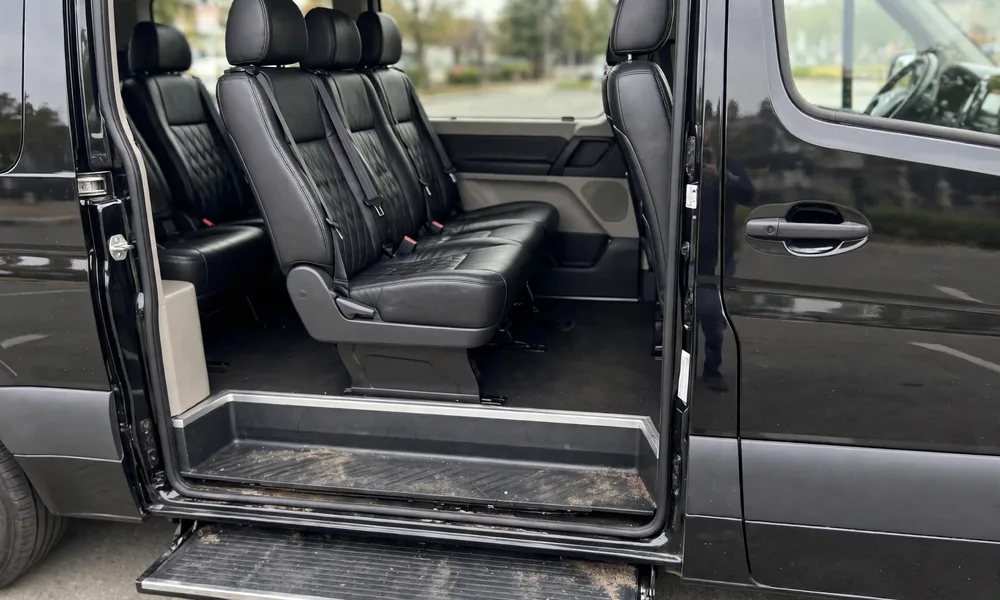
Here is the detail most passengers never notice: on the best luxury minibuses, the sliding door is the most expensive single fitting on the vehicle, after the seats. It is a powered, soft-closing door with its own motor, sensors and seals, because the door is opened and closed dozens of times a day, by guests who never think about it, and a door that slams, sticks or leaks is the first thing a passenger notices.
A luxury minibus costs so much because shuttling asks more of a vehicle than carrying does. That is what the price buys.