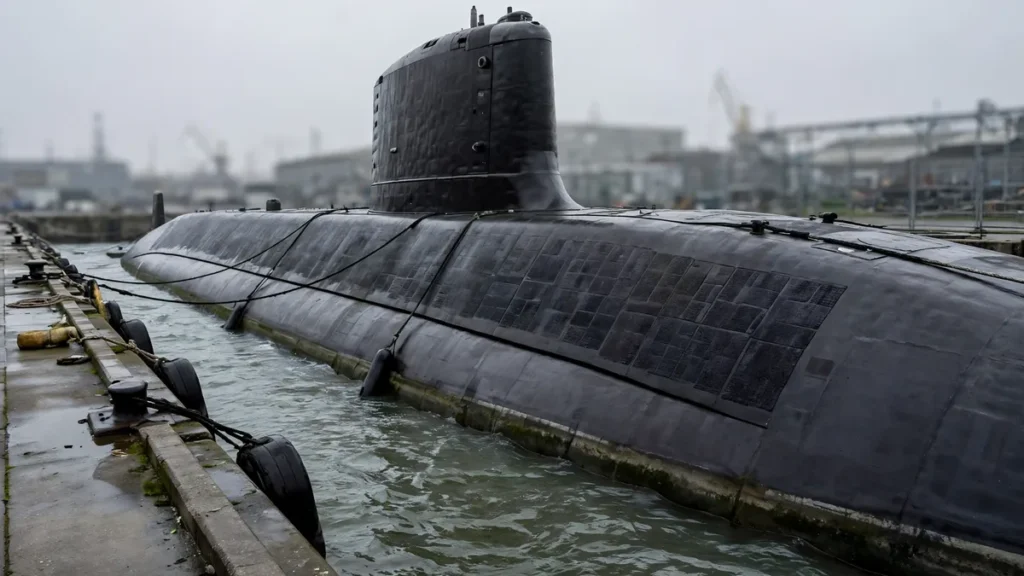
A research submarine works in a world without daylight. A few hundred metres down, sunlight has faded to nothing, and the cameras that work so well near the surface see only black water. What it can do is listen, and send out sound and listen for what comes back. That is what sonar is, and on a research submarine it is the main sense the boat has: its eyes, its map-maker and its wildlife tracker, all in one system.
Sonar stands for sound navigation and ranging. Sound travels through seawater far better than light does, roughly four and a half times faster than it travels through air, at about 1,500 metres per second. A research submarine uses that fact in two ways. It can send out a pulse of sound and time how long the echo takes to return, which tells it how far away things are. Or it can simply listen, picking up the sounds the ocean makes on its own. The rest of the boat is built around keeping those ears working, as explained in our guide to how a research submarine works.
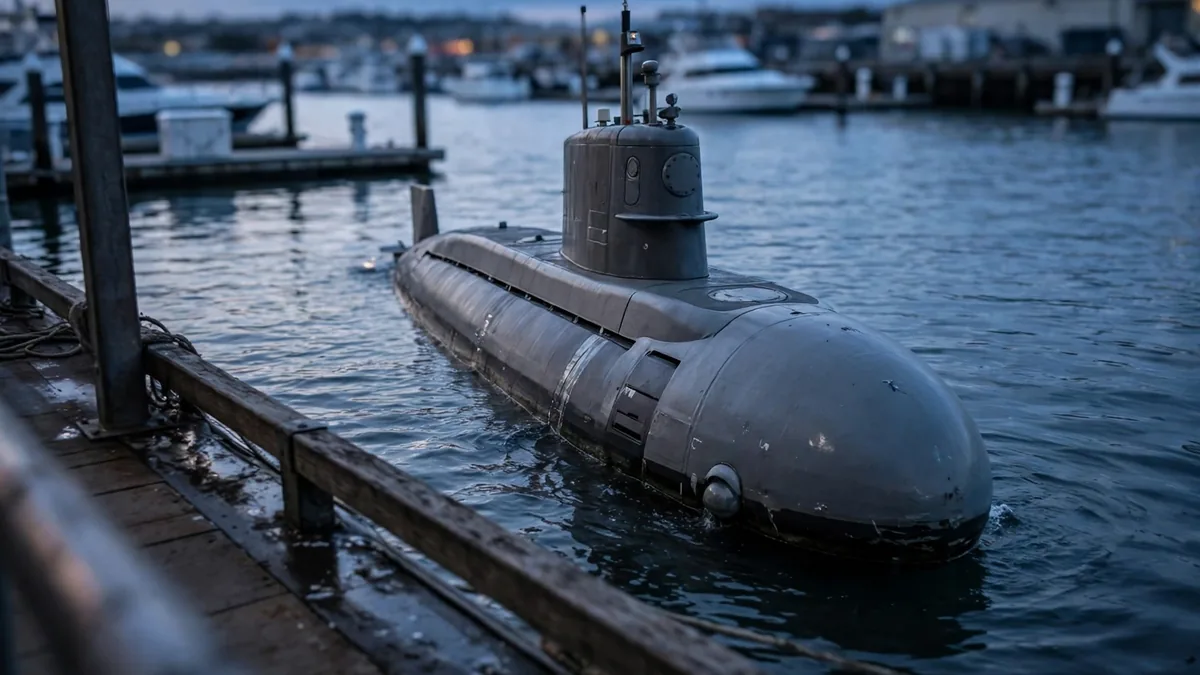
Why sound is the only sense that works down there
Even in the clearest water, usable daylight is gone within the first few hundred metres, and below about a thousand metres there is no sunlight at all. Radio waves, which carry phone calls and satellite navigation on the surface, are absorbed by seawater within metres, so a submerged boat cannot use GPS or call home by radio.
Sound has none of those problems. A low sound can cross an entire ocean basin, and even the higher sounds a research submarine uses can travel for kilometres. The trade-off is that sound is slower and blurrier than light. It is more like feeling your way around a dark room with your hands: you learn the shape and distance of things, but not their colour or fine detail.
Active sonar: sending a ping and listening for the echo
Active sonar is the mode most people picture when they think of submarines: a ping goes out, and an echo comes back. A transducer, a device that turns electricity into sound and sound back into electricity, sends a short pulse into the water. The pulse travels outward, strikes something, and part of it bounces back to the boat. Because the speed of sound in seawater is known, the time between sending and receiving gives the distance: half the round trip, since the sound has gone there and back.
The strength of the echo hints at what the sound hit: a hard rock face returns a strong echo, soft mud returns a weak one, and a swim bladder in a fish scatters sound in its own way. The direction the echo comes from tells the crew where the object sits relative to the boat.
A loud ping announces the boat to everything in the area, and it can disturb the very animals the scientists came to study. Many missions run active sonar only when they need a measurement, mapping a patch of seabed or checking the distance to a cliff face, and stay silent the rest of the time.

Passive sonar: listening without making a sound
Passive sonar makes no sound at all. It is a set of very sensitive microphones, called hydrophones, listening to the ocean. Waves break on the surface, rain patters down, distant ships rumble, rocks shift, and animals call, click and sing. Each source has its own character, and a trained operator, or a computer trained on recordings, can tell them apart.
For a research submarine, passive listening is the default mode. It lets the boat track whales without disturbing them, hear a distant earthquake or underwater landslide, and pick up the low rumble of a ship long before it is close. The catch is that passive sonar gives direction much more easily than distance.
The hydrophone array: ears spread across the hull
One hydrophone can hear a sound, but it cannot tell exactly where it came from. That is why a research submarine carries an array: many hydrophones spread out across the boat, working together. The most important group sits in the bow, often in a dome at the front of the boat, where it has a clear view ahead.
The trick the array performs is called beamforming. The same sound reaches each hydrophone at a slightly different time, depending on where that hydrophone sits. By measuring those tiny delays, the system works out the direction the sound came from, and by combining the signals it can focus its listening in one direction, the way cupping a hand behind your ear focuses your hearing. The full breakdown of these listening systems is covered in our guide to how a submarine sonar array works.
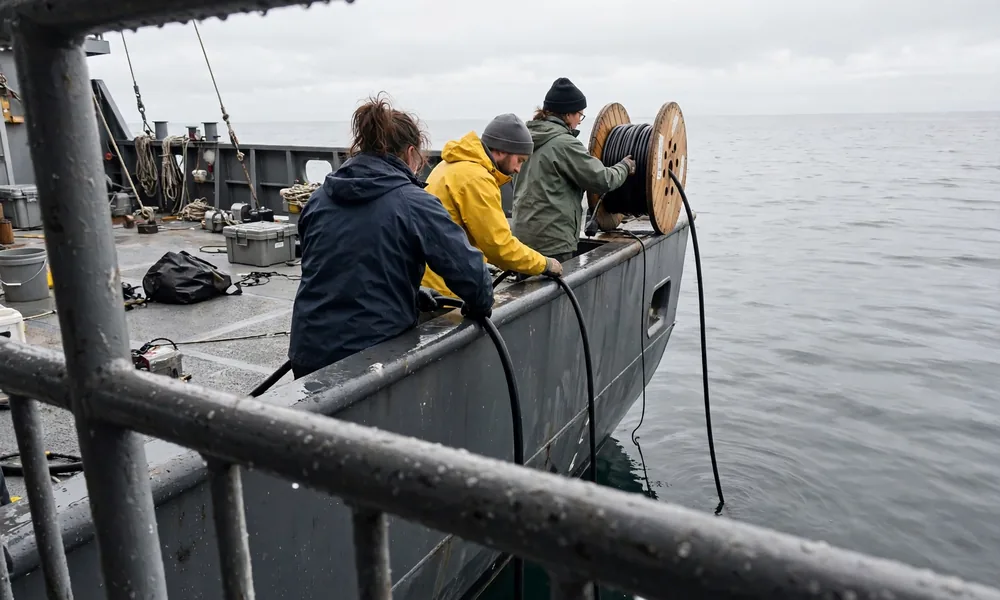
Mapping the seafloor, one swath at a time
One of the main jobs of a research submarine’s sonar is making maps of the seabed. The tool for that is multibeam sonar, which sends out a fan of dozens or even hundreds of narrow sound beams at once, spread across the boat’s path like a rake. Each beam measures the depth directly below its angle, so a single pass paints a wide strip of the seafloor, sometimes several times wider than the water is deep.
The strength of the echo from each beam, called backscatter, tells scientists what the seabed is made of. Hard rock bounces sound back strongly, soft sediment weakly, and a field of shells or gravel sits somewhere in between. That lets researchers map habitats, find the rocky reefs where corals and sponges grow, and trace the paths of underwater currents by the patterns they leave in the sand.
Tracking marine life by ear
The same hydrophones that map rock can also follow animals. Many whales and dolphins are easier to find by ear than by eye: a blue whale’s call can carry for tens of kilometres, and beaked whales, which are almost never seen at the surface, make sharp clicks that a hydrophone array can pick up from far away. By listening from a quiet boat, scientists can count animals, follow their movements, and learn how they behave, all without chasing them.
What sonar cannot do
Sonar has hard limits, and a research crew plans around them. Sound does not travel in straight lines underwater. It bends as it passes through water of different temperatures and saltiness, curving up or down as it crosses the boundaries between warm surface water and cold deep water. A layer of sudden temperature change, called a thermocline, can bend sound away and create a shadow zone where the sonar hears nothing at all, even though something is there. Resolution is another limit: low sounds, which travel furthest, give the blurriest pictures, while higher sounds give finer detail but fade quickly with distance.
Put together, the sonar on a research submarine is a quiet, patient instrument: part map-maker, part wildlife survey, part navigation aid. It listens more than it speaks, and when it does speak, it does so in short, careful pulses. If you want to see how that boat is put together, our guide to how a research submarine is made shows the pressure hull, the systems and the build process behind it. The ocean is still mostly unmapped and mostly unheard, and sonar is how science is slowly changing that, one ping and one quiet listen at a time.