Deep below the surface, in water so dark that sunlight never reaches, a submarine listens. It does not listen with ears, but with an array of hundreds of underwater microphones spread across its hull, each one tuned to catch the faintest sound — a distant propeller, a whale, a ship’s engine miles away. That listening system is called a sonar array, and it is the submarine’s eyes in a world where it cannot see.
A sonar array is one of the most sensitive instruments ever built. Its hydrophones can detect sounds quieter than a whisper from kilometres away, yet they must survive crushing pressure, freezing water, and years at sea without maintenance.
Few machines demand such a strange combination of delicacy and toughness. This is how a submarine sonar array is made.

How It’s Made
Step 1: Growing and cutting the piezoelectric crystals
At the heart of every hydrophone is a piezoelectric crystal, a material that produces a tiny electric signal when it is squeezed by sound waves. The most common material is a ceramic called PZT, made by mixing lead, zirconium, and titanium oxides, pressing the powder into shape, and firing it in a kiln at over 1,000 degrees Celsius. The fired ceramic is then cut into discs or cylinders with diamond saws, polished, and coated with electrodes. Each crystal is tested by tapping it and measuring the voltage it produces, and any that respond unevenly are rejected. A single array can contain hundreds of these crystals, and each one must behave exactly like the others. The finished array’s performance is described in submarine sonar array specs.
Step 2: Building the hydrophones
Each crystal is built into a hydrophone, a sealed unit that protects it from seawater while letting sound pass through. The crystal is mounted inside a housing and potted in a special polyurethane rubber that matches the acoustic properties of water, so sound waves pass into it without bouncing off. A cable is connected to the electrodes, and the whole unit is sealed and pressure-tested in a chamber that simulates the crushing depths a submarine operates at. Hydrophones are made in batches and tested one by one in a water tank, where a speaker plays known tones and engineers measure exactly what each unit hears.
Step 3: Wiring the array into panels
Hydrophones are useless alone, so they are wired together into panels, each holding dozens of units in a precise grid. The spacing between hydrophones is critical: it determines which sounds the array can locate and how sharply it can point its listening beam. Cables from every hydrophone are bundled into waterproof connectors and routed to a junction box, where the signals are combined and amplified. The panels are built on a rigid backing frame that holds every hydrophone in exactly the right place, because a hydrophone a few millimetres out of position would blur the array’s hearing.

Step 4: Fitting the array into the bow dome
Most of the array is mounted in the submarine’s bow, behind a dome made from glass-reinforced plastic that is transparent to sound. The dome is moulded in a single piece, machined to a smooth finish, and filled with water so sound passes from the sea into the hydrophones without a barrier of air. The dome itself is inspected for voids and delamination, since a flaw in it would deafen the whole system.
Step 5: Adding the towed array and flank arrays
The bow array is not the submarine’s only ear. Many submarines also carry flank arrays along the sides of the hull and a towed array — a long cable full of hydrophones that trails behind the boat on a winch, listening from hundreds of metres away from the submarine’s own noise. The towed array is built in sections, each a tube of hydrophones and cables sealed in oil-filled plastic, joined by connectors that must survive being reeled in and out under tension. Flank arrays are fitted into the hull during construction, in recesses that keep the hull smooth. The towed system is covered in submarine towed array specs.
Step 6: Calibration, sea trials, and final testing
Before the submarine sails, the array is calibrated. The boat is taken to a quiet range where known sound sources are played at known distances, and engineers measure how accurately the array locates them. Software maps each hydrophone’s response and corrects for tiny differences, so the array hears as one instrument instead of hundreds of separate ones. Then come sea trials, where the crew tracks real ships and compares the sonar picture with what they know is out there. The hull that carries all of this is built to its own formidable standard, as shown in how a submarine pressure hull is made.
| Main materials | PZT piezoelectric ceramic, polyurethane rubber, glass-reinforced plastic dome |
| Hydrophone count | Hundreds of hydrophones across the bow, flank, and towed arrays |
| Crystal firing temperature | Over 1,000 degrees Celsius in a kiln |
| Dome material | Glass-reinforced plastic, transparent to sound and filled with water |
| Operating environment | Near-freezing seawater at crushing depth, with no maintenance access |
| Array types | Bow array, flank arrays, and a towed array trailing behind the boat |
| Calibration | Tested against known sound sources on a quiet range before service |
| Manufacturing time | Months from crystal firing to calibrated sea trials |
What Does a Submarine Sonar Array Cost?
A submarine sonar array is a military system, so exact prices are rarely published, but the scale is clear. A complete sonar suite for a modern attack submarine, including the bow array, flank arrays, towed array, and processing electronics, is estimated at tens of millions of dollars — a significant share of the boat’s total cost, which runs into billions. Individual hydrophone elements are precision instruments in their own right, and the testing, calibration, and sea trials add further cost. Navies pay it gladly: in the silent world beneath the waves, the sonar array is the difference between seeing and being blind.
A Rare Fact
Sonar operators can sometimes identify a ship not by its name, but by its sound alone. Every vessel has a unique acoustic signature — the rhythm of its propeller, the hum of its generators, the whine of its pumps — and experienced operators can recognise individual ships from their noise, like recognising a friend’s voice on the telephone. A sonar array listening in the right layer can hear a ship that is far beyond the horizon, in water where no light has ever shone.
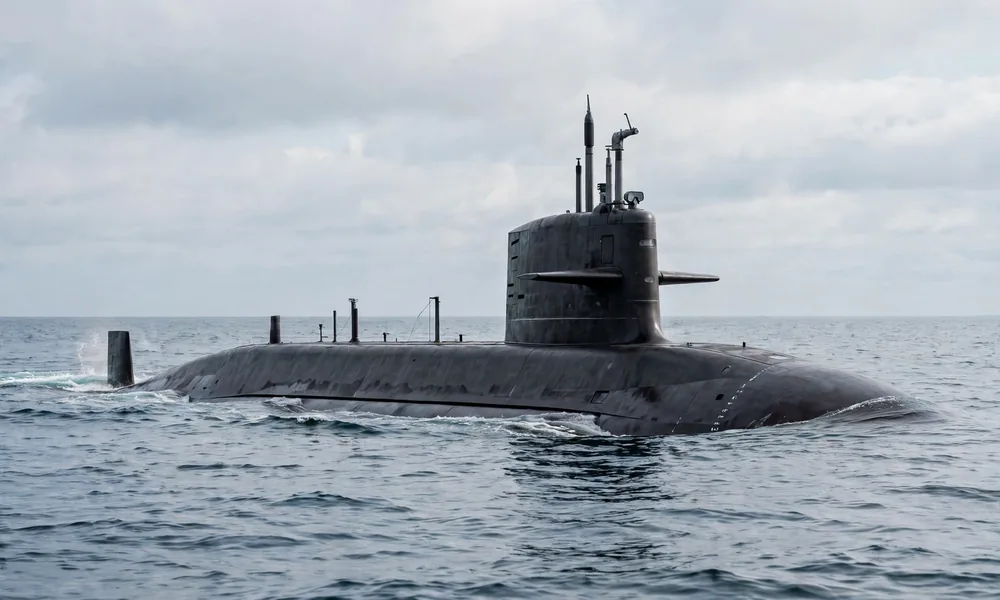
The sonar array will never be the part of a submarine anyone photographs. It hides behind a dome in the bow, in the flanks of the hull, and on a cable trailing far behind, listening in the dark.


