A hypercar seat looks like a sculpture: a single sweeping shell, barely padded, bolted straight to the floor with almost no adjustment. It is also, gram for gram, one of the most engineered parts of the car. It must hold a driver in place at three times the force of gravity in a corner, protect them in a crash, weigh less than a suitcase, and still be comfortable enough for a three-hour drive. A normal car seat weighs 20 kilograms or more; a hypercar seat can weigh under 10. The difference is materials.
This is the story of the materials inside that seat, and of the trade-offs behind every gram.
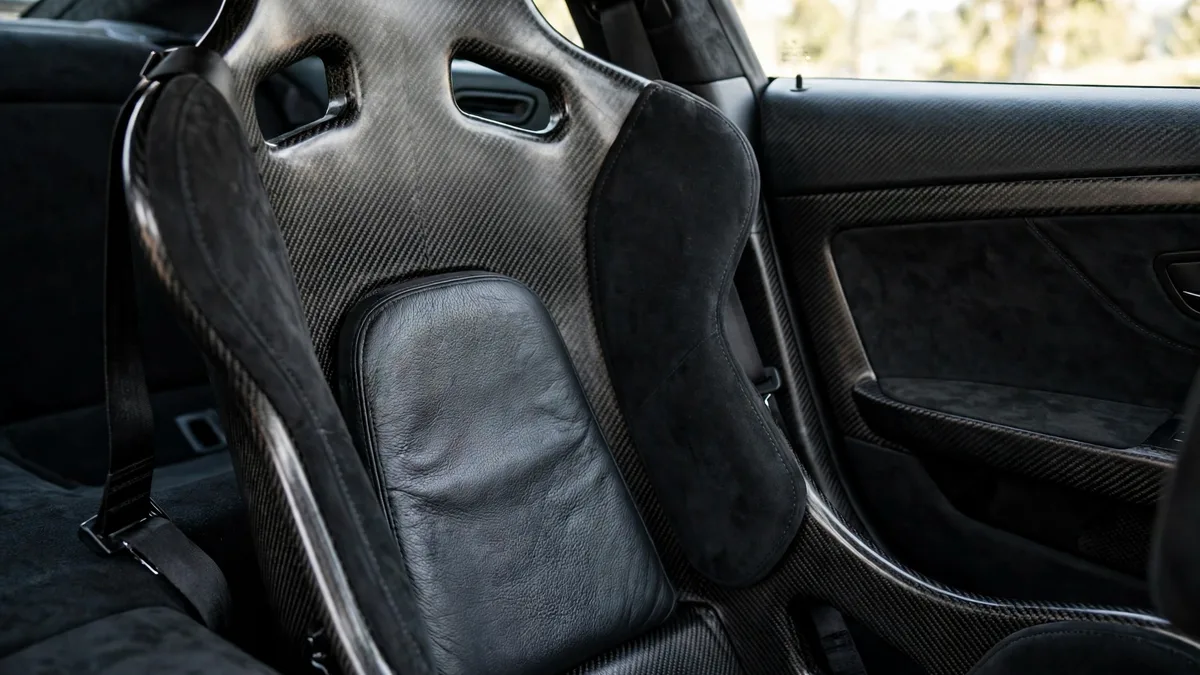
The Materials Behind the Hypercar Seat
The headline material is carbon fibre, laid up by hand into a rigid shell, with aramid fibre in the places that must survive a crash without shattering. On top of the shell sit thin pads of foam, leather and Alcantara, chosen for grip and feel rather than softness, and underneath are titanium or aluminium brackets and a handful of fasteners. Even the stitching matters: a seam that bursts in a crash is a failure, not a detail.
Step 1: The carbon fibre shell
The seat starts as a shell of carbon fibre reinforced plastic. Sheets of woven carbon cloth, pre-impregnated with epoxy resin, are cut into patterns and laid by hand into a mould, layer by layer, with the fibres pointed in different directions so the shell is stiff in every direction it will be loaded. The mould goes into an autoclave — a heated pressure vessel — where the resin cures under pressure, squeezing out air bubbles that would weaken the part. A finished shell can be just a few millimetres thick yet strong enough to carry a driver through a crash.
Step 2: Aramid and the crash layer
Carbon fibre is stiff and strong, but it is also brittle: hit it hard and it can crack rather than bend. That is why the shell’s crash-critical areas are reinforced with aramid fibre, the material used in bulletproof vests, which is tough and does not shatter. Aramid layers are laid into the shell around the harness slots and the base, where crash loads concentrate, so the seat bends and absorbs energy instead of breaking apart. The carbon fibre weave used in the shell is chosen for its drape as much as its strength, because a cloth that will not follow a tight curve leaves wrinkles, and wrinkles are weak spots.
Step 3: Foam that grips instead of cushioning
The padding on a hypercar seat is not there for comfort in the usual sense. It is a thin layer of high-density polyurethane or viscoelastic foam, shaped to match the driver’s body and covered in a material that grips. The foam’s job is to spread crash loads across the body and to stop the driver sliding in corners, not to feel like an armchair. Some seats use different foam densities in different zones — firmer under the thighs, softer at the shoulders — and the pads are often removable, so an owner can swap them for a different thickness or have them shaped to their own body.
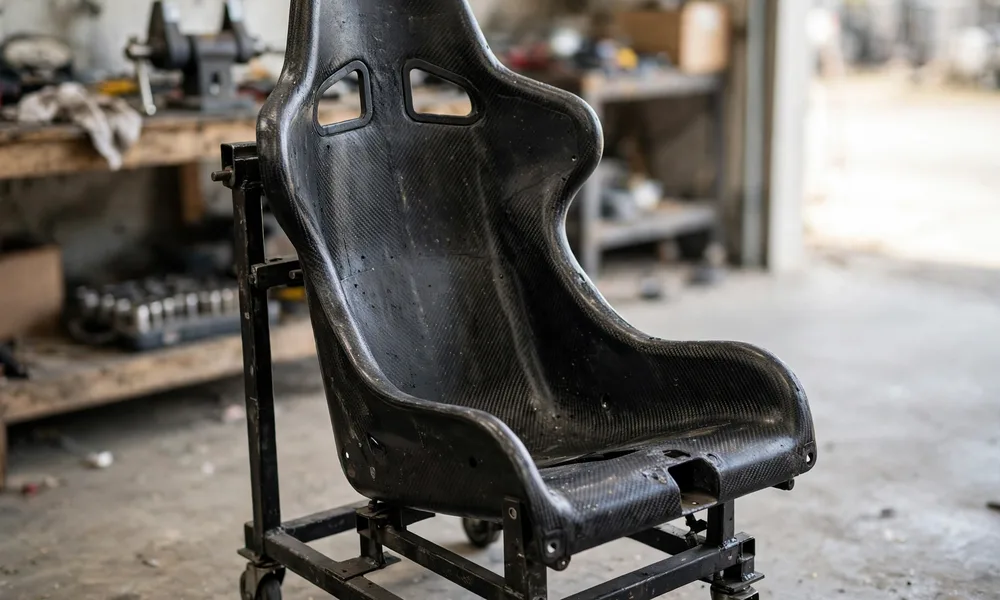
Step 4: Leather, Alcantara and the grip surfaces
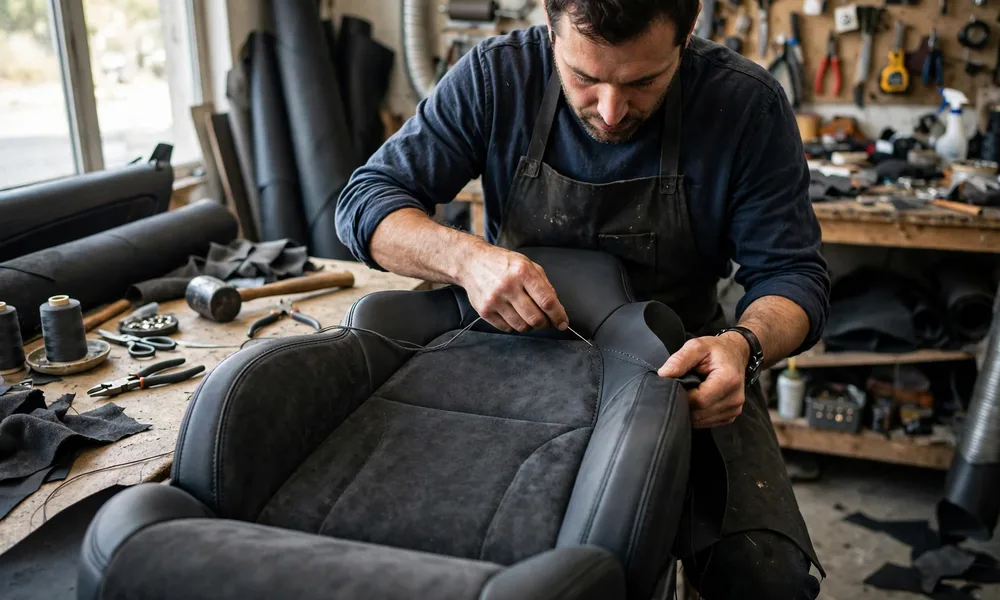
The seat’s surface is where the driver actually meets the car. The centre panels are usually Alcantara, a synthetic suede made from fine polyester and polyurethane fibres, chosen because it grips clothing far better than smooth leather and does not get slippery with sweat. The bolsters are often leather, which is tougher and easier to clean where the driver slides in and out. The hypercar chassis the seat bolts to is just as uncompromising, and the seat’s mounting points are designed to match it exactly.
Step 5: Brackets, rails and the weight budget
Under the shell, the seat is held by brackets of machined aluminium or titanium, and sometimes by a small amount of adjustment — a few centimetres of fore-and-aft slide, and that is all. Titanium brackets are stronger than steel for their weight and do not corrode, but they are expensive to machine, so aluminium is used where the loads are lower. The fasteners are high-strength steel or titanium bolts, torqued to exact values, because a seat that moves in a crash is a seat that has failed.
Step 6: The harness and the safety system
A hypercar seat is designed around its harness, not the other way round. The shell has slots for four, five or six-point belts, positioned so the straps pull the driver straight back into the seat rather than crushing their shoulders. The belts themselves are woven from polyester webbing, tens of millimetres wide, with a breaking strength measured in tonnes, and the buckles are quick-release aircraft-style hardware. The seat’s job in a crash is to keep the driver in exactly the right position while the belts and the chassis absorb the energy. The Aston Martin Valkyrie’s materials show the same philosophy everywhere: every part is shaped by the loads it must carry, and nothing is there for decoration.
Step 7: Finishing, testing and the human fit
Before a seat is approved, it is tested to destruction. Shells are crushed, dropped and fatigued through thousands of load cycles, and complete seats are put through crash sled tests with instrumented dummies. The foam and trim are tested for flammability, and the whole seat is weighed to the gram — a seat that is 200 grams over budget can mean a redesign. Then comes the human test: the buyer sits in it, often for an hour or more, while the maker adjusts the pads and the pedal position. A hypercar seat is not adjustable in the usual sense, but it is fitted, and that fitting is part of what the buyer is paying for.
Hypercar Seat at a Glance
| Specification | Detail |
|---|---|
| Shell | Carbon fibre reinforced plastic, aramid crash layers |
| Padding | High-density polyurethane foam, removable pads |
| Trim | Alcantara centre panels, leather bolsters |
| Mounting | Aluminium or titanium brackets, fixed or sliding |
| Harness | Four to six-point polyester belts, quick-release buckle |
| Weight | Under 10 kilograms for the lightest shells |
| Adjustment | Minimal — pedals and wheel move instead |
What Does It Cost?
A hypercar seat typically costs $8,000 to $20,000 (estimate) per seat, with the carbon shell accounting for most of that. A pair of seats in a top hypercar can add $20,000 to $40,000 (estimate) to the car’s price, and a fully bespoke fitted seat with custom foam can cost more still. By comparison, a normal car seat costs roughly $300 to $800 (estimate) to make. The difference is the hand-laid carbon, the aramid, the titanium hardware, and the hours of trimming and fitting.
A Rare Fact
The carbon fibre in a hypercar seat shell starts life as a white acrylic fibre — the same family of material used in jumpers — which is heated in stages until almost everything except carbon has burned away. A single seat shell can contain kilometres of carbon thread, and the finished part is so stiff that it rings like a bell when tapped, yet it weighs less than a bag of shopping.


