In a jet engine workshop, a turbine blade no bigger than a hand sits on a bench, and the engineer handling it wears gloves — not because the blade is sharp, but because a fingerprint could matter. The blade will spend its working life spinning at thousands of revolutions a minute in gas hotter than its own melting point, held together by its chemistry alone. That metal is Inconel, one of the most remarkable alloys ever put into service.
Inconel is a family of nickel-chromium superalloys, and its trick is simple to state and almost impossible to achieve: it stays strong when it is hot. Most metals go soft as they heat up; steel loses half its strength by 500°C. Inconel keeps working at 700°C, 900°C, even over 1,000°C in the best grades, resisting oxidation, corrosion, and the slow creep that makes hot metal stretch and fail. It is why jet engines can run as hot as they do, and why rockets, chemical plants, and nuclear reactors all depend on it. Its specification sheets list different grades for different jobs. Here is what those numbers mean.
How It Works
Step 1: The nickel-chromium foundation
Every Inconel grade starts with the same foundation: at least half nickel, with a large dose of chromium — typically 15 to 23 percent. The nickel gives the alloy a crystal structure that stays stable across a wide range of temperatures instead of changing form the way steel does. The chromium does the protective work: exposed to air at high temperature, it forms a thin, tough layer of chromium oxide that seals the metal underneath from further attack. That oxide skin is self-healing — scratch it and it reforms — which is why Inconel can sit in a furnace or a chemical bath for years without corroding away. The same nickel base makes the alloy hard to machine, as how Inconel alloy works explains.
Step 2: Strengthening with niobium and molybdenum
The most famous grade, Inconel 718, gets its strength from niobium, which combines with nickel to form tiny particles scattered through the metal like grit in concrete, pinning the crystal structure in place and stopping it deforming under load. Those particles only form during a carefully controlled heat treatment called ageing. Inconel 625, the other great workhorse grade, takes a different route: it is strengthened by molybdenum and niobium dissolved in the metal itself, which makes it easier to weld and form, though slightly less strong at the highest temperatures. The choice between 718 and 625 is the first decision in almost any Inconel job, and the two grades are compared in Inconel alloy materials engineering.
Step 3: How it is made
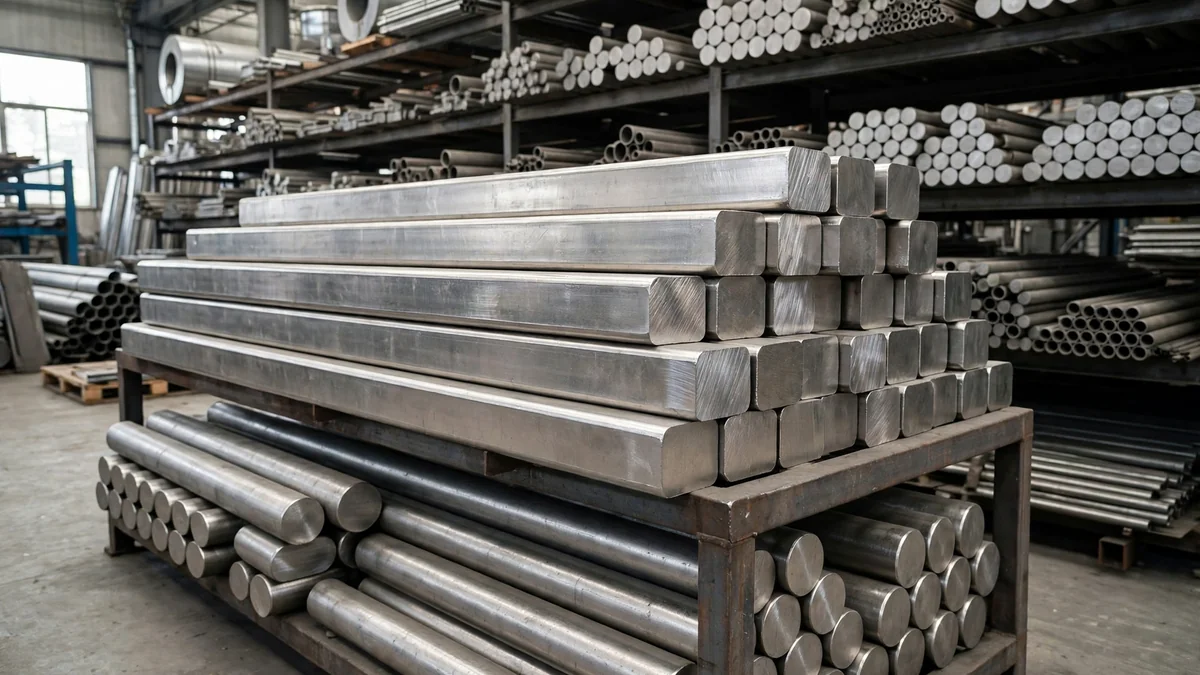
Making Inconel starts with melting, and the melting has to be extraordinarily clean. The raw metals are melted in a vacuum furnace, often twice — first in a vacuum induction furnace, then remelted in a vacuum arc furnace — because even tiny amounts of oxygen or sulphur in the melt will weaken the finished alloy. The molten metal is cast into ingots, then forged and rolled into billets, bars, plate, or sheet. Forging matters: it breaks up the cast structure and refines the grain, and a forged Inconel part is far stronger than a cast one. Some of the most demanding parts, like turbine discs, are forged from a single billet in one enormous press stroke.
Step 4: Heat treatment and ageing
After forming, Inconel parts are heat-treated to develop their strength. For Inconel 718 the schedule is a precise sequence: a solution treatment at around 950 to 980°C to dissolve everything into the metal, then a two-stage ageing treatment at about 720°C and then 620°C, each held for hours. The heat treatment is also where resistance to creep is set: creep is the slow stretching of metal under load at high temperature, and it is the failure mode that kills turbine blades. A well-aged part can run for tens of thousands of hours before it has stretched enough to matter.
Step 5: Machining the unmachinable
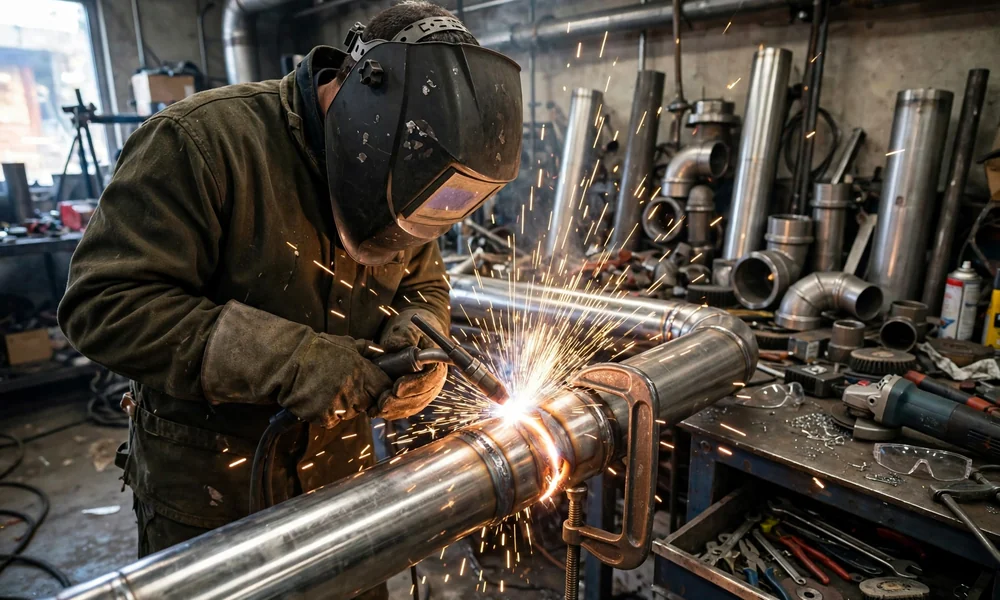
The alloy work-hardens as it is cut — the surface gets harder the more you cut it — and it holds its heat at the cutting edge instead of letting it flow away into the chips, so tools wear out fast and cuts have to be slow. Machining Inconel can take five to ten times as long as machining steel, and it eats carbide tooling. That is why many Inconel parts are forged close to final shape, or 3D printed, so little machining is needed. The difficulty and cost of working it are part of why the alloy is so expensive, as explained in why Inconel alloy is so expensive.
Step 6: Where it is used
Inconel’s home is the hot end of a jet engine: turbine blades, discs, combustion chambers, and exhaust components, where gas temperatures exceed 1,000°C. It is in rocket engines too, including the nozzles and turbopumps of launch vehicles, and in chemical plants, where it resists acids that would dissolve stainless steel. It lines nuclear reactors and forms seals in drilling tools that work kilometres underground. In each case the grade is chosen to match the exact temperature and chemistry it will face.

Inconel Alloy Specs
| Specification | Typical range |
|---|---|
| Nickel content | About 50 to 72 percent depending on grade |
| Chromium content | About 15 to 23 percent |
| Tensile strength (718, aged) | About 1,370 MPa at room temperature |
| Yield strength (718, aged) | About 1,100 MPa at room temperature |
| Maximum service temperature | About 650°C for 718, about 980°C for 625 |
| Melting range | About 1,260 to 1,340°C |
| Density | About 8.2 to 8.5 g per cubic centimetre |
| Key grades | 718, 625, 600, 601, 713C, 738, X-750 |
What Does Inconel Alloy Cost?
Inconel is sold by weight, and it is expensive metal. Inconel 625 plate and bar are estimated to cost roughly $40 to $80 per kilogram, while Inconel 718 in bar or billet form is estimated to cost roughly $50 to $100 per kilogram, and finished, machined, heat-treated parts cost far more — a single turbine blade can be estimated at hundreds of dollars, and a forged turbine disc at tens of thousands. The price of a finished part is usually dominated by machining and heat treatment, not the raw material.
A Rare Fact
Inconel was invented by accident, in the search for something else. In the 1940s, researchers at the International Nickel Company in Huntington, West Virginia, were trying to make a better alloy for dairy equipment — milk processing needed a metal that would not corrode and would not taint the milk. The alloy they developed, named Inconel after the company and the nickel it was built on, turned out to be far more interesting than a milk vat lining: it kept its strength at temperatures no one had expected, and within a decade it was in the first jet engines. It is a reminder that the most important materials in engineering are often found while looking for something entirely different.
Next time you hear a jet engine spool up, think of the blades inside it, spinning in gas hotter than their own melting point, held together by a skin of chromium oxide a few atoms thick. That is Inconel: a metal that refuses to give up, long after every other metal has gone soft.