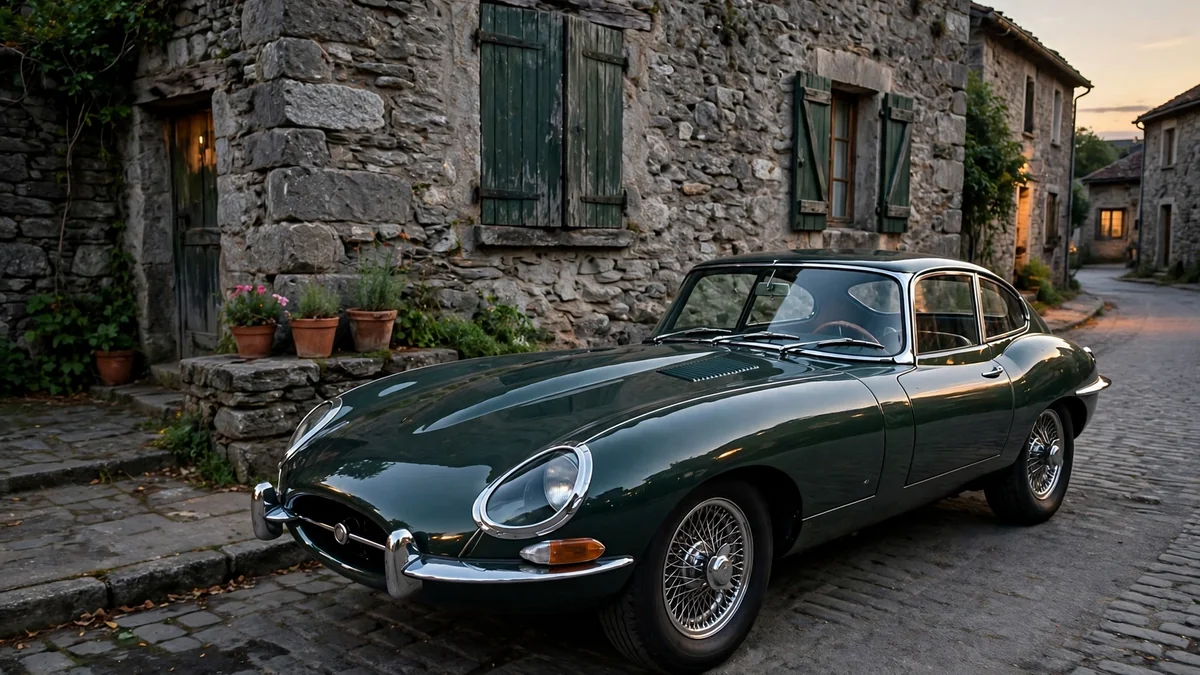
The old car rolled into the village square on a summer evening, and every conversation stopped. Its paint was deep and hand-polished, its chrome caught the low sun, and its engine made a slow, unhurried sound that no modern car can copy. Children pointed, older men nodded, and the owner simply smiled, because he knew what they were looking at. A classic car is not transport. It is a piece of history that still runs, and its spec sheet is a window into a different age of engineering.
But the numbers on a classic car spec sheet do not work the way modern ones do. Horsepower figures were measured differently, top speeds were optimistic, and some of the most important figures, like how the car actually feels to drive, never appeared on the sheet at all. This guide decodes classic car specs in plain words, so the numbers make sense in their own time.
The spec sheet at a glance
| Figure | Typical range | What it tells you |
|---|---|---|
| Engine | 3.0 to 6.0 litre, naturally aspirated, often V8 or V12 | How the power is made |
| Power | Roughly 150 to 350 horsepower, measured by older standards | How hard the engine can push |
| Torque | Roughly 250 to 500 Nm | How easily it pulls from low speed |
| 0 to 100 km/h | Roughly 7 to 12 seconds | How quickly it gathers speed |
| Top speed | Roughly 170 to 240 km/h, often optimistic | How fast it was claimed to go |
| Weight | Roughly 1,300 to 1,800 kg | How light it is for its size |
| Gearbox | Four-speed manual or three-speed automatic | How the driver changes gear |
| Brakes | Drum brakes early, disc brakes later | How it stops |
| Fuel use | Roughly 12 to 20 litres per 100 km | How thirsty it is |
| Production years | Often a run of five to fifteen years | How rare the car is today |
Power measured the old way: read it with care
The first trap in a classic car spec sheet is the horsepower figure itself. Before the 1970s, many makers quoted gross horsepower, measured on an engine with no gearbox, no alternator, no air filter and no exhaust fitted, which flattered the number considerably. Later figures were net horsepower, measured with everything attached, and the same engine could lose a fifth of its quoted power overnight when the standard changed. A 1960s car quoted at 300 horsepower might make closer to 240 in modern terms, and that is before decades of wear. The lesson is simple: never compare a classic’s horsepower directly with a modern car’s, and always ask which standard the number was measured to. The way such a car was built in the first place is described in the guide to how a luxury classic car is made, from the hand-beaten panels to the finished paint.
Acceleration and top speed: slower on paper, faster in feeling
On paper a classic car looks slow. Zero to 100 km/h in ten seconds, a top speed its maker may never have verified, and a gearbox with only four ratios. On the road it feels very different. The engine is large and unstressed, so it pulls from low revs with a deep sound, the steering is heavy and full of feedback, and the driver feels every part of the machine working. The top speed figure deserves particular caution: makers in the 1960s often quoted the speed a car might reach downhill with a tailwind, and few owners ever tested it. What matters is the cruising speed, the speed the car can hold all day without strain, which for most classics is around 110 to 130 km/h, and that is still enough for a summer tour.
Weight, brakes and gearbox: the honest numbers
Weight is where a classic car often surprises modern readers. Without airbags, crash structures, sound insulation and electronics, a large classic can weigh less than a modern family hatchback, and that lightness is why even modest power feels enough. The brakes are the opposite story. Even the disc brakes of the 1960s are a fraction of the size of a modern set. A classic needs more distance to stop, and its owner learns to brake early and gently. The gearbox is usually a four-speed manual with a long, deliberate shift, or a three-speed automatic that changes gear with a soft sigh. Neither is fast by modern standards, but both are part of the character, and learning to drive one well is half the pleasure. The balance of speed and comfort in a car built for long journeys is explored in the guide to luxury grand tourer specs explained, where a different kind of classic idea is decoded number by number.

Fuel, rarity and what the numbers leave out
Fuel use is the number classic owners learn to live with. Twelve to twenty litres per 100 km was normal for a large engine of the era, and it means a classic is a car for short, joyful journeys rather than daily commuting. Production numbers matter more than most figures on the sheet: a car built in the thousands is rare today, one built in the hundreds is exceptionally rare, and that rarity is what drives the value far more than the top speed ever did. Those are the reasons people buy classics, and no table will ever capture them. A lighter, open-topped kind of classic is explored in the guide to how a luxury convertible works, where the same era of engineering is seen from the driver’s seat.
What a luxury classic car costs
A luxury classic car typically costs roughly $100,000 to $500,000 as an estimate, with the rarest and most desirable models going far higher, and a handful of famous examples have sold for several million. The price is estimated to depend on rarity, condition, originality and history, and it varies enormously even between two cars of the same model. Running costs are part of the picture too: specialist servicing, hand-made parts and regular maintenance all cost far more than on a modern car, and a full restoration can cost more than the car itself. The money buys a piece of history that still runs, and for the people who own one, that is the whole calculation.
A rare fact
Some classic cars were built with a small toolkit fitted into the boot lid, with spanners and screwdrivers made to the exact size of the car’s own bolts, and a few even carried a spare set of spark plugs in a leather roll under the seat. The toolkit was not a gimmick. In an age when a breakdown far from home was a real possibility, the owner was expected to fix the car himself, and the maker supplied the tools to do it. A few of those original toolkits survive today, and collectors value them almost as much as the cars they came with, because they show how differently a car was understood in its own time.
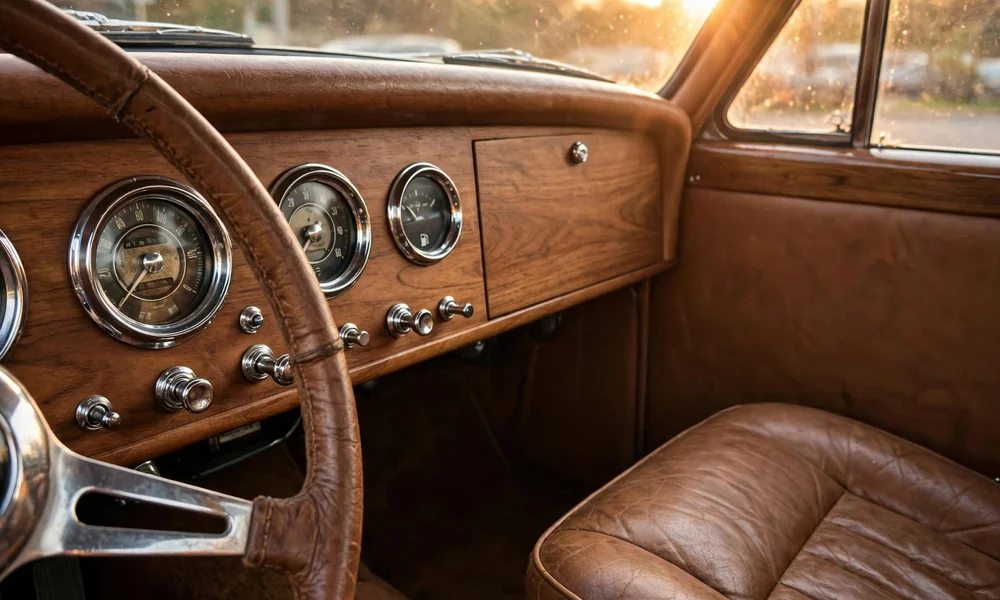
A classic car spec sheet is a document from another world, written in numbers that need translating before they make sense. Learn to read the torque, the weight and the production run, and the figures stop being a puzzle and start being the story of how the car was built, how it was driven, and why it still matters today.


