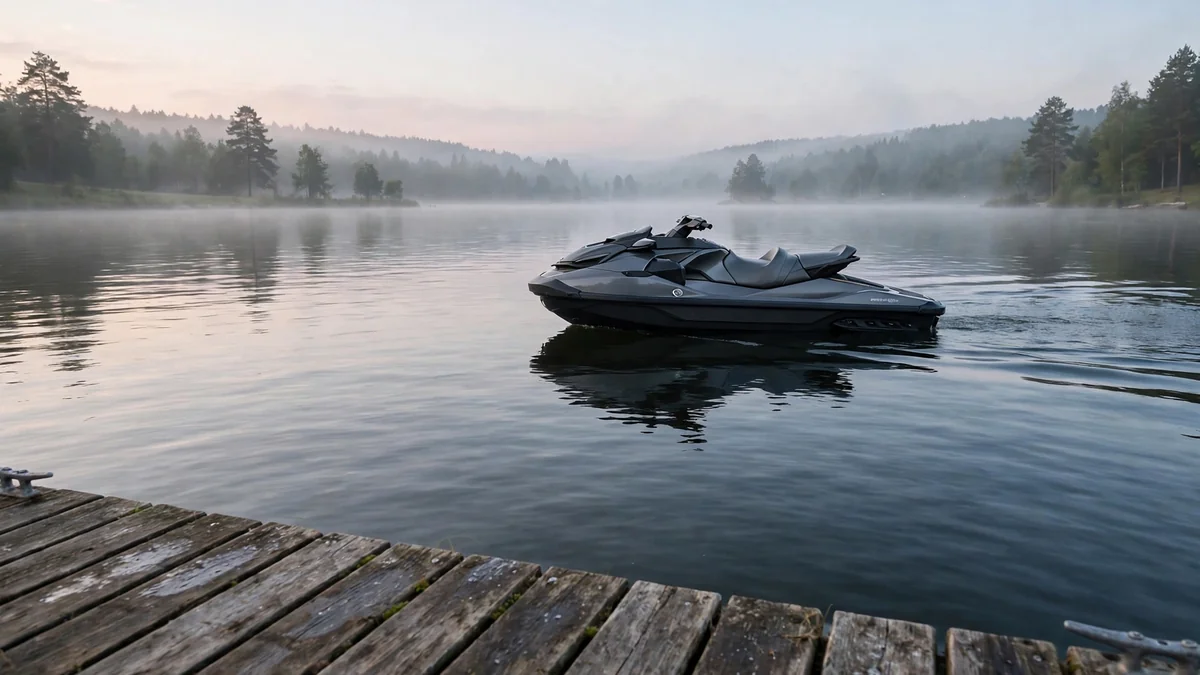
Before sunrise on a still lake, the only sound was the soft slap of water against the dock. Then a rider pushed a jet ski into the water, pressed a button, and glided away without a sound. No engine roar, no exhaust smell, no vibration through the handlebars. Just a quiet hum and a widening wake. It was a luxury electric jet ski, and it felt less like a machine and more like a trick: all of the speed, none of the noise.
That silence is the headline, but the spec sheet is where the real story lives. An electric jet ski is measured in kilowatts instead of horsepower, in kilowatt-hours instead of litres, and in minutes of charging instead of trips to the fuel dock. If you grew up reading petrol jet ski specifications, the electric numbers can feel like a foreign language. This guide translates them.
Kilowatts, Kilowatt-Hours and What They Mean
The first number to understand is power, measured in kilowatts. One kilowatt is roughly 1.34 horsepower, so a 60-kilowatt electric jet ski produces about 80 horsepower, and a 90-kilowatt model produces about 120 horsepower. The difference from a petrol engine is how that power arrives. An electric motor delivers its full torque the instant you press the throttle, so an electric jet ski can feel faster off the line than a petrol ski with a bigger headline power figure.
The second number is battery capacity, measured in kilowatt-hours. A typical luxury electric jet ski carries a battery of 12 to 18 kilowatt-hours, which is roughly the size of a small plug-in hybrid car battery. That battery decides the range, and range is the number that matters most in real use.
How a Luxury Electric Jet Ski Works
Under the sleek bodywork, the system is simpler than a petrol jet ski, with fewer moving parts and no exhaust, gearbox or fuel system. Here is how the power flows from battery to water.
Step 1: The Battery Stores the Energy
A sealed lithium-ion battery pack sits low in the hull, where its weight helps stability. The pack is waterproofed to marine standards and cooled by water drawn from the jet intake, which keeps it at a safe temperature even during hard riding. The battery management system monitors every cell and will reduce power if any cell gets too hot.
Step 2: The Controller Converts the Power
A motor controller takes direct current from the battery and turns it into precisely controlled alternating current for the motor. It adjusts the power hundreds of times per second, which is what makes the throttle feel so smooth. The same controller handles regenerative braking, recovering a small amount of energy when you slow down.
Step 3: The Motor Spins the Impeller
An electric motor, usually mounted directly on the driveshaft, spins a three-blade impeller inside a jet pump. The motor is sealed against water and cooled by the same loop as the battery.
Step 4: The Jet Pump Creates Thrust
The impeller draws water in through a grate in the bottom of the hull and fires it out of a steerable nozzle at the rear. The faster the water exits, the harder the ski is pushed forward. Steering works by aiming that nozzle, and reverse is achieved by a bucket that drops over the nozzle and redirects the jet forward.
Step 5: The Rider Controls Everything from the Bars
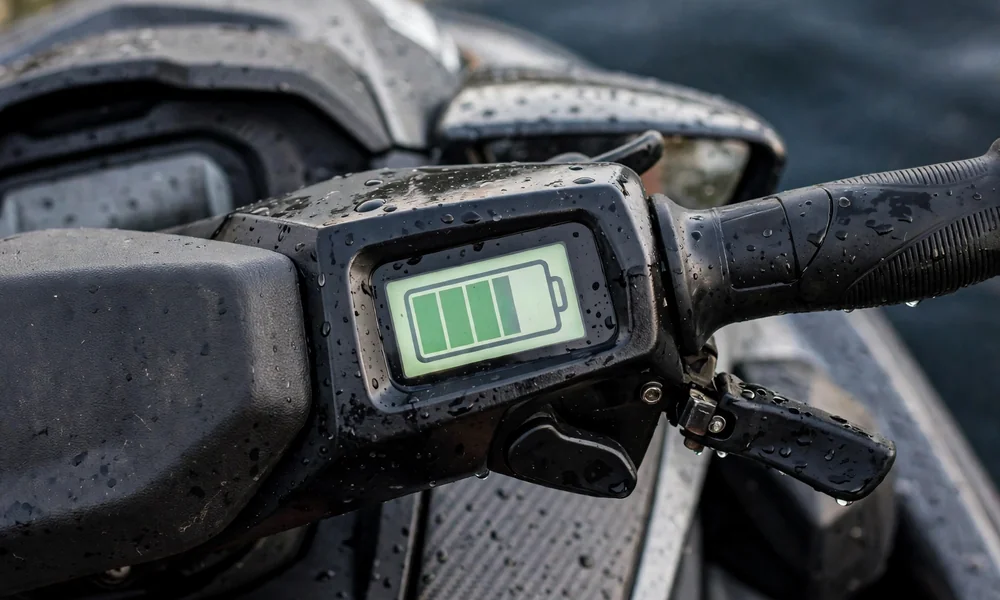
The handlebars carry the throttle, the steering, the riding-mode selector and a display showing speed, battery level and estimated range. Luxury models add features such as cruise control, a phone-charging dock and a sound system. The display’s range estimate is the number to watch, because it adjusts constantly as your riding style changes.
Luxury Electric Jet Ski Specs at a Glance
| Specification | Typical Figure |
|---|---|
| Motor power | 45 to 90 kilowatts (60 to 120 hp) |
| Battery capacity | 12 to 18 kilowatt-hours |
| Top speed | 80 to 105 km/h |
| 0 to 50 km/h | 2.5 to 4 seconds |
| Range | 60 to 100 minutes of riding |
| Charging time (fast) | 1 to 1.5 hours to 80 percent |
| Charging time (standard) | 3 to 5 hours to full |
| Hull weight | 280 to 380 kilograms |
| Rider capacity | 1 to 3 people |
| Waterproof rating | IP67 battery enclosure |
Range is given in minutes rather than kilometres because riding style changes it so dramatically. Gentle cruising can double the range of full-throttle riding, which is why the display matters more than the brochure. The build story behind these numbers is told in how a luxury electric jet ski is made, which follows the ski from hull mould to final test.
Why Range Is the Number That Decides Everything
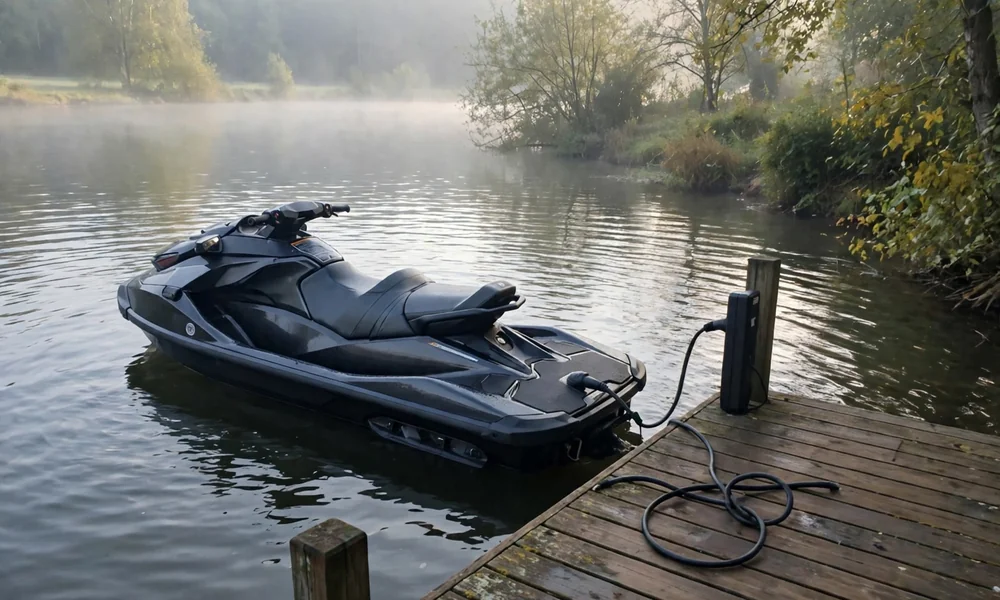
An hour of riding sounds short until you ride one. Most jet ski sessions last 45 to 90 minutes anyway, because the physical effort of standing, leaning and absorbing waves is exhausting. The luxury electric ski is designed around that reality: a battery that covers a normal session, then a fast charge over lunch while the rider rests. Marinas and lakeside resorts are starting to install dedicated chargers for exactly this pattern, and some luxury models can charge from a standard dockside outlet overnight.
Charging time also matters, because a fast charger can bring the battery to 80 percent in about an hour, while the last 20 percent is deliberately slower to protect the cells. The full guide to how a luxury electric jet ski works explains the charging and cooling systems in more detail.
What a Luxury Electric Jet Ski Costs
A luxury electric jet ski typically costs between $20,000 and $40,000 as an estimate, depending on the motor power, battery size and the level of trim. Top models with the largest batteries and premium finishes sit at the top of that range. Running costs are far lower than a petrol jet ski, with no fuel, no oil changes and no exhaust maintenance, although a replacement battery after many years of use is a significant expense. The price story is covered in full in why a luxury electric jet ski is so expensive, which breaks down where the money goes.
A Rare Fact About Electric Jet Skis
Here is something almost no rider knows until they hear it from an engineer: an electric jet ski can be quieter underwater than above it. The motor and impeller produce very little noise, but the water jet itself creates a hiss as it leaves the nozzle, and that hiss is mostly masked by the sound of the wake. The result is that fish and wildlife are far less disturbed than by a petrol ski, and several lakes and nature reserves that ban petrol watercraft now allow electric models. It is a small detail, and it is quietly opening up riding spots that have been closed to jet skis for decades.
How to Read Any Electric Jet Ski Spec Sheet
Start with the battery capacity and the realistic riding time, not the top speed. Then check the charging time and whether a fast charger is included, because the charger decides how many sessions you can fit into a day. Finally, look at the weight and the rider capacity, and be honest about how you will use it. A ski that is perfect for a solo rider on a quiet lake may be the wrong choice for a family of three on open water. Get those three numbers right and the rest of the spec sheet falls into place.