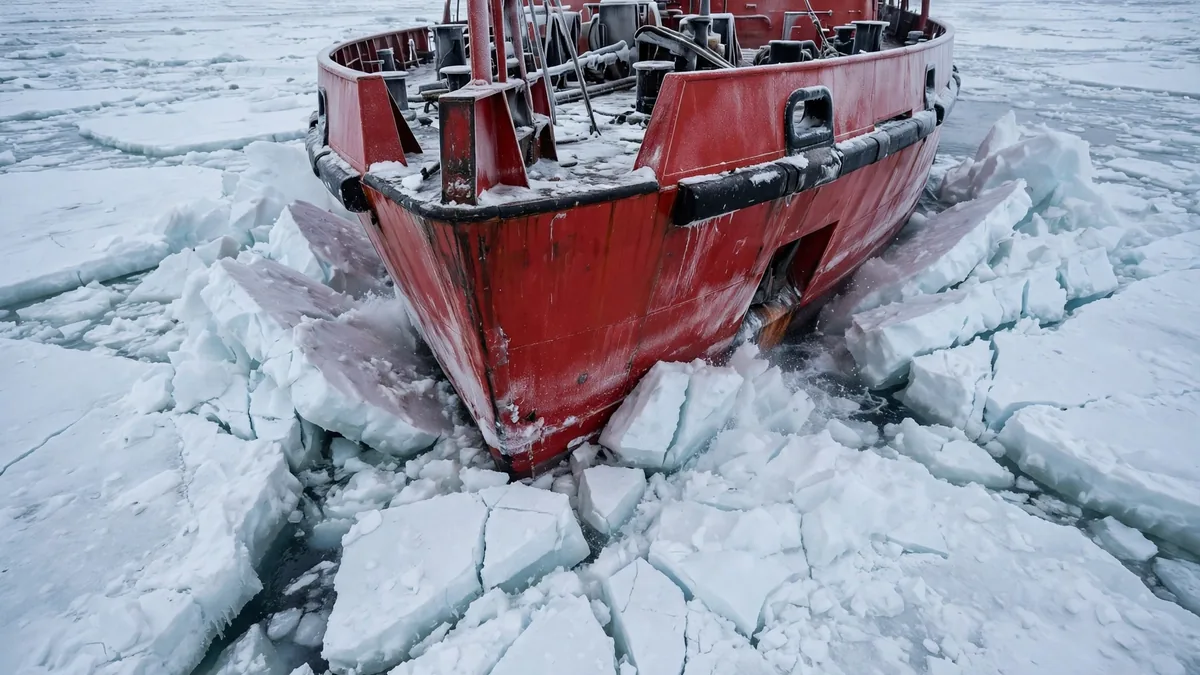
On a frozen sea in the far north, where the water is white and the horizon is a line of ice, a ship pushes forward slowly, and the ice in front of it cracks, groans, and splits into great slabs that slide aside. There is no explosion, no saw, only weight and power, and the ship keeps moving through ice a metre thick as if it were thin glass. The ship is an icebreaker, and its spec sheet reads like a list of superlatives, because everything about it, the hull, the power, the propellers, has to be stronger than the ice it breaks.
This guide explains the numbers on a luxury icebreaker spec sheet in plain English: what each one means, which ones decide how thick the ice can be, and how to tell a genuinely capable icebreaker from a merely well-marketed one.
Ice class: the certificate that decides where it can go
The first number on the sheet is not a number at all, but a class, the ice class, awarded by a classification society after the ship is inspected and tested. The highest classes allow a ship to work year-round in the thickest polar ice, while lower classes limit it to summer ice or to following another icebreaker, and the class decides which waters the ship may legally enter. A luxury icebreaker built for polar expeditions carries the highest class its owner can afford, because the class is the difference between reaching the pole and turning back at the ice edge.
The hull: shaped to ride up and crush down
An icebreaker hull does not cut the ice, it climbs onto it and crushes it with its own weight. The bow is sloped, not sharp, so the ship rides up onto the ice sheet, and the weight of the ship presses down until the ice cracks beneath it, and the broken slabs are pushed aside by the shape of the hull. The paint is a special low-friction coating, renewed often, because the ice scrapes it off, and the guide to how a luxury icebreaker works follows this hull through a day of breaking ice, where the ship’s motion is a slow rhythm of riding up, cracking down, and moving forward a few metres at a time.
Power: how much, and why it must be electric
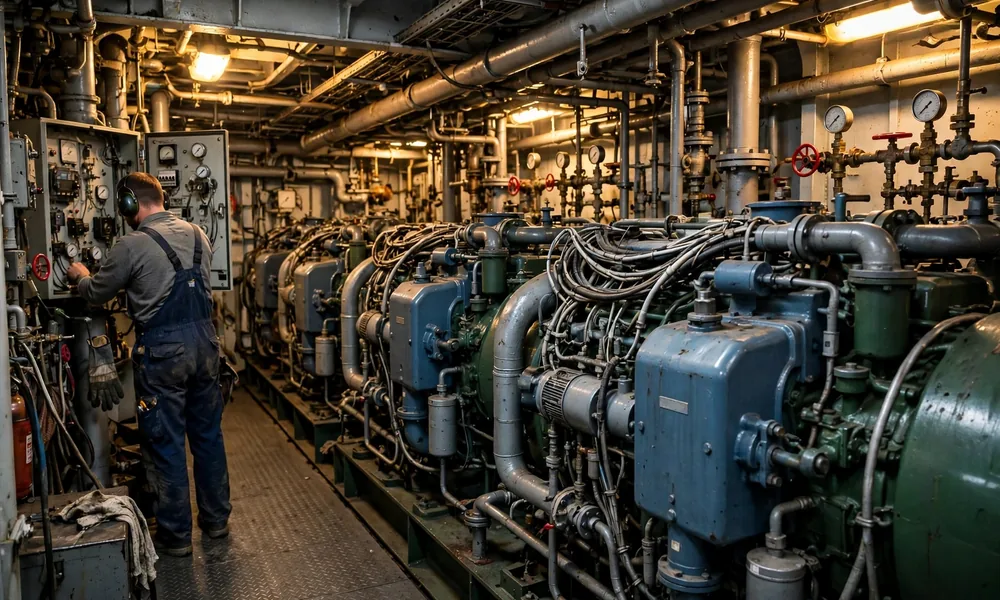
Breaking ice takes enormous power, and the sheet quotes it in megawatts, usually twenty or more for a large icebreaker, delivered by diesel-electric propulsion. The diesel engines do not drive the propellers directly; they generate electricity, and electric motors drive the propellers, because an electric motor can deliver full torque at zero speed, which is exactly what a ship needs when it is stuck in ice and must twist free. The guide to how a luxury icebreaker is made follows these engines from the factory to the engine room, where they sit in a space built to be serviced in the middle of nowhere.
Propellers and rudders: built to be hit
The propellers of an icebreaker live in the worst place on the ship, underwater, behind the hull, where the ice they have just broken slides back and strikes them. Some icebreakers use azimuth thrusters, pods under the hull that can rotate in any direction, which let the ship move sideways, spin in place, and break ice astern as well as ahead, and the sheet quotes the number and power of the thrusters beside the propellers, because together they decide how the ship moves when the ice will not let it move forward.
Icebreaking capability: the thickness that matters
The headline figure on the sheet is the icebreaking capability, the thickness of level ice the ship can break continuously, usually quoted in metres, and for a large luxury icebreaker it is two metres or more. The sheet also quotes the capability in ridged ice, the piled-up pressure ridges that are far harder than level ice, and the guide to why a luxury icebreaker is so expensive follows the money from the steel to the power plant, and the ice thickness is the number that explains most of it.
Endurance and comfort: a ship that stays out for months
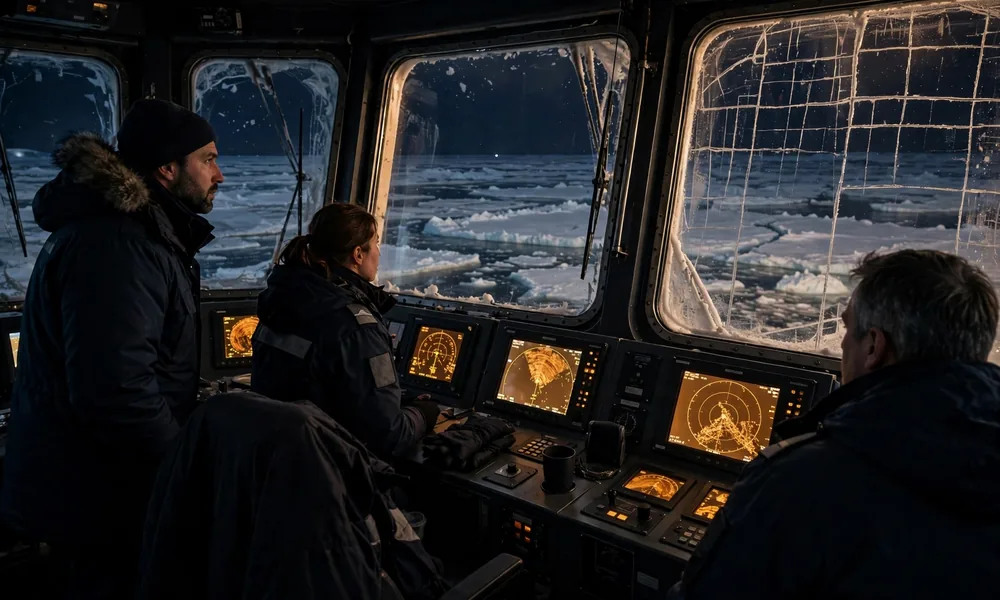
The last numbers describe how long the ship can stay in the ice and how its people live while it does. The fuel tanks hold enough for months at sea, because there is no refuelling in the polar winter, and the ship carries its own helicopters, which scout the ice ahead and ferry people to and from the ice.
The spec sheet at a glance
| Specification | Typical luxury figure | What it tells you |
|---|---|---|
| Ice class | Highest polar class, year-round operation | Which waters the ship may legally enter |
| Icebreaking | Roughly 2 metres of level ice, continuously | How thick the ice can be, and how fast the ship breaks it |
| Power | Roughly 20 to 40 megawatts, diesel-electric | How much force the ship can put into the ice |
| Hull steel | Up to 5 centimetres thick at the waterline | How the hull survives the ice pressing back |
| Propulsion | Two or three propellers, or azimuth thrusters | How the ship moves, turns and breaks ice astern |
| Speed in ice | Roughly 2 to 3 knots in 2-metre ice | How fast the ship makes progress through heavy ice |
| Endurance | Months at sea, fuel for the polar winter | How long the ship can stay out without refuelling |
| Helicopters | One or two, with a hangar and landing deck | How the ship scouts the ice and moves people |
| Crew and guests | Roughly 100 to 200 people aboard | How many the ship carries, and how they live |
What it costs
A luxury icebreaker typically costs an estimated $300,000,000 to $800,000,000, depending on its size, its ice class and its power plant. The estimate covers the ship alone, not the crew, the fuel or the helicopters, which are a permanent part of operating a ship that works for months in a place where there is no help for a thousand miles.
A rare fact
One detail few people in warm countries ever learn is that an icebreaker sometimes breaks ice by going backwards. When the ship meets a pressure ridge too thick to break ahead, it turns, backs into the ridge with its reinforced stern, and crushes it with the propellers washing water under the ice, a manoeuvre called backing and ramming, and the ship repeats it, forwards and backwards, until the ridge gives way. The stern is built as strongly as the bow for exactly this reason, and a captain who knows his ship will break the worst ice astern, where the propellers do half the work.
Read the spec sheet in that order, class first, then hull, power, propellers, ice thickness and endurance, and the numbers stop looking like superlatives and start looking like a description of a machine. The best icebreakers are not the ones with the biggest single number, but the ones whose numbers agree with each other, a hull the power can push, propellers the ice cannot break, and fuel enough to stay out until the job is done.