The buyer stood in the showroom with a printed spec sheet in one hand and a coffee in the other, staring at a wall of numbers that seemed to belong to a maths exam. Horsepower, torque, kerb weight, litres, millimetres, seconds to a hundred.
A luxury hatchback spec sheet is not a puzzle, even though it reads like one. Each number answers a simple question: how fast will it go, how much will it carry, how will it feel on a bad road, and how easy will it be to live with every day.

Power first: horsepower and torque
Horsepower is the headline number, and it measures how fast the engine can do work. A luxury hatchback with around 300 horsepower is genuinely quick, and the most powerful hot hatches push past 400 horsepower from a two-litre engine, which would have seemed impossible a generation ago.
Torque is the number you actually feel. It is the twisting force the engine produces, measured in newton-metres, and it is what shoves you back into the seat when you press the accelerator.
Speed numbers: the sprint and the top end
The zero to one hundred kilometres per hour time is the most quoted figure on the sheet, and it is a fair measure of standing-start punch. A luxury hatchback that reaches a hundred in under five seconds is properly fast, and the quickest ones do it in about four. The figure is measured in perfect conditions with a professional driver, so your own time will be a little slower, but it is still the best way to compare one car with another. The guide to how a luxury hatchback is made shows how much engineering goes into making a small car launch that hard without drama.
Top speed is the least useful number for most owners, because almost every luxury hatchback is electronically limited to 250 kilometres per hour, and you will never reach it on a public road. It still tells you something about the car, because a high top speed means the engine, the gearbox and the aerodynamics were all built with serious speed in mind.
Space numbers: boot litres and what they hide
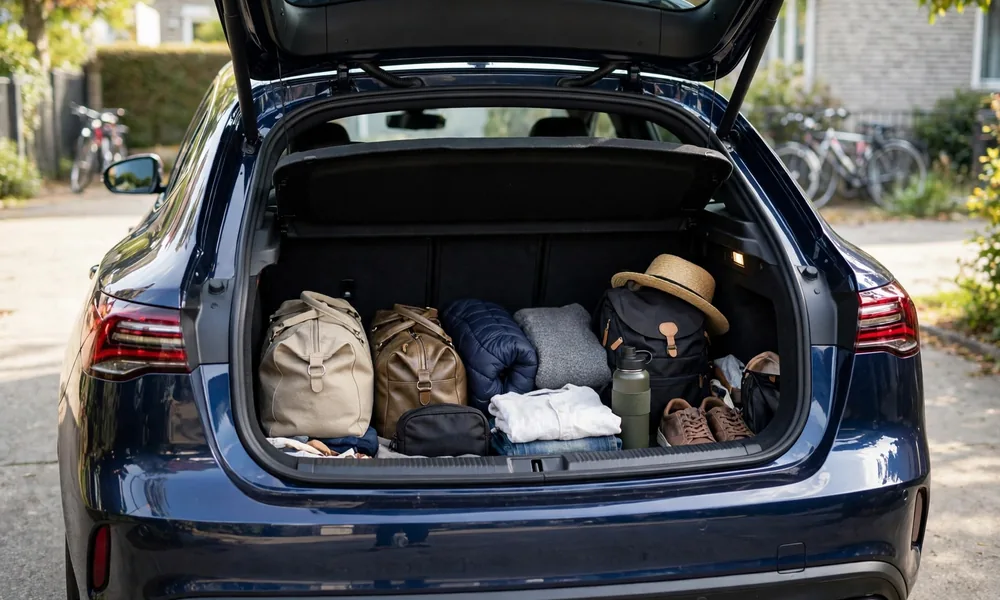
Boot space is measured in litres, and a luxury hatchback usually offers between 350 and 400 litres with the rear seats up. That is enough for two large suitcases and a few soft bags, and it is the number that decides whether the car works for a weekend away.
The second space number is the seats-down figure, which can reach 1,200 litres or more in a good hatchback, and it turns the car into a small van for the day. Check whether the rear seats fold flat, whether the load lip is low enough to slide heavy boxes in, and whether the boot floor has a false panel hiding extra storage.
Weight and balance: kerb weight and power to weight
Kerb weight is the weight of the car with all its fluids and a full tank of fuel, but without passengers or luggage. A luxury hatchback usually weighs between 1,400 and 1,600 kilograms, and every extra kilogram dulls the acceleration, the braking and the way the car changes direction.
Power to weight is the number that ties horsepower and kerb weight together, and it is the fairest single measure of how quick a car will feel. Divide the horsepower by the weight in tonnes and you get the figure, and anything above 200 horsepower per tonne feels properly quick.
Size numbers: wheelbase, width and the turning circle
The wheelbase is the distance between the front and rear axles, and it shapes both the ride and the room inside. A longer wheelbase usually means more rear legroom and a calmer ride over bumps, because the car has more time to settle between the front and rear wheels hitting the same pothole.
The turning circle tells you how much road the car needs to turn around, and anything under eleven metres is handy in a tight city street or a crowded car park. Width matters too, especially in older multi-storey car parks, so check the figure with the mirrors folded before you buy. The guide to luxury sedan specs explained covers the same numbers on a longer car, and the contrast shows why a hatchback is the easier car to park. Small outside dimensions with a long wheelbase inside is the hatchback’s oldest trick, and the spec sheet proves it.
Efficiency numbers: fuel, range and charging
Fuel consumption is quoted in litres per hundred kilometres, and a modern luxury hatchback with a petrol engine usually claims between six and eight litres. Treat the official figure as a best case measured in a laboratory, and expect to use about a litre more in real driving with air conditioning and short trips.
Electric hatchbacks quote range instead of fuel use, usually between 350 and 500 kilometres on a full charge, and charging speed in kilowatts. A car that charges at 100 kilowatts or more can add a useful amount of range in the time it takes to drink a coffee, while a slower charger turns every stop into a long wait. The guide to how a luxury sedan works explains the same charging ideas in a bigger car, and the numbers translate directly. Range is the headline, but charging speed is the number that decides how the car feels on a long journey.
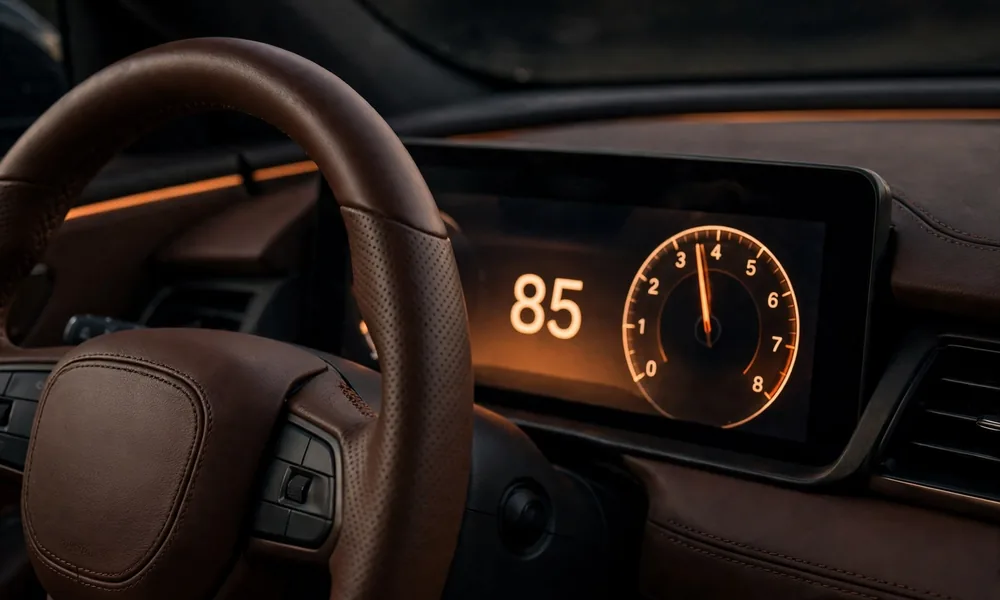
| Spec | What it means | What to look for |
|---|---|---|
| Horsepower (hp) | How fast the engine can do work | 300 hp or more in a hot hatch |
| Torque (Nm) | Pulling force, felt as a push in the back | 400 Nm or more from low revs |
| 0 to 100 km/h | Standing-start acceleration time | Under 5 seconds is quick |
| Top speed | Fastest the car will travel | Often limited to 250 km/h |
| Boot space (litres) | Luggage volume with seats up | 350 to 400 litres is generous |
| Kerb weight (kg) | Car with fluids, no passengers | Lighter means livelier handling |
| Wheelbase (mm) | Distance between front and rear axles | Longer usually means more legroom |
| Turning circle (m) | Space needed to turn around | Under 11 metres is handy in town |
What it costs
A luxury hatchback typically costs an estimated 45,000 to 70,000 dollars, with the most powerful hot hatch versions reaching an estimated 80,000 dollars or more. The price buys the engine, the chassis tuning, the cabin materials and the technology, and the options list can add an estimated 10,000 dollars for better seats, bigger wheels and driver assistance. A well chosen hatchback holds its value better than most luxury cars, because buyers always want a small car that does everything.
A rare fact about the hatchback
The most powerful production four-cylinder engine in the world sits in a luxury hatchback, and it produces more than 400 horsepower from just two litres. Engineers achieved it with a turbocharger the size of a small melon, a cooling system borrowed from racing, and pistons machined to tolerances measured in thousandths of a millimetre.
So the next time a spec sheet lands in your hand, read it slowly and translate each number into a feeling: the torque into a push, the boot litres into suitcases, the wheelbase into legroom, the turning circle into a tight street. The numbers were never meant to confuse you.


