The school run used to be the least glamorous drive of the day, a slow crawl of traffic lights, backpacks and spilled juice. Then the sliding door glided open on its own, the children climbed into seats that felt like armchairs, and the screens in the headrests lit up before anyone had asked. The luxury minivan does not try to be exciting. It tries to make the busiest, messiest journeys in family life feel calm, and the spec sheet is where that calm is either real or just a promise.
Reading the sheet properly means looking past the headline figures. Passenger space, sliding doors, towing, screens and safety systems all hide in numbers that look dull until you know what they mean. This guide decodes them, starting with the figures that decide space and ending with the ones that decide whether the van can cope when the whole family, and all of their luggage, comes along.
The spec sheet at a glance
| Specification | Typical luxury figure |
|---|---|
| Engine | 3.5 litre V6 hybrid, about 245 horsepower |
| Torque | About 300 newton-metres |
| Gearbox | Continuously variable automatic |
| Drive | Front-wheel drive, all-wheel drive option |
| 0 to 60 mph | About 7.5 seconds |
| Seats | Seven to eight |
| Length | 5.1 to 5.2 metres |
| Cargo space | 900 to 4,000 litres, seats folded |
| Towing | 1,500 to 1,600 kilograms |
| Fuel economy | About 36 miles per gallon combined |
| Fuel tank | 68 litres |
| Sliding doors | Power, hands-free, both sides |
| Screens | Rear entertainment, 11 inch display |
| Boot | Power tailgate, vacuum cleaner option |
| Safety | Full driver aids, 360 degree camera |
Space: the figure that is really the point
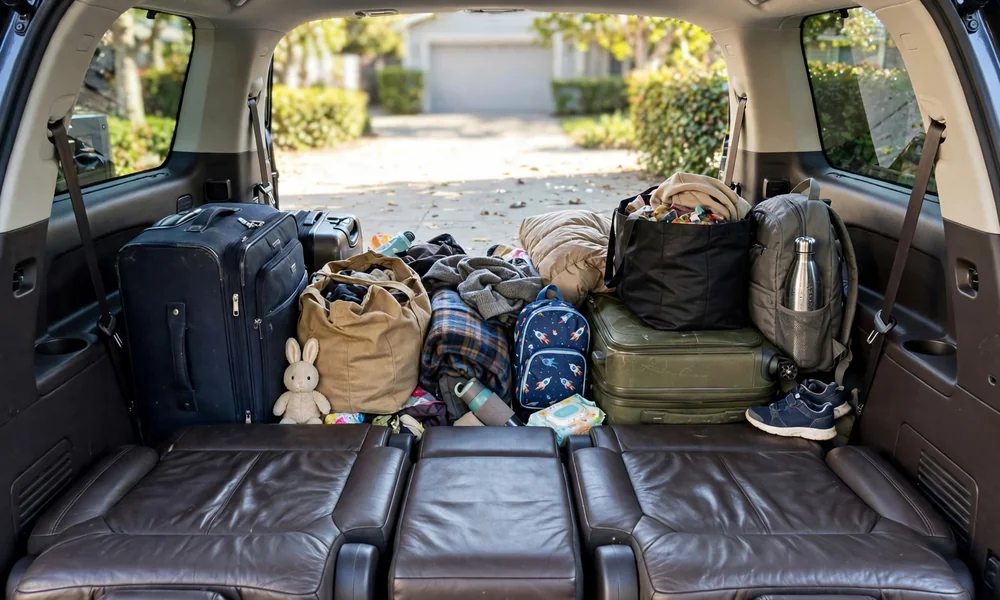
A luxury minivan seats seven or eight people, and the cargo figure tells the rest of the story: about 900 litres behind the third row, rising to around 4,000 litres with the seats folded away. Four thousand litres is more than most small vans carry, and it means the same vehicle that takes the family to school can swallow a sofa, a set of bikes or a fortnight of holiday luggage. The length, 5.1 to 5.2 metres, is what makes that possible, and it is also why the sliding doors matter so much.
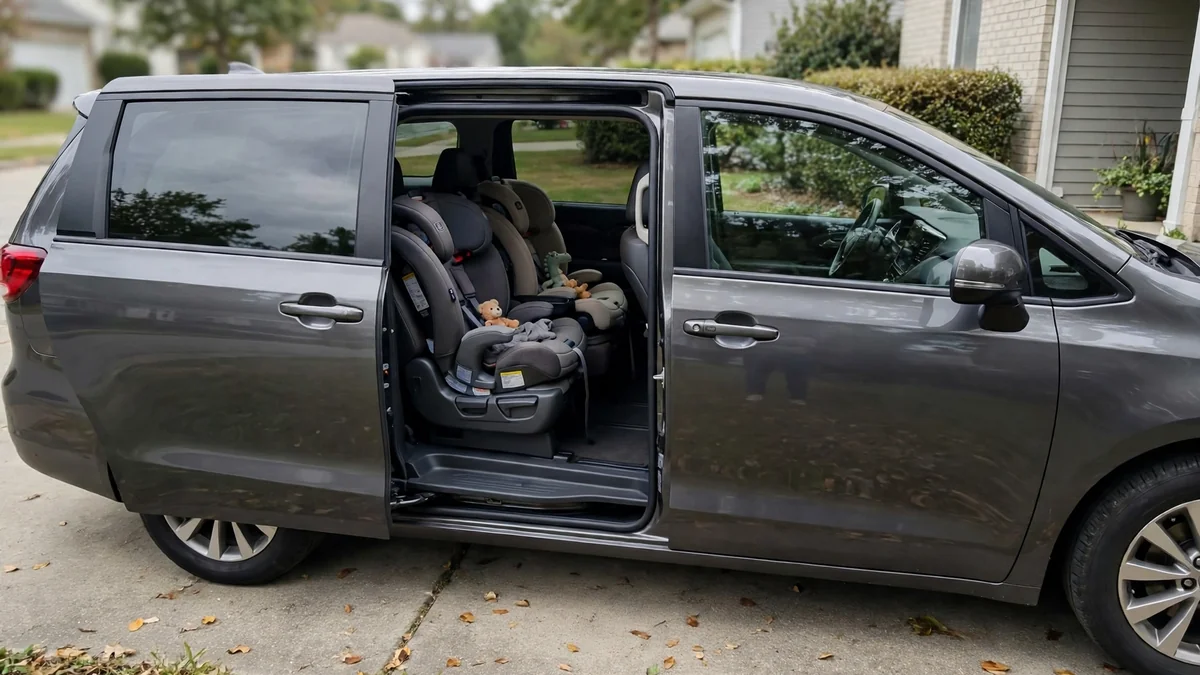
Sliding doors are the minivan’s quiet genius. They need no room to swing open, so children can climb out in a tight car park without denting the car next door, and they open wide and low enough for a grandparent or a car seat to get in easily. Power operation means they glide shut at the touch of a button, or with a wave of a foot under the bumper when your hands are full. The big SUV alternative cannot match this, and how a luxury SUV is made shows a taller, heavier answer to the same family question.
Power and economy: the hybrid compromise
The typical luxury minivan uses a 3.5-litre V6 hybrid making about 245 horsepower, and the hybrid part is the clever bit. An electric motor fills in the gaps where a petrol engine is weakest, pulling away from traffic lights and crawling through town on electric power alone, which is why the combined fuel economy reaches about 36 miles per gallon, a figure a big petrol SUV can only dream of. The trade-off is speed: nought to 60 mph takes about 7.5 seconds, which is unhurried but never feels slow in daily driving.
The continuously variable gearbox keeps the engine at its most efficient speed rather than stepping through fixed gears, which makes the van feel smooth and quiet, if a little dull when you ask for a sudden burst of speed. Front-wheel drive is standard, with all-wheel drive as an option for snow and wet roads, and towing of 1,500 to 1,600 kilograms covers a small caravan or a boat trailer. The saloon alternative is smaller and sleeker, and how a luxury sedan works shows what a family gives up, and gains, when it chooses style over space.
Screens, sound and the long journey
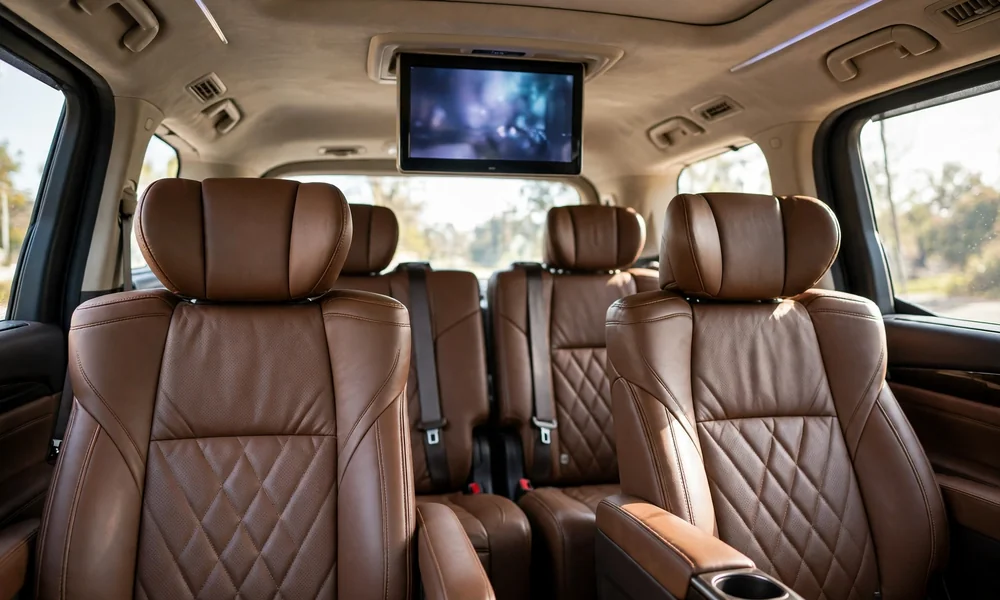
On a long journey, the spec sheet’s most important numbers may be the ones about entertainment. An 11-inch rear screen, wireless headphones and a sound system with speakers in the ceiling turn a four-hour drive into a film screening, and parents will tell you that this is not a frill but a survival tool. The front cabin gets its own large touchscreen, wireless phone charging and more cupholders than any family could ever fill, which is exactly the point: the van is designed by people who have done the school run.
The sound system deserves a mention too, because a minivan is a big, echoing box, and filling it with clear sound takes more speakers and more tuning than a small car needs. The cabin is also quieter than it looks, with acoustic glass and extra insulation keeping road noise down so the children in the third row can actually hear the film. The systems that make all of this work are explained in how a luxury car sound system is made, which follows the speakers and amplifiers from the factory to the finished car.
Safety: the number no parent skips
A luxury minivan carries the people its owners love most, so the safety spec is long: automatic emergency braking, lane keeping, blind-spot monitoring, adaptive cruise control and a 360-degree camera that shows the whole car from above when parking. The camera matters more than it sounds, because a 5.2-metre van has blind spots a hatchback never will, and the overhead view turns a tight car park into a simple exercise.
The structure underneath is built for the same job, with a stiff passenger cell and crumple zones that absorb a crash before it reaches the cabin. Child-seat anchors in every row, including the third, mean nobody has to climb over a seat to buckle a child in. It is the least exciting part of the spec sheet and the most important, and it is the reason minivans, for all their unglamorous image, remain the safest way to move a large family.
What she costs, and a rare fact
A luxury minivan costs an estimated $50,000 to $70,000, depending on the trim, the drivetrain and the options. Those are estimates, because prices vary by market and by specification, but they explain the gap from a $35,000 minivan: the hybrid system, the power doors, the rear entertainment, the leather and the full suite of driver aids each add thousands, and the top trim adds more still.
Here is the rare fact the spec sheet never mentions. The minivan was invented because a designer watched his own family struggle into a big saloon with children, dogs and luggage, and sketched a tall, boxy vehicle with sliding doors on a napkin. The modern luxury version still answers that same sketch, only now the doors open themselves and the children watch films while they ride.