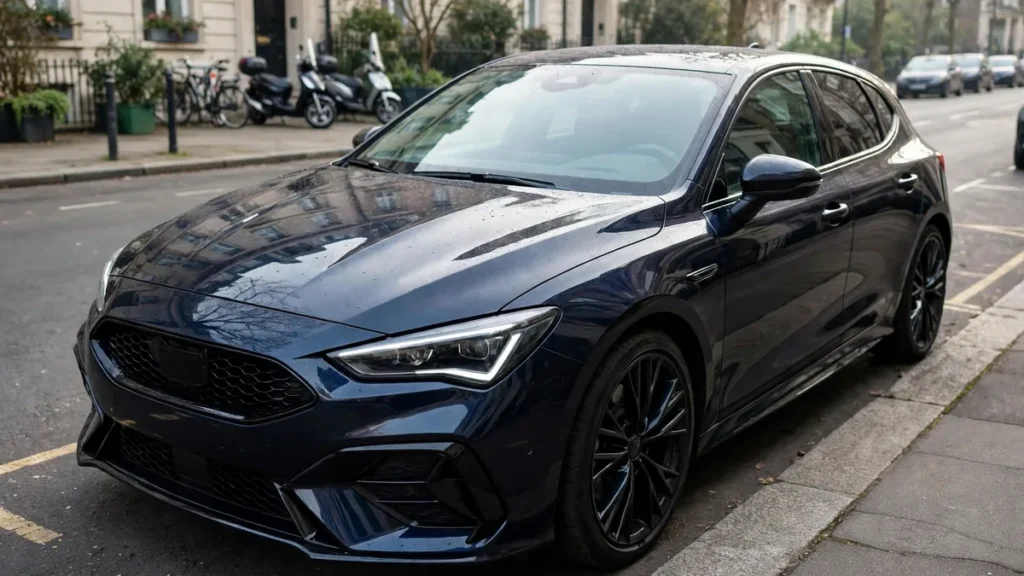
The family arrived at the dealership with a tape measure, a pushchair and a list of everything the new car had to swallow. The station wagon in the corner looked long and low and almost old-fashioned next to the tall SUVs around it, but the salesperson opened the tailgate and the whole family went quiet.
A station wagon, or estate, is the quiet achiever of the luxury world, and its spec sheet is full of numbers that matter more than horsepower. Load space, towing, roof weight and payload decide whether the car works for a family, a dog, a boat or a business.

Load space first: the litres that matter
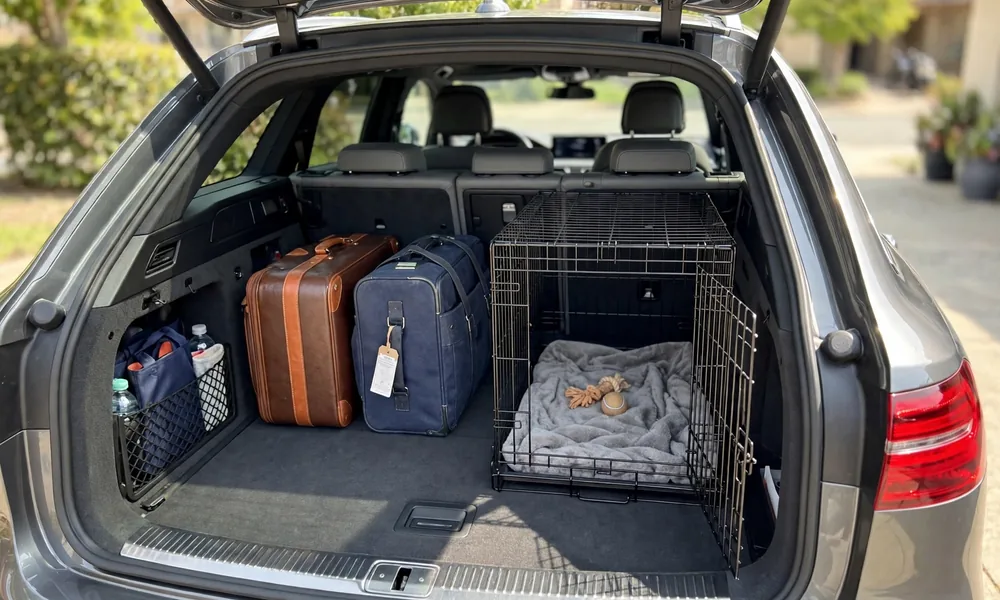
Boot space is the wagon’s headline number, and a luxury station wagon usually offers 600 litres or more with the rear seats up, which is roughly double what a hatchback manages. That is enough for a family holiday without a roof box, and it is measured with the load cover in place up to the window line in most cases.
The seats-down figure is where the wagon really earns its keep, often reaching 1,600 litres or more, which is enough for a bicycle, a flat-pack wardrobe or a weekend of camping gear. Check that the seats fold truly flat, because a step in the floor makes long items slide and rattle, and check the length with the front seats in your normal driving position. A wagon that swallows a two-metre load with the tailgate shut is a car that can replace a small van. The guide to how a luxury station wagon is made shows how engineers build that huge flat floor without weakening the body.
Towing and roof loads: the working numbers
Towing capacity is quoted in kilograms for a braked trailer, and a strong luxury wagon can pull 1,800 kilograms or more, which covers a family caravan, a horse box or a decent sized boat. The figure depends on the engine, the cooling system and the chassis, so the most powerful version of the same car often tows more than the base model.
Roof load is the smaller number that unlocks the roof box, the bikes and the kayaks, and most luxury wagons allow 75 kilograms or more on their roof rails. That is enough for a large roof box full of holiday clothes, and the long roof of a wagon carries it without the wind noise you get on a tall SUV.
Power and torque: the pulling figures
Horsepower still matters in a wagon, but torque matters more, because torque is the force that pulls a loaded car up a hill and gets a heavy trailer moving from a standstill. A luxury wagon with 500 newton-metres or more feels unstressed with a full boot and four passengers, while a car with the same horsepower but far less torque will feel busy and strained.
Acceleration times are quoted with an empty car, so add a second or two in your head for a fully loaded holiday run, and remember that the wagon’s job is to be quick without drama rather than to win traffic light races. The most powerful wagons still reach a hundred kilometres per hour in under five seconds, which is sports car territory in a car that can carry a wardrobe. That combination is the wagon’s secret, and it is why enthusiasts love them. The guide to luxury van specs explained covers similar load numbers in a taller body, and the comparison shows how much lower and easier to drive the wagon feels.
Size and stance: wheelbase, clearance and payload
The wheelbase of a luxury wagon is long, usually close to three metres, and that length is what gives the car its calm ride and its generous rear legroom. A long wheelbase smooths out bumps because the front and rear wheels hit them at different times, and it also gives the cabin the space for adults to sit comfortably behind tall drivers.
Ground clearance is usually around 150 millimetres, which is enough for rough farm tracks and deep snow but not for serious off-road work, and that is a fair compromise for a car built for roads. Payload is the number many buyers forget, and it is the total weight of people plus luggage the car is allowed to carry, often around 500 kilograms. Four adults and a full boot can exceed that in a hurry, so check the plate on the door frame before you load up for a long trip. The guide to why a luxury minivan is so expensive looks at a taller rival that solves the same problem differently, and the wagon usually wins on driving pleasure.
Efficiency and driving assistance
Fuel consumption in a luxury wagon usually sits between seven and nine litres per hundred kilometres for a petrol engine, and less for a diesel or hybrid, because the long body is surprisingly slippery through the air. The wagon shape is more aerodynamic than a tall SUV, which is why it can be both bigger inside and thriftier on fuel.
Driver assistance figures appear as counts rather than measurements: the number of cameras, the range of the radar, and the list of systems fitted as standard. Look for adaptive cruise control that works in stop-start traffic, a towing assistant that steers the trailer for you, and a blind spot system that knows the length of what you are pulling.
| Spec | What it means | What to look for |
|---|---|---|
| Boot space (litres) | Luggage volume with seats up | 600 litres or more is generous |
| Seats-down space | Volume with rear seats folded | 1,600 litres or more is excellent |
| Towing capacity (kg) | Heaviest braked trailer it can pull | 1,800 kg or more is strong |
| Roof load (kg) | Weight allowed on the roof rails | 75 kg or more fits a roof box |
| Torque (Nm) | Pulling force for towing and hills | 500 Nm or more is ideal |
| Wheelbase (mm) | Distance between front and rear axles | Longer means calmer and roomier |
| Ground clearance (mm) | Height of the lowest point off the road | 150 mm or more clears rough tracks |
| Payload (kg) | People plus luggage the car can carry | 500 kg or more is useful |

What it costs
A luxury station wagon typically costs an estimated 60,000 to 90,000 dollars, with the fastest performance versions reaching an estimated 120,000 dollars or more. The price buys the long body, the strong chassis, the big boot and the towing hardware, and the options list can add an estimated 12,000 dollars for air suspension, a panoramic roof and a tow bar. A good wagon holds its value well, because buyers who understand them rarely go back to anything else.
A rare fact about the station wagon
The fastest station wagons in the world lap the Nurburgring racing circuit quicker than many purpose-built sports cars, carrying a full boot and four seats while they do it. One famous performance wagon covers the lap in under eight minutes, which is faster than sports cars that cost twice as much and carry half as much.
So read the next wagon spec sheet with the tape measure in mind, not the stopwatch. The litres tell you what it carries, the kilos tell you what it pulls, the wheelbase tells you how it rides, and the payload tells you how honestly it does it all.