In a school car park on a rainy morning, a tall box on wheels pulls in, its sliding door opens, and seven children climb out, followed by a dog, followed by a football kit, followed by a cello. The vehicle is a luxury minivan, and it costs as much as a sports car, which seems impossible until the owner lists what it does: it carries a family, their luggage, their instruments and their dog, in leather seats, in silence, with screens for the children and coffee for the parents, and it does it every day, for years. The minivan is the most useful car ever made, and the luxury version of it is useful in a way that costs a fortune.
This is why a luxury minivan is so expensive, in seven costs, from the space itself to the seats, the doors, the quiet, the screens and the market that buys them. Each reason alone sounds reasonable, and it is only when they are added together that the price starts to make sense, because a luxury minivan is not a van with leather, it is a living room that can do a hundred miles an hour.
Reason 1: The space itself is the luxury
The first cost is the space, and it is the simplest fact of all: a luxury minivan is a large box, and a large box costs more to build than a small one. The guide to how a luxury minivan works follows the finished car through a day of school runs and shopping trips, and the space it describes is the whole point of the machine.
Reason 2: Seats that are armchairs, not benches
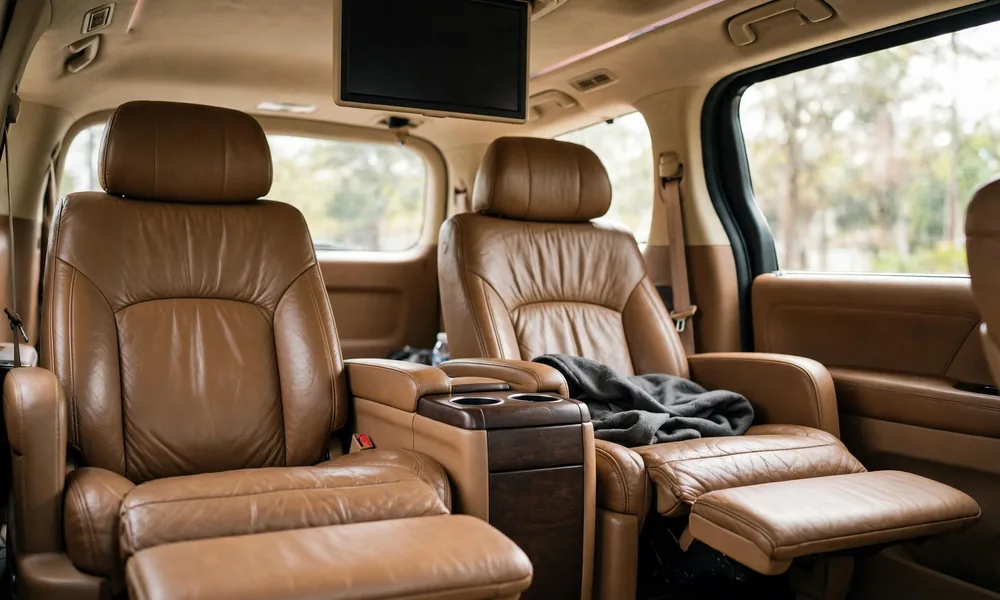
The second cost is the seats, and a luxury minivan has the best seats of any car on the road. The second row is not a bench, it is two armchairs, with leather, heating, cooling, and a footrest that folds out, and the third row is not a punishment, it is a proper seat, with room for an adult. The seats are also the most expensive part of the interior to build, because each one is a machine in itself, with motors, heaters, and airbags, and the guide to luxury minivan specs, explained sets out the numbers behind these seats, the legroom, the headroom and the ways they move, in the same plain terms.
Reason 3: Doors that slide, and open by themselves
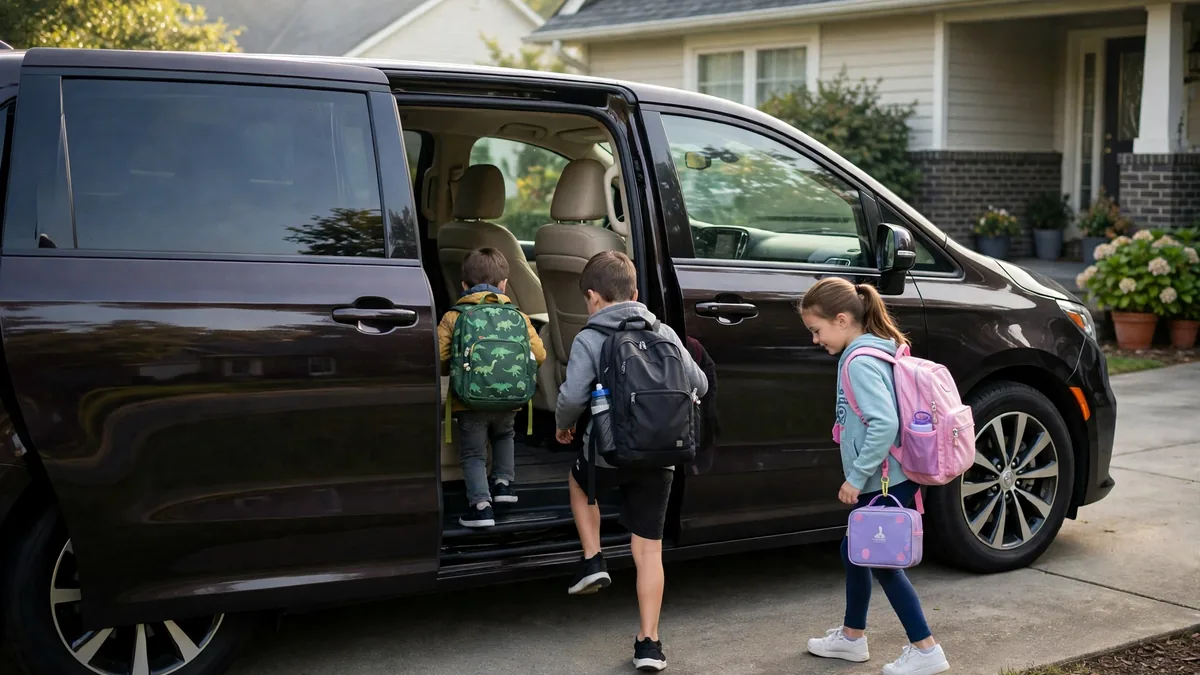
The third cost is the doors, and a luxury minivan has doors that no other car has. The rear doors slide, rather than swinging, because a sliding door can open in a car park without hitting the car next to it, and the doors are powered, opening and closing at the touch of a button, or a wave of a foot under the sill.
Reason 4: Silence, and the engineering that buys it
The fourth cost is the silence, and it is expensive because a large box is hard to keep quiet. The minivan is fitted with acoustic glass, thicker than ordinary glass, and the doors carry extra seals, and the floor carries sound-deadening mats, and the engine is mounted on flexible beds, because a family that is talking, or sleeping, or listening to a story, does not want to hear the road.
Reason 5: Screens, and a cinema for the back seats
The fifth cost is the screens, and a luxury minivan carries more of them than any other car. The front has a central screen and a digital display, and the rear has screens in the headrests, or a single large screen that folds from the roof, and the children can watch films, play games and listen to music, each with their own headphones, so the parents can listen to nothing at all. The guide to how a luxury electric SUV works follows a different kind of family car through the same screens, where the children watch the same films and the parents enjoy the same silence.
Reason 6: Safety for the most precious cargo
The sixth cost is safety, and it is the one the owner thinks about most, because the cargo is children. A luxury minivan carries more airbags than any other car, in the front, the sides, the curtains and the knees, and it carries sensors that watch the road, the blind spots and the driver, and brakes that stop the car by themselves if the driver does not.
Reason 7: Few buyers, few rivals, and a market that pays
The seventh cost is the simplest: very few luxury minivans are ever built, and the people who buy them do not haggle. A maker that builds a luxury minivan is building a car for a small market, families who want space and luxury together, and the cost of designing it, testing it and building it is spread across a small number of cars, not hundreds of thousands.
The minivan at a glance
| Part | Typical luxury figure | What it tells you |
|---|---|---|
| Space | Seven seats, large load area, tall roof | How much the car can carry, and who it can carry |
| Seats | Two armchairs in the second row, proper third row | How comfortable the passengers are, for hours |
| Doors | Powered sliding doors, powered tailgate | How easily the car loads, in a car park, with hands full |
| Silence | Acoustic glass, extra seals, deadened floor | How quiet the car is, and how fresh the family arrives |
| Screens | Front, rear, headrest and roof screens, Wi-Fi | How quiet the children are, and how the parents cope |
| Safety | Airbags everywhere, sensors, automatic braking | How the car protects the people it carries |
| Market | Few rivals, loyal buyers, small volumes | Why the car costs what it costs, and who pays it |

What it costs
A luxury minivan typically costs an estimated $60,000 to $120,000, depending on its engine, its seats and its screens. The estimate covers the car alone, not the insurance, the servicing or the fuel, which are a real part of running a large car every day, for years, with a family inside it.
A rare fact
One detail few owners ever learn is that the sliding doors of a minivan were first fitted to vans, not to cars, and they were invented for delivery drivers, who needed to open a door in a narrow street without hitting anything. The first sliding doors were fitted to panel vans in the nineteen fifties, and they were a simple steel panel on a rail, with no motor, no sensor and no leather, just a door that slid.
Add the seven costs together, the space, the seats, the doors, the silence, the screens, the safety and the market, and the price of a luxury minivan stops looking like a lot of money for a box on wheels and starts looking like the price of a living room that can do a hundred miles an hour, with the people you love most inside it, in leather, in silence, watching a film.