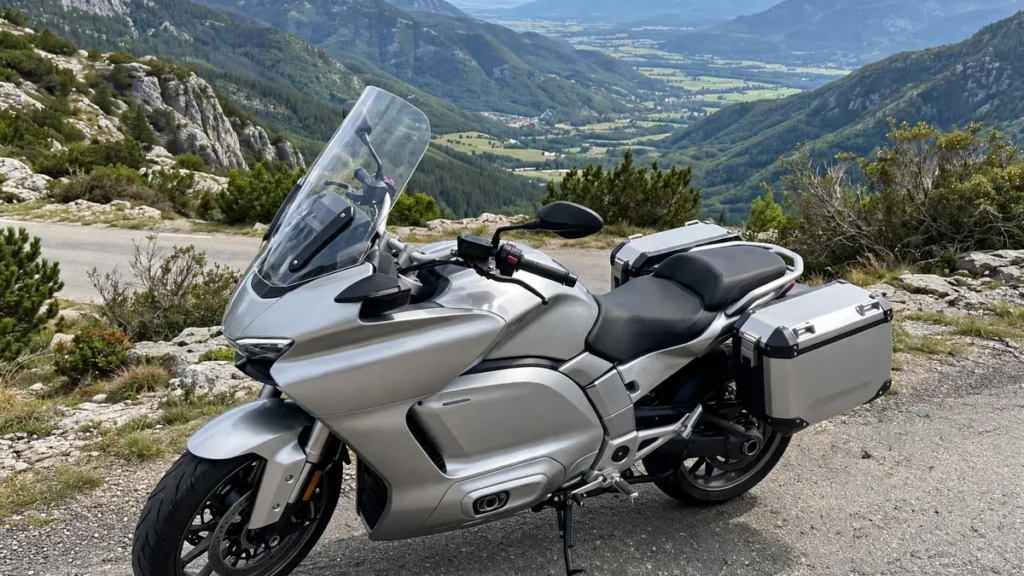
At a fuel stop on a mountain road, a rider unfolds a brochure for a luxury touring motorcycle, and the spec sheet inside it reads like a riddle. One line promises 1,800 cc and 100 horsepower, the next promises 400 kilograms and a seat height of 720 millimetres, and none of it explains why this bike costs as much as a car while a lighter, faster motorcycle costs half as much. The rider looks at the bike, then at the numbers, and the two do not seem to belong to each other at all.
This guide reads a luxury touring motorcycle spec sheet the way a long-distance rider would, number by number, from the engine and the weight to the suspension, the fuel range and the seat, so you can tell which figures decide comfort over five hundred kilometres and which are only there to impress. A touring bike is judged by different numbers than a sports bike, and the sheet rewards the reader who knows that.
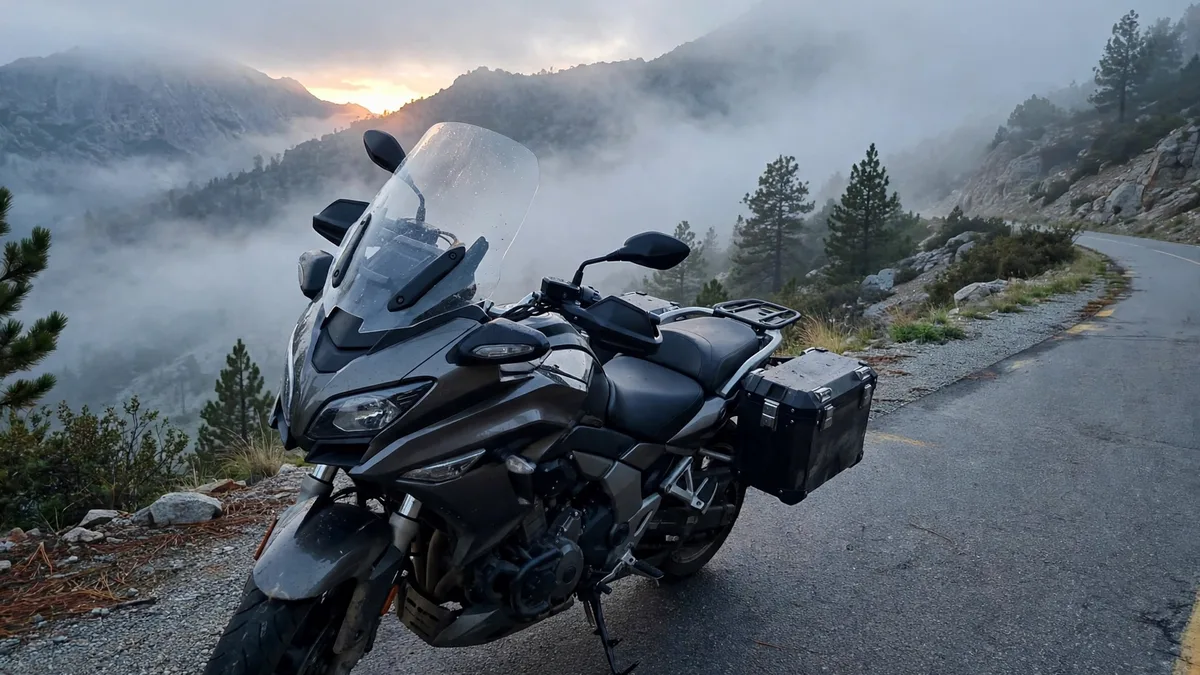
The spec sheet at a glance
| Specification | Typical luxury figure | What it tells you |
|---|---|---|
| Engine | 1,600 to 1,800 cc, 100 to 130 hp | How it pulls at low revs |
| Torque | 160 to 180 Nm at low revs | How it climbs with luggage |
| Weight | 360 to 420 kg fully fuelled | How steady it feels at speed |
| Seat height | 700 to 750 mm | How easily you reach the ground |
| Fuel capacity | 22 to 26 litres | How far between fuel stops |
| Range | 350 to 450 km per tank | How rarely you stop |
| Luggage | 100 to 130 litres, panniers and top box | How much a week on the road takes |
| Electronics | ABS, traction control, cruise control | How it looks after you in the rain |
Engine and torque: pull matters more than power
The first number to read is the engine, and on a touring bike the figure that matters is torque, not horsepower. Horsepower is the headline, and 100 to 130 of them sounds modest beside a sports bike, but a touring engine makes its power low down, where a rider actually uses it, and it pulls a fully loaded bike up a mountain pass without ever needing to rev hard. Torque is measured in newton-metres, and a luxury tourer offers 160 to 180 of them at little more than tickover, which is what lets the bike roll away from a standstill with a passenger, two panniers and a top box, all without a hint of strain. The engine is assembled by hand in many luxury tourers, and the guide to how a luxury touring motorcycle is made follows it from the frame and the fairing to the road test, fully loaded.
Weight and seat height: the numbers your body reads
Weight is the number that surprises newcomers most, because a luxury touring motorcycle weighs 360 to 420 kilograms with fuel, which is roughly twice a sports bike. That weight is not a flaw; it is what keeps the bike steady in a crosswind on a motorway and planted through a long bend, and once it is rolling, the mass disappears into the ride. The weight only shows itself at walking pace, in a car park or a U-turn, and that is where the second number matters: seat height. A seat at 700 to 750 millimetres lets most riders put both feet flat on the ground, and that flat footing is worth more than any electronic aid when the bike is fully loaded and the ground is uneven. The price of all that comfort is a subject of its own, and the guide to why a luxury touring motorcycle costs so much sets out the seven costs behind the fairing, the electronics and the hand finishing.
Fuel range and luggage: how far a week takes you
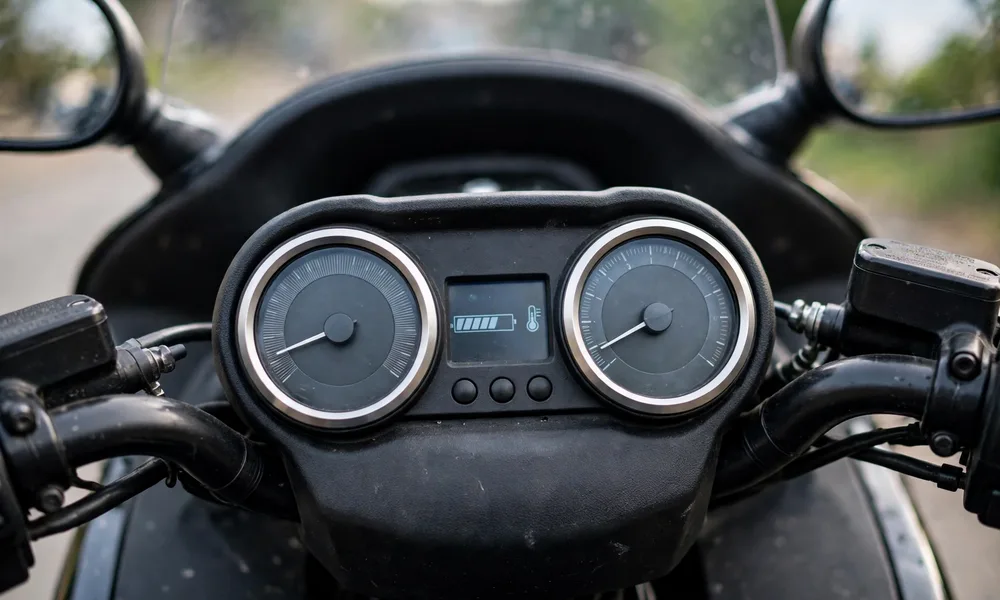
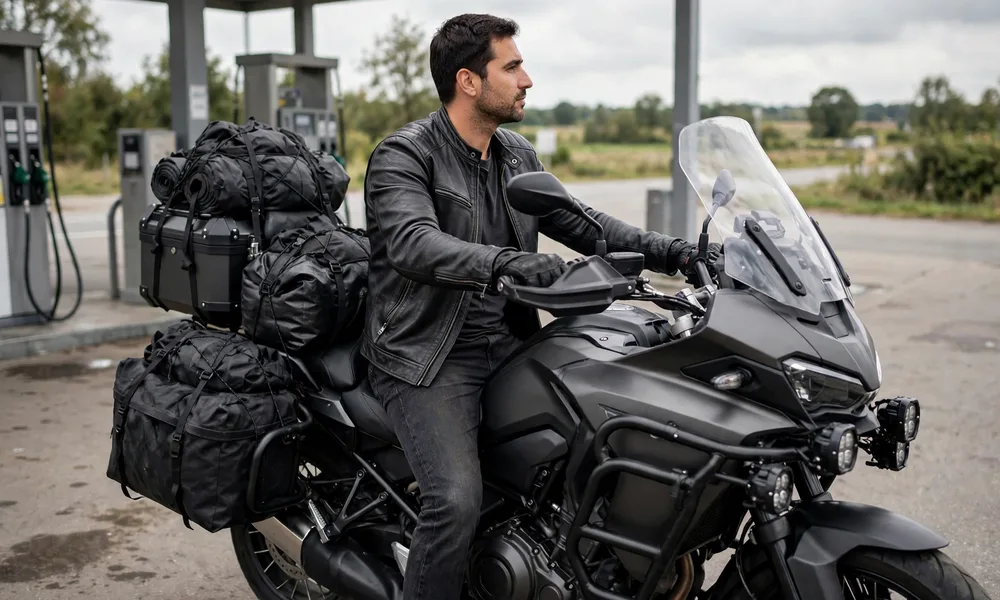
Fuel capacity and range are the numbers that decide how a touring day feels, because every fuel stop is twenty minutes out of the ride. A tank of 22 to 26 litres gives a range of 350 to 450 kilometres at a steady cruise, which is a morning of riding before lunch and a stop, and the sheet’s range figure is usually honest, because touring bikes are tested at the speeds their owners actually ride. Luggage is measured in litres, and a luxury tourer offers 100 to 130 of them across hard panniers and a top box, which is a week of clothes for two, packed tightly. The panniers themselves matter as much as their volume, because a waterproof, lockable box that opens with one hand in the rain is worth more than an extra ten litres that leaks.
Suspension, brakes and electronics: the quiet numbers
Suspension is the number that decides whether a passenger arrives fresh or aching, and the sheet will list travel in millimetres and whether the damping adjusts electronically. A luxury tourer offers long-travel suspension that soaks up a rough road without wallowing, and electronic adjustment that firms up when the panniers are loaded and softens again when they are empty. Electronics fill the rest of the sheet, and the ones that matter are cruise control, traction control, heated grips and a screen that adjusts with the touch of a button, because those are the aids you use every day. A sports bike is judged by a different sheet entirely, with lightness and peak power first, and the guide to luxury motorcycle specs, explained decodes those numbers, from power-to-weight to lean angle, for riders who chase speed rather than distance.
What it costs
A luxury touring motorcycle typically costs an estimated $25,000 to $40,000, depending on the engine, the electronics, the luggage and the finish. The estimate covers the bike alone, not riding gear, insurance or the first service. The price is mostly in the engine, the fairing and the electronics: a big low-revving engine, a wind-tunnel-shaped fairing and a full suite of rider aids cost far more to make than the frame or the wheels, and the premium over an ordinary motorcycle buys comfort that lasts for a decade of long rides.
A rare fact
One detail few riders ever learn is that a touring motorcycle’s fairing is shaped in a wind tunnel with a rider sitting on the bike, not on the bike alone. The airflow over a rider’s shoulders and helmet decides whether a long day ends in comfort or in a headache, and engineers tune the screen and the vents so the wind passes cleanly around the rider rather than battering the helmet. That is why two fairings that look alike can feel completely different at motorway speed, and why the sheet’s wind protection figure, where it is given at all, is measured with a rider in place. The bike is built around the person, not the other way round.
Read the sheet in this order, torque first, then weight and seat height, then range and luggage, and the rest will fall into place. A luxury touring motorcycle earns its price in low-down pull and all-day comfort, not in top speed, and the best bike on the forecourt is the one whose numbers match the way you actually ride, across a continent, in the rain, and home again.