A touring bike is judged by a different set of figures from any other motorcycle. Nobody buys one to win a race or to impress a crowd at a cafe. They buy it to ride four hundred kilometres in a day, arrive with a passenger who still likes them, and do the same again tomorrow. A luxury electric touring bike has to answer the same question as a petrol tourer, with a battery where the fuel tank used to be, and the specification sheet is where that answer lives.
The numbers look strange at first. There is no engine size and no fuel tank, and the range is quoted in kilometres that depend on the wind, the hills and how heavily the panniers are loaded.
This guide reads the whole sheet the way an experienced rider does, starting with the numbers that decide how far the bike will take you and ending with the ones that decide how fresh you will feel when you get there.

Luxury Electric Touring Bike Specs at a Glance
| Specification | Entry Luxury | Mid Luxury | Flagship |
|---|---|---|---|
| Battery | 12 to 15 kWh | 16 to 20 kWh | 21 to 25 kWh |
| Motor power | 40 to 60 kW | 60 to 80 kW | 80 to 110 kW |
| Torque | 140 Nm | 180 Nm | 220 Nm |
| Range, mixed riding | 180 to 220 km | 220 to 280 km | 280 to 350 km |
| Fast charge, 20 to 80 percent | 45 minutes | 30 minutes | 20 minutes |
| Weight, ready to ride | 280 to 320 kg | 310 to 350 kg | 340 to 380 kg |
| Luggage | 80 litres | 100 litres | 130 litres |
| Seat height | 700 mm | 720 mm | 720 mm, adjustable |
Battery and Range: The Numbers That Decide the Day
Battery capacity is listed in kilowatt-hours, and on a touring bike it is the biggest number on the sheet. An entry luxury tourer carries twelve to fifteen kilowatt-hours, a mid luxury bike sixteen to twenty, and a flagship twenty-one to twenty-five. That is the size of the fuel tank, and it decides how far the bike will go before the rider has to stop and think about charging instead of riding.
Range is the figure to read with the most care. The honest way to read the figure is to take the mixed riding number, then knock a fifth off for the conditions you actually ride in. The touring motorcycle specifications show how a petrol tourer answers the same question with litres and kilometres per tank, and the electric bike replaces that maths with kilowatt-hours and charging stops.
Motor Power and Torque: Why Low-Down Pull Matters More
Motor power is listed in kilowatts, and torque in newton-metres, and on a heavy touring bike torque is the number a rider feels first. An electric motor makes its full torque from zero speed, so a tourer rated at sixty kilowatts can pull away from a standstill two-up with luggage without a downshift, a clutch slip or a moment of strain.
Power still matters, but only at motorway speed. A bigger motor holds its speed against a headwind and climbs a long pass without fading, while a small motor will feel strong around town and then run out of breath at a steady cruise. The luxury motorcycle specifications explain the same idea on a petrol machine, where torque earns its keep over peak power.
Charging: The Stop That Replaces the Fuel Stop
Charging time is the number that decides your routine on the road, and the sheet lists it in two ways. The slow figure is the overnight charge, usually six to eight hours on a home charger, which is how the bike starts every morning full. The fast figure is the one that matters on a tour: twenty to eighty percent in twenty to forty-five minutes, depending on the bike, which is a coffee stop rather than a lost afternoon.
Read the fast charging figure against the charger, not just the bike. A flagship that charges in twenty minutes needs a fast charger that can deliver the power, and on a quiet country road the only charger may be a slow one at a cafe. The luxury electric bike specifications explain the same charging ideas on a smaller machine. Plan the route around the chargers, not the range figure, and the tour will run to plan.
Weight, Seat and Luggage: The Comfort Numbers
Weight is the most honest figure on the sheet. A luxury electric touring bike weighs 280 to 380 kilograms ready to ride, and that mass shapes every other number: the brakes must be bigger, the suspension must be stronger, and the motor must make more torque just to move it.
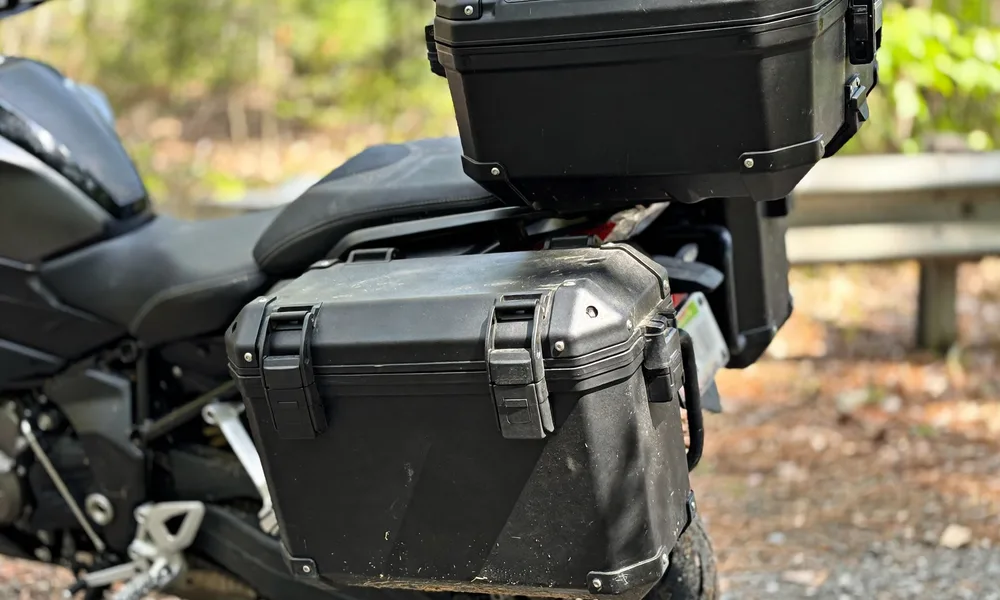
Seat height is listed in millimetres, and it decides whether the rider can put both feet flat on the ground at a stop. A touring seat sits at 700 to 720 millimetres, low enough for most riders, and the flagship adds an adjustable seat for shorter and taller riders. Luggage is measured in litres, and a luxury tourer offers 80 to 130 of them across hard panniers and a top box, which is a week of clothes for two, packed tightly.

Suspension, Brakes and Electronics: The Quiet Numbers
Suspension is the number that decides whether a passenger arrives fresh or aching, and the sheet will list travel in millimetres and whether the damping adjusts electronically. A luxury tourer offers long-travel suspension that soaks up a rough road without wallowing, and electronic adjustment that firms up when the panniers are loaded and softens again when they are empty.
Electronics fill the rest of the sheet, and the ones that matter are cruise control, traction control, heated grips and a screen that adjusts with the touch of a button, because those are the aids you use every day.
A Rare Fact About the Electric Tourer
Here is a detail few riders ever learn. An electric touring bike is quieter than the wind at motorway speed, so the rider hears the tyres, the wind and the world going past instead of an engine. That silence changes a long day completely. The rider arrives less tired, the passenger can talk without shouting, and the bike feels less like a machine and more like a way of travelling.
What the Specs Mean for You
If you are comparing luxury electric touring bikes, read the sheet in this order: mixed range against the distance between chargers on your routes, fast charging time against how long you like to stop, torque for the passenger and luggage you actually carry, and weight against how the bike feels at walking pace.
Then look at the luggage and the seat, and judge them honestly. A hundred litres of waterproof, lockable storage is worth having on any tour; an adjustable seat is worth having if two people share the bike. But neither replaces range. The best bike on the forecourt is the one whose numbers match the way you actually ride, across a continent, in the rain, and home again. A bike that matches your routes, your passenger and your luggage will earn its price on every tour, and the sheet is the only place to check that match before you buy.


