The spec sheet of a luxury vintage car is a strange document. Half of it reads like the brochure of a new car, with horsepower, displacement and top speed, and the other half reads like a museum label, with production years, chassis numbers and the name of the coachbuilder who shaped the body by hand. A buyer looking at a 1960s grand tourer is not really comparing it with other cars of its age. He is comparing it with the memory of what that car was, and the spec sheet is where the memory and the machine meet. Read it well and it tells a story about engineering, fashion and money all at once. Read it badly and it is just a list of old numbers.
An auction specialist in London once described the moment a client nearly walked away from a perfect car over a single figure. The car was a late-1960s V12 coupe, and the sheet listed its top speed at 150 miles per hour. The client had read in a magazine that the same model was good for 160, and he suspected the car had been detuned or damaged. The specialist showed him the fine print: the magazine figure had been recorded on a test track with the car in its lightest competition trim, while the sheet quoted the road-going production figure with full equipment and a full tank. The car was exactly as it should have been. The client bought it, and later said the ten miles per hour he thought he had lost were the cheapest lesson he ever had in reading old specifications.

Engine numbers, and what they meant then
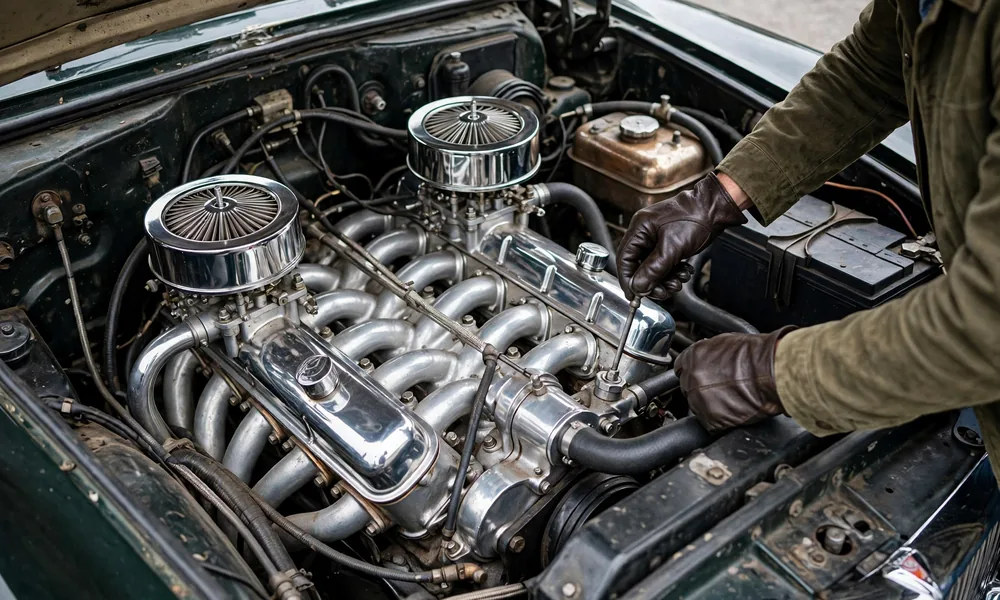
The engine is where every vintage spec sheet begins, and the first figures are displacement and cylinder count. A luxury vintage car typically carries a large engine by modern standards: a straight six of three to four litres, a V8 of five to six litres, or a V12 of four to six litres. Those numbers sound generous until the horsepower line arrives, because a 1960s V12 of five litres might produce only 270 to 320 horsepower, where a modern turbocharged engine of half the size makes more. The difference is not a failure. It is the technology of the time: carburettors instead of fuel injection, low compression ratios built for the low-octane fuel of the era, and a deliberate tuning choice that favoured smoothness and torque over outright power.
Chassis, brakes and weight
Below the engine, the sheet lists the chassis, and here the language changes. A luxury vintage car might have a separate steel chassis with the body bolted on top, or a monocoque where the body itself is the structure. Neither is better in every way. A separate chassis is easier to repair and often rides more softly, while a monocoque is stiffer and lighter. The sheet also lists the suspension: independent front suspension with coil springs was standard on better cars by the 1960s, while the rear might be a live axle on leaf springs or, on the finest cars, a fully independent rear end. The difference is felt in every corner, and the sheet states it in a single line that is easy to skip.
Performance figures and how they were measured
Acceleration and top speed are the glamour figures, and they need the most careful reading. A 1960s luxury coupe might list 0 to 60 miles per hour in 7 to 9 seconds and a top speed of 130 to 150 miles per hour. Those figures were usually recorded by a factory test driver on a closed road, with the car in perfect condition, on tyres of the period, and often with the wind behind it. Modern tests of the same cars sometimes record slower times, not because the cars have faded but because modern testers are gentler with irreplaceable machinery. The sheet’s numbers describe what the car could do when new and driven hard, and they are a guide to character rather than a promise.
The numbers that prove it is real
At the bottom of a vintage spec sheet sit the figures that have nothing to do with driving and everything to do with value: production numbers, chassis number ranges and coachbuilder details. A car built in a run of 300 is a different proposition from one built in a run of 3,000, and the sheet, or the history file that accompanies it, should state how many were made and how many survive. Matching numbers, where the engine and chassis numbers correspond to the factory records, is the single most valuable line a buyer can find, and its absence can halve a car’s value. The spec sheet does not prove matching numbers, but it tells the buyer which numbers to check.
Price is where the sheet ends and the market begins. As an estimate, a well-documented luxury vintage car in good driving condition typically sells for roughly $150,000 to $500,000, with the finest examples of the most desirable models passing $1 million and exceptional cars going far beyond that. The spread is enormous because condition, history and originality matter more than any performance figure. A car with a famous first owner, a documented racing history or a body by a celebrated coachbuilder can be worth several times a similar car without those things, and none of that appears in the horsepower column. The spec sheet explains what the car is. The history file explains what it is worth.
A rare fact worth knowing
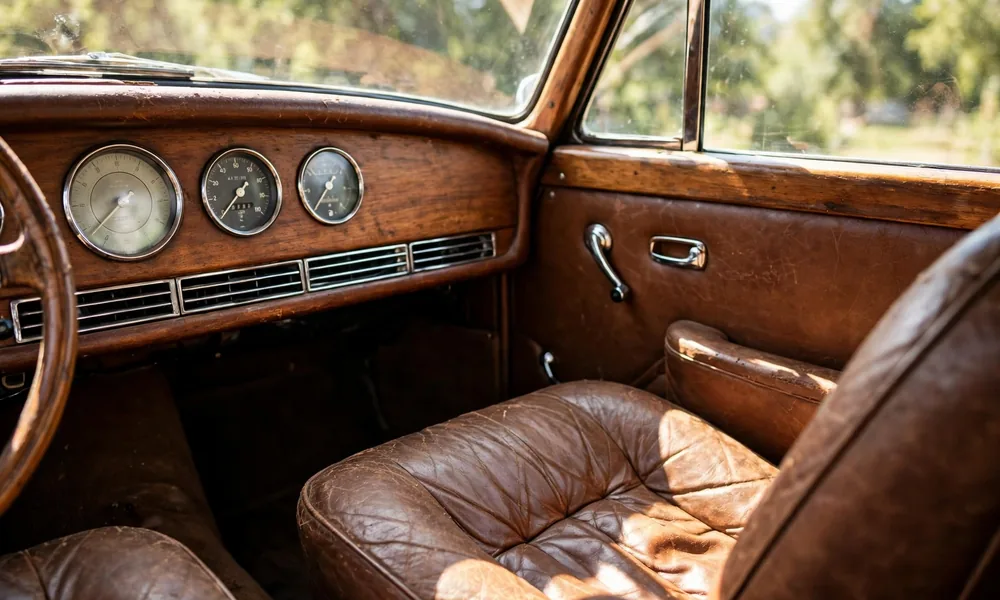
Here is a detail that surprises almost every new buyer. On many luxury vintage cars, the speedometer is deliberately optimistic by design, and the factory knew it. Speedometers of the 1950s and 1960s were often calibrated to read a few miles per hour fast at cruising speed, partly because of the tolerances of the mechanical instruments and partly because makers preferred a driver to think he was going faster than he was. The result is that a car whose sheet promises 140 miles per hour might show 145 on its own dial while a GPS records 137. Collectors who restore these cars sometimes recalibrate the instruments to be accurate, and purists argue about whether that is an improvement or a falsification. Either way, the spec sheet’s top speed was measured with timing equipment, not with the car’s own dial, and the dial in front of the driver has been telling a small white lie for sixty years.
The best way to read a luxury vintage spec sheet is as a biography rather than a brochure: the engine figures describe the car’s youth, the chassis figures its manners, and the production figures its place in history. For how these cars were put together, see how a luxury vintage car is made, and for a very different spec sheet, see the luxury autonomous car spec sheet. A lighter, wilder reading is the luxury dune buggy spec sheet.
| Specification | Typical luxury vintage range | What it decides |
|---|---|---|
| Engine | 3–6 litre, 6–12 cylinders | Character and effortless torque |
| Power | 200–350 hp | Period performance, not modern pace |
| Torque | 250–400 lb-ft | Real-world pull from low revs |
| Gearbox | 4-speed manual, sometimes overdrive | Cruising comfort |
| 0–60 mph | 7–9 seconds | Acceleration when new |
| Top speed | 130–150 mph | Grand touring ability |
| Weight | 1,400–1,900 kg | Handling and ride |
| Price (estimate) | $150,000–$1,000,000+ | Condition, history, originality |