The harbour was quiet at first light, the water flat and grey, and the yacht slipped out past the breakwater without a sound, her white hull cutting a clean line through the calm. On the bridge the captain watched the instruments settle, the engines humming low below decks, and by the time the sun cleared the headland the boat was running at a steady cruise, her crew already at work and her guests still asleep in cabins that felt more like a hotel than a boat.
A luxury yacht is built for days like that, when the sea is kind and the boat has to feel effortless, but the spec sheet hides how much engineering sits below the pretty lines. Its numbers only make sense when you know what each one does on the water, and this is what a luxury yacht spec sheet means, number by number.

The spec sheet at a glance
| Figure | Typical range | What it tells you |
|---|---|---|
| Length overall | Roughly 30 to 80 metres | How big the yacht is |
| Beam | Roughly 7 to 14 metres | How wide, and how much room inside |
| Gross tonnage | Roughly 300 to 2,500 GT | How much internal volume it has |
| Engines | Two diesels, roughly 2,000 to 5,000 hp each | How the power is made |
| Top speed | Roughly 15 to 25 knots | How fast it can run flat out |
| Cruising speed | Roughly 12 to 18 knots | How fast it travels day to day |
| Range | Roughly 3,000 to 6,000 nautical miles | How far it can go between fuel stops |
| Guests and crew | Roughly 10 to 12 guests, 8 to 20 crew | Who it carries and who runs it |
| Price | Roughly $20 million to $150 million | What the yacht costs |
Length, beam and tonnage: size is really volume
Length overall, roughly 30 to 80 metres on a luxury yacht, is the number everyone quotes, but gross tonnage is the number that tells you how much boat you are actually getting. Gross tonnage is a measure of internal volume, not weight, and a yacht of 1,000 gross tonnes has roughly twice the usable space of one of 500, even if the two boats look similar in photographs. That volume is what becomes cabins, saloons, galleys and engine rooms, and it is why two yachts of the same length can feel like completely different boats inside.
Beam, the width of the hull, usually runs roughly 7 to 14 metres, and a wider beam means more stable decks and bigger cabins, but it also means more resistance through the water and higher harbour fees, since many marinas charge by the width of the berth as well as the length. Designers balance the beam against the length to keep the hull efficient, and the ratio between the two is one of the first things a naval architect gets right. The strength of the hull itself, and how steel is shaped into a yacht that can survive decades at sea, is explained in the guide to how a superyacht steel hull is made, from flat plates to a finished hull.
Engines and speed: the numbers that decide how she travels
Most luxury yachts run on two diesel engines, each making roughly 2,000 to 5,000 horsepower, and the pair drives the boat through propellers that are often larger than a person. Top speed, roughly 15 to 25 knots, is the headline figure, but cruising speed, roughly 12 to 18 knots, is the number that matters day to day, because it is the speed the yacht can hold for hours without burning through its fuel or shaking the guests in their cabins.
Speed and range pull against each other. Push the throttles to the stops and the fuel burn climbs steeply, cutting the range in half or worse, while a gentle cruise speed can stretch the same tanks across an ocean. That is why the range figure, roughly 3,000 to 6,000 nautical miles, is always quoted at a stated cruising speed, and a buyer who reads the range without checking the speed it was measured at is being misled. The same balance of power and efficiency appears on a much larger scale in the guide to luxury cruise ship specs explained, which shows what changes when the vessel grows into a floating city.
Range and fuel: how far the tanks will take you
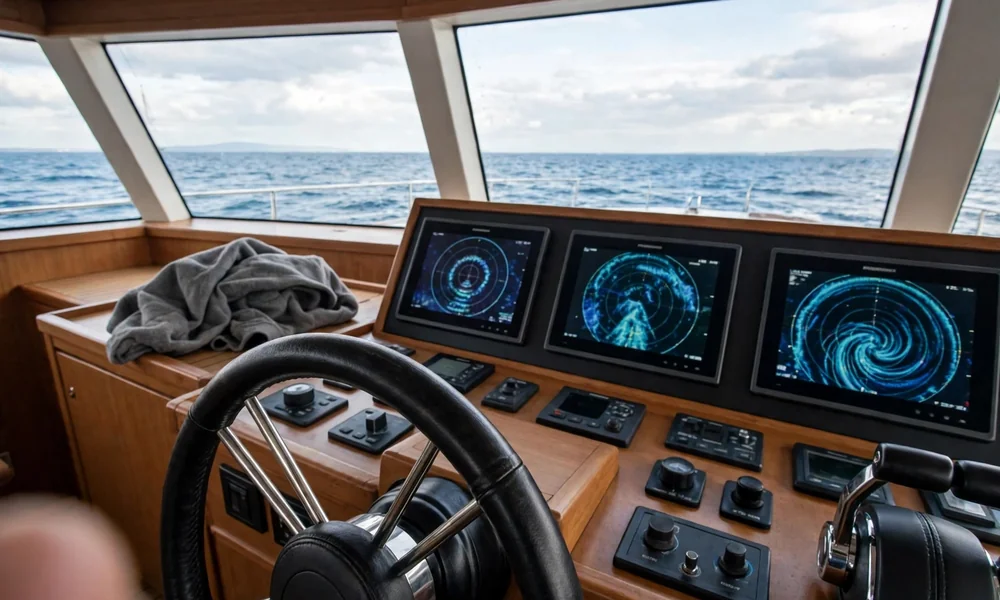
Range is the spec that decides where a yacht can actually go, and it is set by the size of the fuel tanks, the efficiency of the engines and the speed the captain chooses. A yacht with a 4,000-nautical-mile range at 12 knots can cross the Atlantic with fuel to spare, while the same boat at 20 knots might only manage half that distance, which is why experienced owners plan their passages around the economical speed rather than the exciting one.
Guests and crew: the people the numbers serve
A luxury yacht of this size usually carries roughly 10 to 12 guests and 8 to 20 crew, and the crew number is a spec in its own right, because it decides the level of service on board. The crew includes the captain, engineers, deckhands, chefs and stewards, and on the largest yachts there may be a crew member for every guest, which is what makes the service feel invisible: cabins are turned down while guests are at dinner, and the tender is ready before anyone asks for it.
The guest cabins are usually arranged with one large owner suite and several smaller guest cabins, and the spec sheet will sometimes list the cabin layout rather than just the numbers. What the numbers will not tell you is how quiet the cabins are, and that depends on the insulation around the engine room and the stabilisers, which are fins under the hull that counteract rolling in a swell. A yacht that rolls gently at anchor is worth far more to its owner than one that is a knot faster, and the stabiliser system is often the most expensive single option on the whole boat. The way a yacht is put together, from hull to finished interior, is described in the guide to how a luxury sailboat is made, which follows the build from the first mould to the launch.

Price: what the money buys
A luxury yacht costs roughly $20 million to $150 million as an estimate, and the money goes into the hull, the engines, the systems and the interior, in that order. A cheaper boat can match one number on the sheet, such as length, but it will not match the whole sheet at once, because the engineering that makes a yacht quiet, stable and reliable far from shore is expensive to design and to build.
A rare fact worth knowing
Some luxury yachts carry a small submarine on board, tucked into a garage in the hull and launched through a side door. It is not there for show. The little sub can dive a few hundred metres down with two or three people aboard, letting guests visit reefs and wrecks that no diver could reach, and it returns to the yacht to recharge between dives. Owners who have used one once tend to call it the most surprising toy on the whole boat, and it is the kind of detail that never makes the headline numbers.


