From the bridge of a cargo ship, the world is a wide band of sea and sky, and the captain can see for miles in every direction. It is the calmest room on the ship and the most important one. Every decision about where the vessel goes, how fast it travels, and what it avoids is made here, in a glass room perched high above the deck, exposed to green water, tropical sun, and salt spray for decades at a time.
The bridge of a working cargo ship is a tougher place than the bridge of a yacht. There is no polished wood for show and no crew of stewards to keep it spotless. The windows are bigger, the consoles are built for gloved hands, and the whole structure must meet strict fire and safety rules that apply to no other room on the ship. It has to stay clear in a storm, stay cool in the tropics, and keep working when the ship around it is flexing in heavy seas.
Here are the materials inside a ship bridge, why engineers chose them, how they are shaped, and what happens when they fail.

The Materials Behind the Ship Bridge
1. Laminated safety glass, the windows that must never fail
The bridge windows are made from laminated safety glass: two or more sheets of toughened glass bonded together with a clear plastic interlayer, usually polyvinyl butyral. Engineers choose it because it is strong, optically clear, and safe when it breaks, holding together in a cracked sheet instead of shattering across the helm. The glass is cut, toughened, laminated under heat and pressure, then set into rubber gaskets. When laminated glass fails, it usually starts with a heavy wave striking the outer pane. The glass cracks in a spiderweb pattern but stays in place, and the bridge stays weather-tight until the pane can be replaced in port.
2. Shipbuilding steel, the deckhouse that carries the bridge
The bridge sits inside a steel deckhouse, built from ordinary shipbuilding steel, the same grade used in the hull. Steel is chosen because it is strong, cheap, and easy to weld into the big box shapes a cargo ship needs, and because it meets the fire rules for a ship’s accommodation block. The plates are cut, welded into panels, and painted inside and out. When the deckhouse fails, the trouble is usually corrosion: paint damaged by salt spray lets rust eat into the plating, and in the worst cases a corroded deckhouse leaks rainwater into the bridge below.
3. Marine aluminium, the light bridge wings
The bridge wings, the open platforms that jut out over the water on either side, are often built from marine-grade aluminium alloy. Aluminium is chosen because it is far lighter than steel, which matters when the platform hangs out over the side of the ship, and because it does not rust in salt air. The alloy is cut from plate, welded into frames, and painted to match the deckhouse. When the wings fail, the trouble is usually at the welds: constant flexing in a seaway can open fatigue cracks, and if the paint is damaged, salt water attacks the exposed metal.
4. Polycarbonate, the clear panels that bend instead of breaking
Some bridge windows, side screens and instrument covers are made from polycarbonate, a transparent plastic many times tougher than glass. Engineers choose it because it is light, almost unbreakable, and can be cold-formed into curved shapes that glass cannot match. The sheets are cut, bent and polished, then coated against scratches and ultraviolet light. When polycarbonate fails, it is usually the coating that goes first. Years of sun yellow the surface and fine scratches haze it, until the watch officer is peering through a fog that no amount of cleaning removes.
5. Fire-resistant composite panels, the walls that buy time
The walls and ceilings of the bridge are lined with fire-resistant composite panels: mineral wool or ceramic fibre sandwiched between thin steel or aluminium sheets. These panels are chosen because international safety rules demand that a fire elsewhere in the ship must not reach the bridge quickly, and the panels can hold back flames and heat for an hour or more. The panels are cut to size, fitted into frames, and sealed at the joints. When they fail, it is usually the seals: heat and vibration open a gap at a joint, and smoke finds its way through long before the panel itself gives way.
6. Rubber gaskets and seals, the quiet waterproofing
Every window, door and cable that passes through the bridge is sealed with rubber gaskets, usually EPDM rubber. EPDM is chosen because it stays flexible in heat and cold, resists sunlight and salt water, and keeps its shape after years of being squeezed. The gaskets are extruded into long strips, cut to length, and pressed into channels around the frames. When rubber gaskets fail, they harden and shrink with age, or they are damaged by a careless refit. A failed gasket lets rain and spray into the bridge, and on a long voyage a slow leak can reach the electronics in the consoles below.
Ship Bridge Materials
| Material | Where it is used | Why it is chosen |
|---|---|---|
| Laminated safety glass | Bridge windows | Clear, strong, holds together when cracked |
| Shipbuilding steel | Deckhouse structure | Strong, cheap, meets fire rules |
| Marine aluminium | Bridge wings | Light, resists salt corrosion |
| Polycarbonate | Side screens, instrument covers | Almost unbreakable, moulded into curves |
| Fire-resistant composite | Walls and ceilings | Holds back fire and heat for an hour or more |
| EPDM rubber | Gaskets and seals | Flexible, weathertight, resists sun and salt |
Ship Bridge Specifications
| Specification | Typical value |
|---|---|
| Window glass | Laminated toughened glass, about 10 to 12 millimetres |
| Deckhouse | Shipbuilding steel, welded and painted |
| Bridge wings | Marine aluminium, extending over both sides |
| Visibility | About 225 degrees from the helm position |
| Fire protection | Composite panels rated for an hour or more |
| Window heating | Electric demister elements in the glass |
| Seals | EPDM rubber gaskets around windows and doors |
| Service life | Structure lasts the life of the ship with maintenance |
The way the whole bridge is assembled is described in how a ship bridge is made, and the lighter, quieter bridge of a yacht is covered in how a yacht navigation bridge is made. The light alloy that frames the upper works of a large yacht is explored in the materials behind the superyacht aluminium superstructure.
A Rare Fact
The word bridge comes from the days when a ship’s command platform really was a narrow bridge stretched across the deck, from one side of the ship to the other, so the captain could see both sides at once. The name stuck even as the platform grew walls, a roof and glass, and became a full room. On many cargo ships, the open bridge wings still jut out over the water on either side, a reminder of the days when the helmsman stood in the open air with nothing between him and the sea.
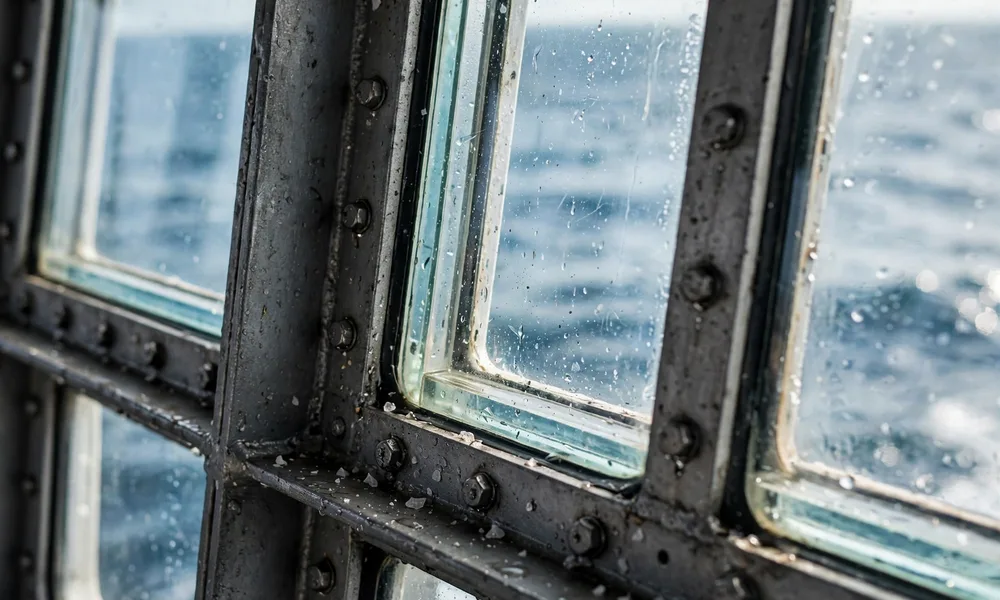

A ship bridge looks like a room made of glass and calm, and that is exactly the point. Laminated glass holds the sea out while letting the crew see, steel carries the structure, aluminium lightens the wings, polycarbonate bends where glass cannot, fire-resistant panels buy time in an emergency, and rubber seals keep the weather outside. When every material does its job, the calmest room on the ship is also the safest.