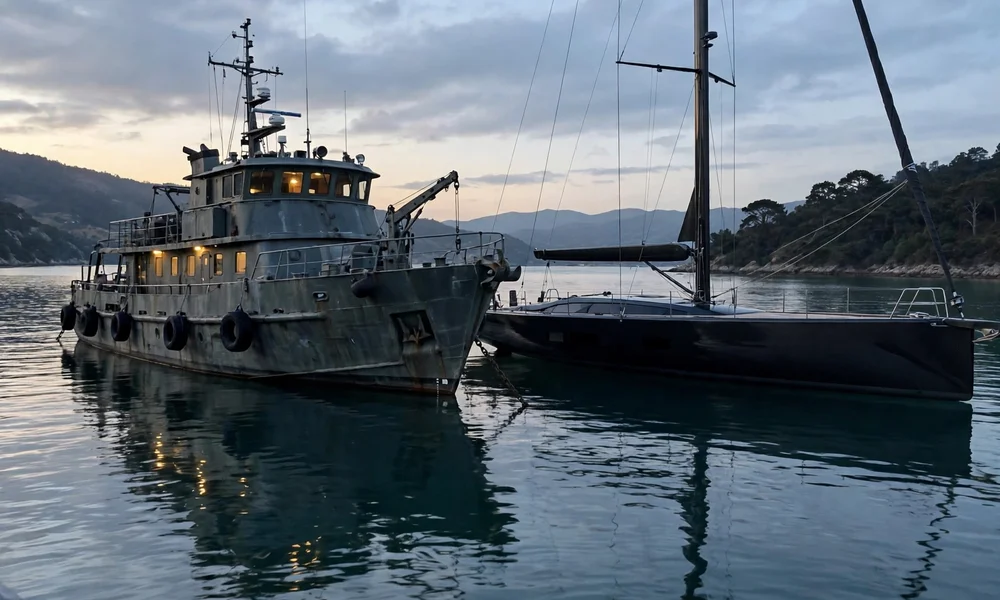
Every yacht hull is a compromise between weight, strength, cost, and time, and no two materials express that compromise more differently than steel and carbon fibre. Steel is the old workhorse: heavy, honest, and almost impossible to kill. Carbon fibre is the modern challenger: light, stiff, and eye-wateringly expensive. Choosing between them decides how the yacht sails, how much it costs, and how long it lasts.
This comparison puts the two materials head to head across the things that actually matter to an owner: weight and performance, strength and stiffness, build cost, repair, corrosion and fatigue, comfort at sea, lifespan and resale, design freedom, and sustainability. One material wins on the numbers; the other wins on the life of the boat.

How we compared them
We compared the materials as a buyer would, not as a laboratory would. Weight is judged by what it does to speed, range, and stability, not by a number on a datasheet. Cost is judged over the whole life of the yacht, including repair and resale, not just the build invoice. Comfort is judged by how the hull feels in a seaway, because a fast yacht that pounds its crew is a yacht nobody enjoys. Carbon fibre versus aluminium in superyacht materials covers the other great modern pairing, and this comparison is strictly steel against carbon fibre.
Weight and performance
Carbon fibre wins this round by a distance. A carbon hull can be less than half the weight of an equivalent steel hull, and that weight saving goes straight into speed, acceleration, and fuel range. A lighter hull needs a smaller rig on a sailing yacht and a smaller engine on a motor yacht, and it sits higher in the water, which reduces drag further. Steel pays for its weight in stability, since the mass sits low and damps rolling, but it cannot match carbon for sheer performance. Verdict: carbon fibre, clearly.
Strength and stiffness
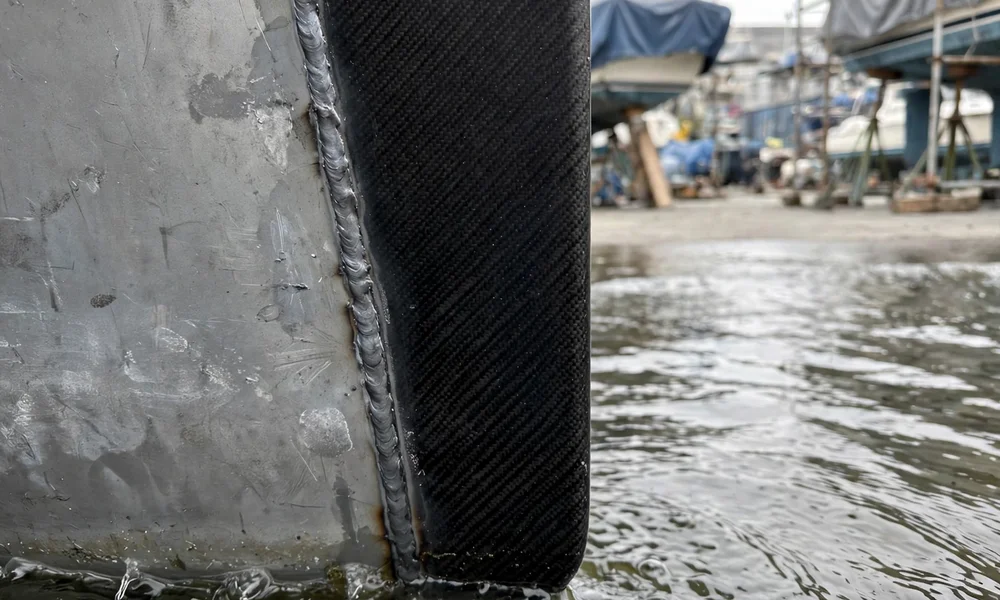
Carbon fibre is stiffer than steel weight for weight, which means a carbon hull can be built thinner and still resist bending, and a stiffer hull keeps its shape in a seaway, which keeps doors closing and rigging tensioned. Steel is stronger in a different way: it bends before it breaks, and it absorbs an impact by denting rather than cracking. Hit a container at speed and steel deforms where carbon shatters. Verdict: carbon for stiffness, steel for toughness, a draw overall, with the edge to steel for a yacht that will see ice or debris.
Build cost
Steel wins on build cost without a contest. Steel plate is cheap, welders are everywhere, and a steel hull can be built in almost any yard in the world. Carbon fibre needs expensive cloth and resin, a temperature-controlled shed, skilled laminators, and an autoclave or a vacuum infusion setup, and the labour hours are far higher. A carbon hull of the same size can cost several times as much to build. Verdict: steel, by a large margin, and the gap only grows on larger hulls.
Repair at sea and in the yard
Steel is the easiest hull material in the world to repair. Any port with a welder can cut out a damaged plate and weld in a new one, and the repair is as strong as the original. Carbon repair needs a specialist, a clean and dry workspace, matching cloth and resin, and a careful cure, and a bad repair is worse than no repair at all. In a remote anchorage, that difference is the difference between sailing home and waiting for a shipyard. Steel versus aluminium in yacht hulls reaches the same conclusion from the other side, and it holds here too. Verdict: steel, decisively.
Corrosion and fatigue
Carbon fibre does not rust, and that is a genuine advantage: no paint system to maintain below the waterline, no anodes to replace, no pitting in salt water. Steel rusts, and keeping it from rusting is a permanent job of coatings, inspections, and maintenance. But carbon has its own weakness: it fatigues differently, and damage can hide inside the laminate where it cannot be seen. Steel shows its problems on the surface, where they can be found and fixed. Verdict: carbon for freedom from rust, steel for honest, visible ageing, another draw.
Comfort at sea
Steel is quiet. Its mass damps vibration and deadens the drumming of waves on the hull, and a steel yacht at anchor feels solid and calm. Carbon is light and stiff, which makes it lively, and a stiff, light hull transmits more noise and more of the sea’s motion into the cabin. Builders fight this with insulation and damping layers, which add back some of the weight carbon saved. For a yacht that will spend long passages at sea, steel’s quiet is a real comfort. Verdict: steel, for the way it feels to live aboard.
Lifespan and resale
A well-maintained steel hull can last fifty years or more, and buyers know it: steel yachts hold their value because the next owner can survey the hull, see what is there, and trust it. Carbon yachts are younger as a class, and buyers are warier, because hidden damage is harder to rule out and repairs are specialist work. A carbon racing yacht may be obsolete in a decade as designs move on, while a steel expedition yacht is barely middle-aged. Verdict: steel, for longevity and for the confidence it gives a buyer.
Design freedom
Carbon fibre can be moulded into almost any shape, with compound curves and fine, light structures that steel cannot match without heavy framing. That freedom is why the fastest sailing yachts and the most radical motor yachts are carbon: the designer is not fighting the material. Steel is limited by what can be cut, bent, and welded, and its shapes are simpler, with more visible structure. For a yacht where the shape is the point, carbon is the only choice. Verdict: carbon fibre, clearly.
Sustainability
Steel is almost entirely recyclable, and a steel hull at the end of its life becomes new steel with little fuss. Carbon fibre is very hard to recycle: the resin cannot be melted away from the fibres easily, and most carbon waste is still landfilled or burned. Carbon’s defenders point out that a lighter hull burns less fuel over its life, which is true, but the end-of-life problem remains unsolved. The best electric boat propulsion systems shows how much weight matters to efficiency, and carbon’s fuel saving is real, yet on the whole-life question steel’s recyclability tips the balance. Verdict: steel, narrowly.
The verdict
Count the rounds and steel wins on cost, repair, comfort, lifespan, and sustainability, while carbon wins on weight, performance, and design freedom, with two draws in between. But the right answer depends on the yacht. For a racing yacht or a high-performance cruiser where speed is the purpose, carbon fibre is the only honest choice, and its cost is the price of winning. For an expedition yacht, a long-distance cruiser, or any yacht that must be repaired far from a specialist yard and last for decades, steel is the better hull, and it is not close. The materials are not rivals so much as answers to different questions, and the mistake is asking either of them to do the other’s job.