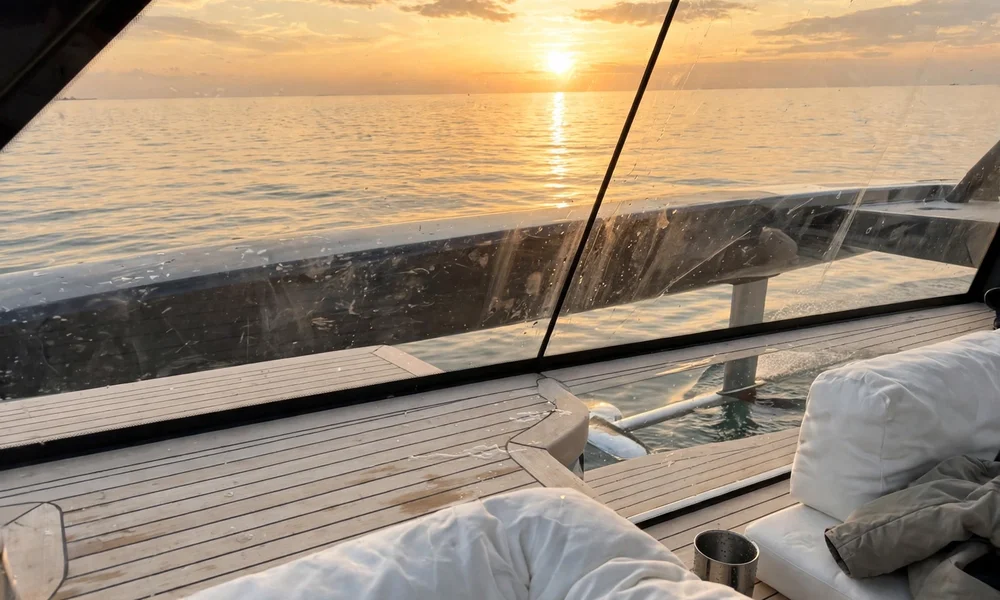
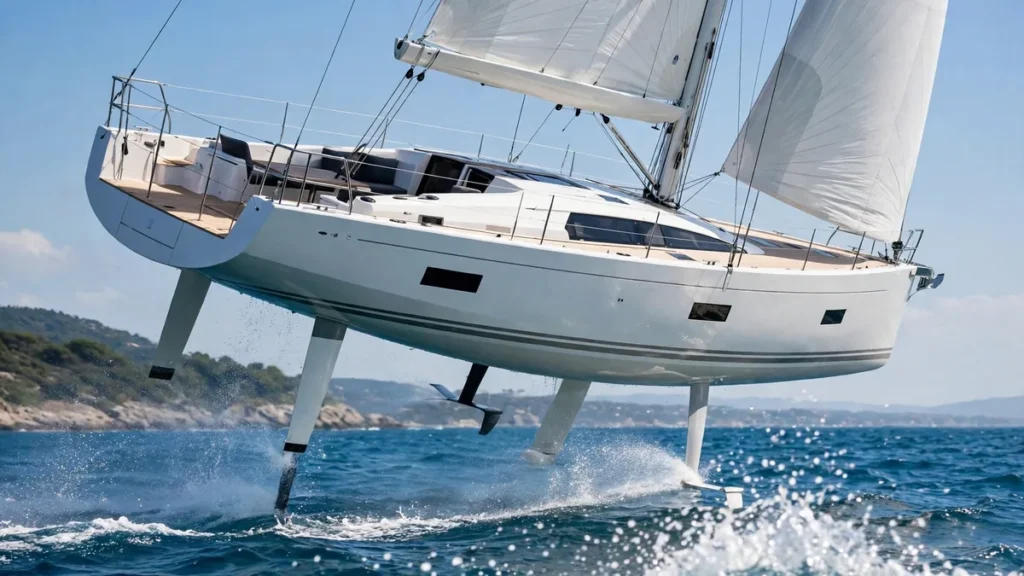
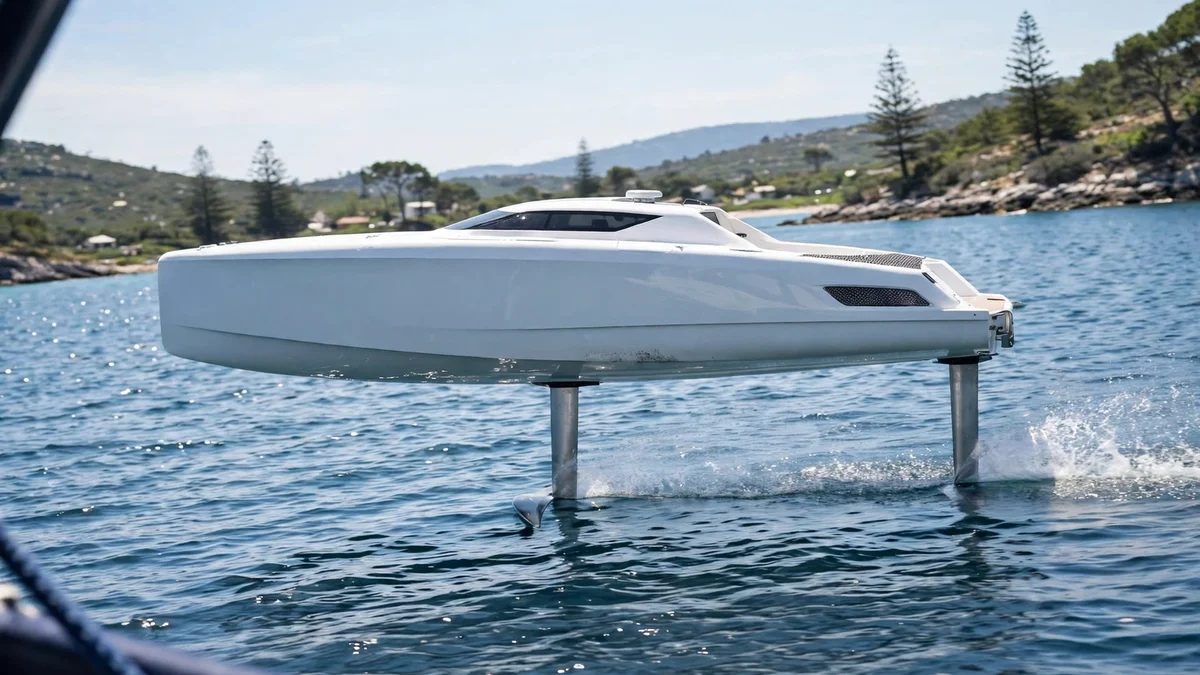
Watch a luxury hydrofoil yacht at speed and the first thing that looks wrong is the water. The hull is out of the sea, riding a metre above the surface on thin struts, and the only thing touching the water is a pair of small wings. There is almost no wake, almost no spray, and the yacht glides across a chop that would be slamming a conventional hull. Then you hear the price — tens of millions for a boat the size of a large motor yacht — and the second thing that looks wrong is the number.
The price is not a mistake, and it is not only the foils. A hydrofoil yacht is expensive because almost nothing about it is standard: the hull, the foils, the control system, the propulsion and even the way it is built are all bespoke, all engineered to tolerances borrowed from aerospace, and all produced in tiny numbers. Every part of the boat is doing a job that no ordinary yacht asks of it, and each one costs accordingly.
Why it costs so much
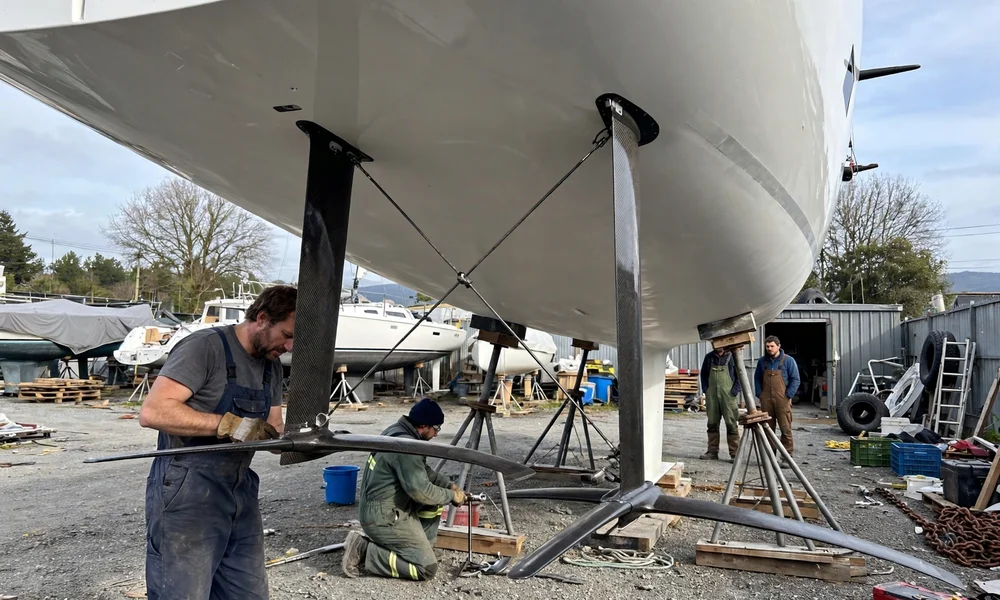
The foils themselves are the first reason. A hydrofoil is not a flat blade but a precisely shaped wing, milled or moulded from carbon fibre or titanium to tolerances measured in fractions of a millimetre, and a flaw in the profile means vibration, drag or a sudden loss of lift at speed. The foils must also survive impacts with floating debris and the constant hammering of salt water, so they are overbuilt and regularly inspected. The way a luxury hydrofoil works explains the lift itself; the cost is in making a wing that holds a forty-tonne yacht steady at forty knots and does it for years.
The control system is the second reason. A hydrofoil yacht is inherently unstable — without constant correction it would roll, pitch or porpoise — so sensors measure the boat’s attitude hundreds of times a second and hydraulic actuators adjust flaps on the foils to keep it level. The software is developed and tested like flight control code, with redundancy at every level, because a failure at speed is not a rough ride but a crash. The hydrofoil yacht explained describes the same balancing act in simpler terms, and the engineering behind it is a large share of the development cost, spread across only a handful of hulls.
Materials are the third reason. The hull is usually carbon fibre, laid up by hand in a mould, vacuum-bagged and cured in an oven, then finished to superyacht standards. Carbon fibre is lighter and stiffer than glass fibre, which is exactly what a foiling boat needs, but the material is expensive, the labour is slow, and any mistake means cutting out a section and starting again. The interior adds the same luxury as any superyacht — stone, leather, custom joinery — but every fitting must also be light, because weight is the enemy of foiling, so even the furniture is engineered rather than simply bought.
Propulsion is the fourth reason. A hydrofoil yacht needs a lot of power to climb onto its foils, and the drivetrain is often hybrid or fully electric, with high-output motors, large battery banks and a generator for range. The motors must be quiet, because silence is part of the luxury promise, and they must be efficient at the high speeds where the foils work best. The way an electric hydrofoil ferry works shows the same power problem solved at a larger scale, and on a yacht the answer costs more per kilowatt because the installation is bespoke and the space is tighter.
Labour is the fifth reason. A luxury hydrofoil yacht is built by a small team of specialists — naval architects, composite engineers, control-system programmers and superyacht craftsmen — and the build can take two to three years. There is no production line and no economy of scale: the yard may build one or two of these yachts a year, so the cost of design, tooling and testing is divided by almost nothing. The craftsmen who fair a carbon hull or wire a foil control system are among the most expensive in the marine industry, and their hours add up to a large share of the final price.
Scarcity is the sixth reason. Very few yards can build a foiling superyacht at all, and very few owners want one, which means the market is tiny and the price is set by what a handful of buyers will pay rather than by competition. The technology is also new enough that insurers, surveyors and regulators all treat it as a special case, which adds cost and delay. Scarcity cuts both ways for the owner: the yacht is rare and remarkable, but it is also hard to sell, hard to service outside a few ports, and dependent on a small circle of experts.
Running costs are the seventh reason. The foils need regular inspection, cleaning and occasional replacement, the control system needs software updates and specialist maintenance, and the yacht needs a crew trained to fly it rather than simply drive it. Berthing, insurance and fuel or charging all cost more than for a conventional yacht of the same size, and a foil strike on a floating object can mean a haul-out and a repair bill in the hundreds of thousands. Owners who can afford the purchase price can afford the running costs, but the running costs are part of why the price stays high.
Key specifications
| Specification | Typical figure |
|---|---|
| Length overall | 25–40 metres |
| Beam | 7–10 metres |
| Hull material | Carbon fibre composite |
| Foil material | Carbon fibre or titanium |
| Propulsion | Hybrid or electric, 1,000–2,500 kW |
| Take-off speed | 16–20 knots |
| Cruising speed (foiling) | 35–45 knots |
| Range | 300–600 nautical miles |
| Guests | 8–12 |
| Crew | 4–7 |
| Displacement | 40–80 tonnes |
| Control system | Fly-by-wire, active foil flaps |
What it costs
Estimates put a luxury hydrofoil yacht at roughly $25–60 million depending on size, builder and specification, with the foils and control system accounting for a large share of the premium over a conventional yacht. Annual running costs are typically estimated at 10–15% of the purchase price, covering crew, maintenance, berthing and insurance. Resale values are uncertain because the market is so small, and a foiling yacht can lose value faster than a conventional superyacht if the technology moves on. Buyers are paying for an experience no other yacht offers — silent, smooth, high-speed flight over the water — and that experience has no cheaper substitute.
A rare fact
The first hydrofoil yachts were so sensitive to weight that the owners’ luggage was weighed before boarding, and on some early boats the crew would ask guests to leave heavy items ashore. Modern control systems and lighter materials have made the boats far more forgiving, but the principle has not changed: a foiling yacht is a flying machine that happens to float at rest, and every kilo on board is a kilo the foils must lift. The crew still thinks about weight the way an airline crew thinks about it, which is not something you can say about any other yacht.