The electric SUV was supposed to be the sensible future: the family car, cleaned up, with the exhaust pipe removed and the guilt along with it. Instead, it has become the heaviest thing on the road. The GMC Hummer EV SUV weighs more than 9,000 pounds, over four tonnes, which is roughly the weight of two ordinary family cars. The Rivian R1S is around 7,000 pounds. Even a supposedly sensible electric SUV like a Tesla Model X is well over 5,000 pounds. These are not trucks. They are family cars that weigh as much as a small lorry, and the weight is not an accident. It is the product of a design philosophy that has gone wrong, and it is time to say so plainly.
The argument here is not against electric cars, and it is certainly not against SUVs as a shape. It is against the specific combination of the two at ever-increasing scale: huge batteries in huge bodies, sold as the default family vehicle. The weight creates problems that no amount of electric torque can wish away, and it does so in exactly the areas where electric cars were supposed to be better: efficiency, safety, and the wear they inflict on everything around them.

Where the weight comes from
The weight starts with the battery, and the battery is the size it is because of the range figure on the brochure. Buyers have been taught to expect 300 miles of range, and the only way to deliver that in a large, tall, unaerodynamic SUV is a very large battery pack. The Hummer’s battery alone weighs close to 3,000 pounds, about the same as an entire small car, and its usable capacity is around 200 kilowatt-hours, roughly three times what a small electric hatchback carries. Every extra mile of range adds kilograms, and every kilogram demands more energy to move, which demands a bigger battery, in a spiral that only stops when the manufacturer decides it stops.
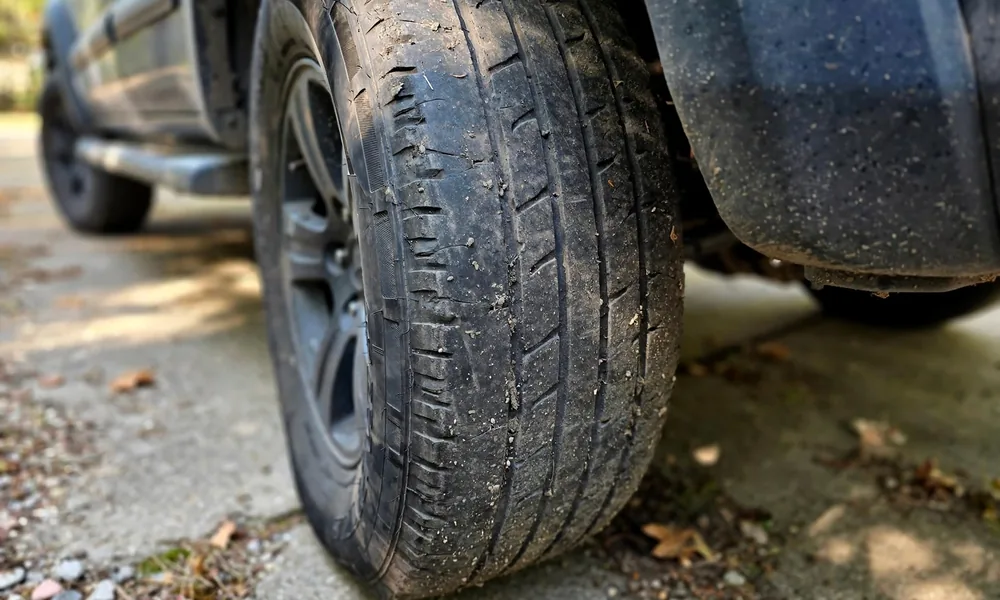
Then the body is built to carry that battery, and the structure, the suspension, the brakes, and the tyres all grow to match. A car that weighs four tonnes needs enormous brakes to stop it, enormous tyres to grip the road, and an enormous structure to protect its occupants in a crash. Each of those adds more weight, and the cycle repeats. The result is a vehicle whose engineering is dominated by managing its own mass, rather than by doing anything useful with it. Our guide to reading an EV battery pack spec sheet shows just how much of the car the battery has become: it is no longer a component, it is the floor, the structure, and a third of the weight, all at once.
The efficiency lie
The most damaging consequence is that the heavy electric SUV is far less efficient than the electric car was supposed to be. Moving four tonnes takes far more energy than moving two, whatever the power source, and the energy has to come from somewhere. A Hummer EV uses roughly twice the electricity per mile of a small electric car, which means it needs twice the charging, twice the grid capacity, and twice the raw materials in its battery to do the same journey. The car is clean at the tailpipe, because it has no tailpipe, but it is greedy everywhere else, and that greed is hidden by the fact that electricity feels free at the point of use.

The safety problem nobody wants to discuss
The most serious consequence is safety, and it is the one the industry least wants to talk about. In a collision, mass wins. A 9,000-pound SUV hitting a 3,000-pound car transfers its momentum to the lighter vehicle, and the occupants of the lighter car pay for the difference. The same applies to pedestrians and cyclists, for whom the height and weight of a large SUV are a lethal combination: a tall, flat front strikes a pedestrian in the chest rather than the legs, and the sheer mass makes the impact unsurvivable at speeds where a smaller car would have left them injured but alive. The heavy electric SUV is not just a danger to its own occupants in a crash. It is a danger to everyone else on the road, and the danger grows with every hundred kilograms.
Manufacturers will point to the safety of the SUV’s own occupants, and they are right that a heavy car protects the people inside it. But that is a private benefit bought with a public cost, and it creates an arms race: as SUVs get heavier, everyone else feels they need a heavier car to be safe, and the road gets heavier still. It is the same logic that filled the roads with SUVs in the first place, now electrified and accelerated. The only way out of an arms race is for someone to refuse to join it, and the electric transition, which was supposed to be a fresh start, was the perfect moment to do exactly that. Instead, the industry built the heaviest cars it has ever made.
Torque vectoring and active suspension can make a heavy car corner well, and our explanation of how torque vectoring works shows how impressive that technology has become. But it is engineering deployed to solve a problem the car created for itself, and the driver feels the difference in the braking distances and the sheer inertia of it.
The strongest objection, answered honestly
The honest objection is that people buy these cars because they need them, or at least because they believe they need them. A large family needs space, and an SUV provides it. A driver in a rural area needs ground clearance and all-wheel drive. Towing a trailer or a boat needs a heavy vehicle with a big battery, and there is no small car that can do that job. Range anxiety is real, and a big battery is the simplest answer to it. These are genuine needs, and it would be wrong to pretend otherwise.
But the objection proves less than it seems. Most electric SUVs are bought by families who never tow and rarely carry more than two people, and the space they need can be provided by a car that weighs two tonnes rather than four. Aerodynamics matter more than battery size for range, and our look at what the numbers under an EV really mean shows how much range is won or lost beneath the car, in the underbody and the airflow, rather than in the size of the battery.
Verdict
The electric SUV has become too heavy, and the weight is doing real damage: to efficiency, to the environment, to the roads, and to the safety of everyone who is not inside one. The answer is not to abandon electric cars or SUVs, but to build electric SUVs that are smaller, lighter, and more aerodynamic, with batteries sized for the journeys people actually make rather than the range figure that wins the brochure. Manufacturers should be judged on efficiency per mile, not on range alone, and buyers should ask what all that weight is actually for. The future of the family car is electric, and that is worth celebrating. But the future should not weigh four tonnes, and it should not need to.


