The electric bike was one of the best inventions of the last twenty years. It took the bicycle, the most efficient machine ever built, and removed the one thing that stopped most people using it: the hills. A legal e-bike, with a 250-watt motor in Europe or a 750-watt motor in the United States, lets an ordinary person ride to work without arriving exhausted, lets an older rider keep cycling, and lets a parent carry children without a car. It is a quiet, clean, brilliant idea. And it is being ruined by bikes that are not e-bikes at all, but electric motorcycles wearing bicycle clothes.
Walk into some bike shops or scroll through some online stores and you will find machines advertised with 1,500 watts, 3,000 watts, even 5,000 watts of power, with throttles that let them hit 40 or 50 miles per hour without a single turn of the pedals. They have bicycle frames, bicycle brakes, and bicycle tyres, and they are sold to people who will ride them on cycle paths, pavements, and shared paths, among pedestrians, children, and ordinary cyclists. This is not progress. It is a category error with a motor attached, and it needs to be said plainly: overpowered e-bikes are dangerous, they are mostly illegal, and they are threatening the future of the real e-bike.

What the law actually says
The legal lines are clear, even if they differ by country. In the European Union and the United Kingdom, an electrically assisted pedal cycle must have a motor rated at no more than 250 watts of continuous power, must only assist while the rider is pedalling, and must stop assisting at 25 kilometres per hour, about 15.5 miles per hour. Anything beyond that is legally a moped or a motorcycle, and it needs registration, insurance, a licence, and a helmet before it goes on a public road. In the United States, the federal definition of a low-speed electric bicycle allows a motor of up to 750 watts, and most states sort legal e-bikes into three classes, with assistance stopping at 20 miles per hour for Class 1 and 2, and 28 miles per hour for Class 3.
A bike with a 2,000-watt motor and a throttle that reaches 40 miles per hour is nowhere near either line. It is not a Class 3 e-bike with a little extra power. It is an unregistered motor vehicle, and riding it on a cycle path is the equivalent of riding a moped down a pavement. The sellers know this, which is why the bikes are often sold with a wink: a switchable off-road mode, a sticker that claims 250 watts while the motor delivers ten times that, or a listing that calls the machine an e-bike while burying the real power figure in the small print. The buyer, who may genuinely not know the law, takes the risk, and the risk is not just a fine. If that rider hits someone, the insurance that would have covered a legal bicycle does not exist, and the injured person is left with nothing.
The physics of a crash at bicycle speed, and beyond
The danger is not theoretical. Kinetic energy grows with the square of speed, so a bike at 40 miles per hour carries four times the energy of the same bike at 20, and that energy has to go somewhere in a crash. The machines themselves are not built for the speeds they reach: a bicycle disc brake can stop a bicycle, but it cannot reliably stop a 40-kilogram machine plus rider travelling at 40 miles per hour, again and again, without fading. Our guide to e-bike disc brake specs shows how much work a proper braking system has to do, and the gap between a legal e-bike and an overpowered one is the gap between a brake that works and a brake that is merely decorative.
Why the real e-bike is the victim
The most insidious damage is not the crash, but the backlash. Every time an overpowered bike is ridden recklessly on a shared path, or involved in a collision that makes the news, the public does not blame the illegal machine. It blames e-bikes, all of them, including the legal ones that a grandmother uses to ride to the shops. Cities respond with bans, with restrictions on cycle paths, and with enforcement that treats every e-bike as a suspect. The people who suffer are the ordinary riders who followed the rules, whose transport is now threatened because a minority decided the rules did not apply to them.
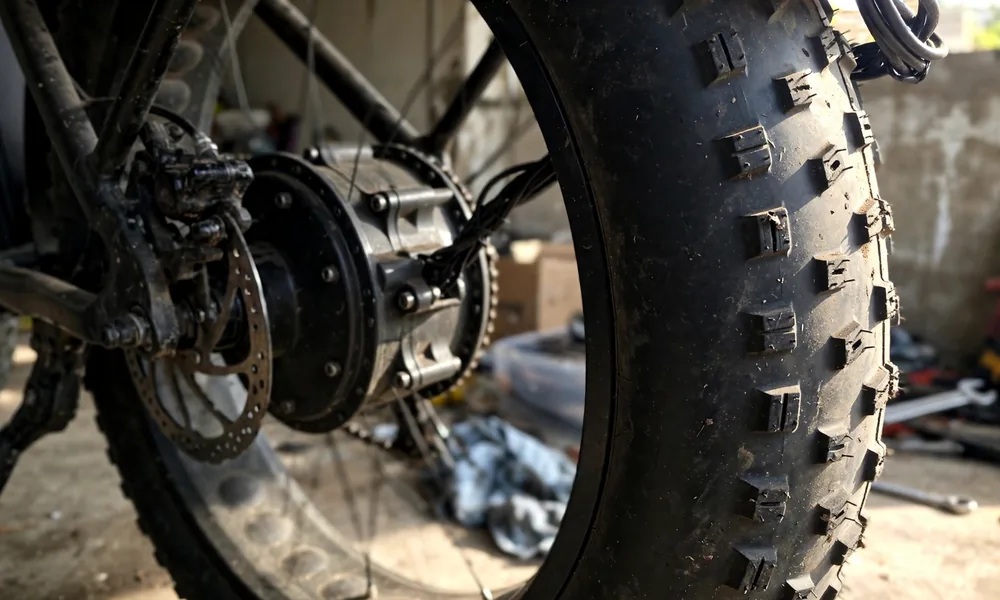
The manufacturers of legal e-bikes, who invest in proper motors, proper batteries, and proper safety testing, are being undercut by sellers who invest in none of those things and simply bolt a bigger motor onto a cheap frame. Our look at electric bike motor specs, decoded shows what a properly engineered motor system looks like, and the difference from a generic high-power hub motor is the difference between a vehicle and a toy with a throttle.
There is also the question of weight. A legal e-bike is light enough to pedal when the battery dies and to carry up a flight of stairs. The engineering of a good lightweight frame is a discipline in itself, and our guide to how lightweight e-bike frames are engineered shows how much care goes into keeping a proper e-bike light. The overpowered bike throws that care away.
The strongest objection, answered honestly
The honest objection is that people want more power for good reasons. A rider in a hilly area, or a heavy rider, or a rider carrying cargo, genuinely needs more assistance than a flat 250 watts provides. A delivery rider carrying a full load up a steep hill is not being reckless; they are doing a job, and the legal limit can feel like an arbitrary number drawn by people who have never ridden a loaded bike up a hill. There are also riders with disabilities for whom a throttle is not a luxury but a necessity, and the law’s insistence on pedal assistance can exclude exactly the people e-bikes should help most.
These are real needs, and the answer is not to pretend they do not exist. It is to meet them inside the law, not outside it. The European speed-pedelec category already allows assistance up to 45 kilometres per hour with a motor up to 4,000 watts, provided the bike is registered, insured, and ridden with a helmet, like the moped it is. Cargo bikes with powerful motors exist within the legal classes, designed and tested for the loads they carry. The needs are legitimate. The way of meeting them is not.

Verdict
Overpowered e-bikes should be treated as what they are: unregistered motor vehicles, not bicycles, and they should be kept off cycle paths and out of bike shops that sell them as e-bikes. The legal e-bike is one of the best things to happen to urban transport in decades, and it deserves to be protected from the machines that are borrowing its name while breaking its rules. Buyers should check the wattage, check the speed, and buy a bike that is legal where they ride. Sellers should stop hiding the real figures. And regulators should enforce the line they have already drawn, before the backlash against the rule-breakers takes the legal e-bike down with them.


