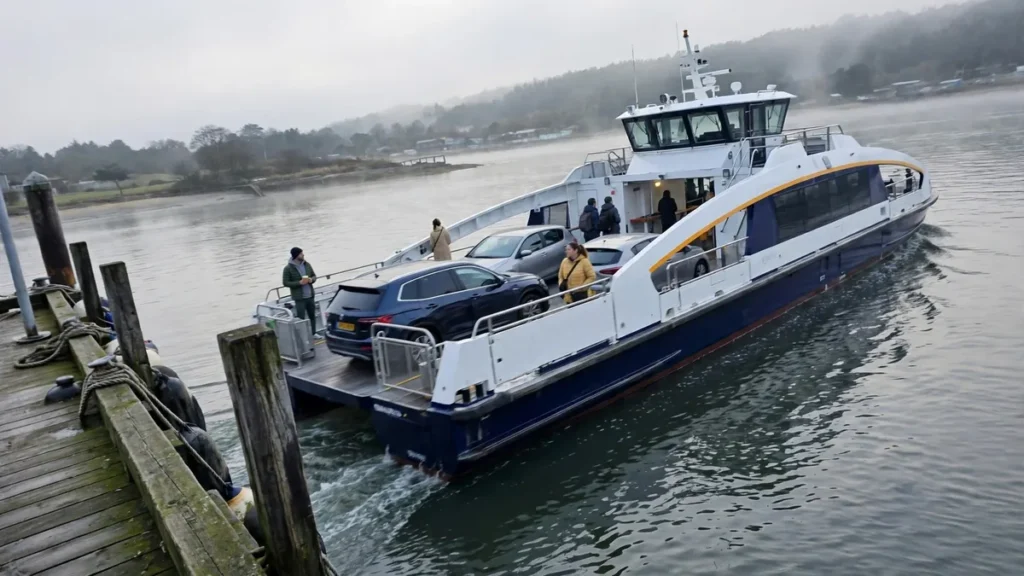
Every ferry operator faces the same impossible choice. Diesel is proven, flexible and dirty. Full electric is clean, quiet and limited to short routes with charging at both ends. Most routes sit somewhere in between: too long for batteries alone, too close to towns and harbours to justify burning diesel all day. The case for hybrid ferries is that the middle of the road is not a compromise. For most ferry routes, it is the right answer.
A hybrid ferry pairs a diesel engine with batteries and electric motors, switching between them — or combining them — as the route demands. It is not a halfway house on the way to full electric. It is a machine designed for the routes ferries actually run, and it is ready now.
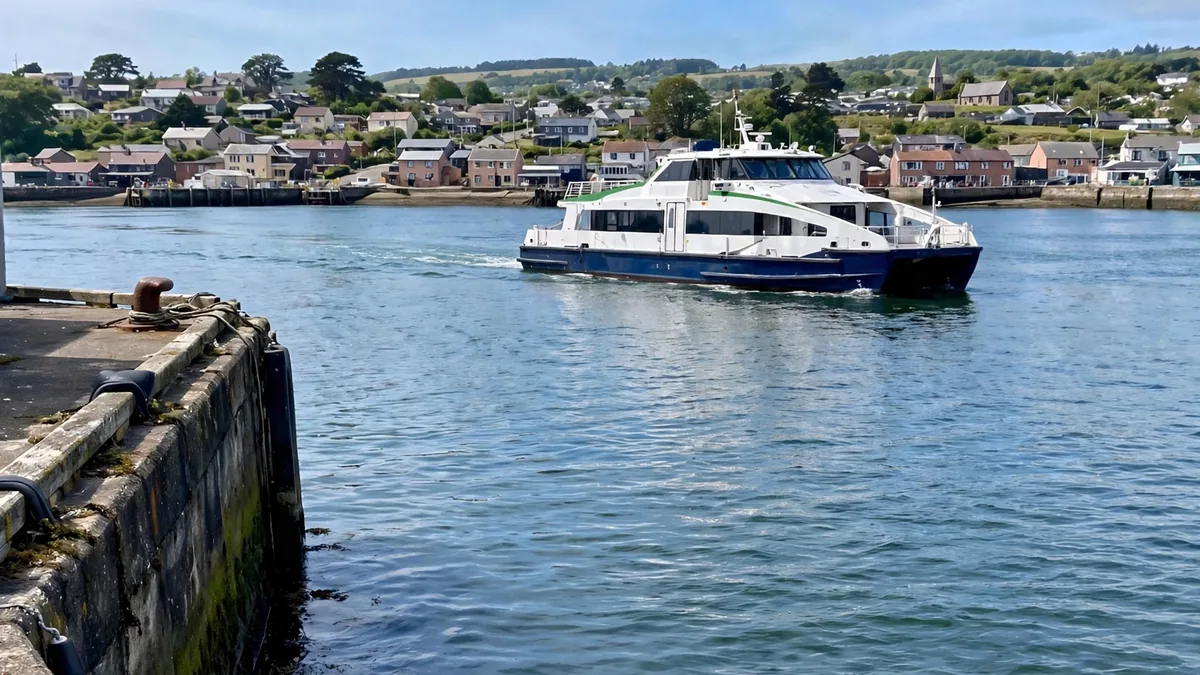
Hybrid fits the routes ferries actually run
Ferry routes are awkward. A crossing might be twenty minutes in open water, then a slow manoeuvre into a crowded harbour, then a wait at the berth, then the same again in reverse. Diesel engines are at their worst in exactly those conditions: idling at the berth, crawling through the harbour, and accelerating hard out of the dock. They burn fuel inefficiently, make noise where people live, and puff exhaust over the passengers waiting on the pier.
A hybrid ferry uses its batteries for the awkward parts. It leaves the berth silently on electric power, crosses the harbour without smoke or noise, and only starts the diesel once it is in open water and running at a steady, efficient load. The batteries recharge during the crossing, and the ferry arrives at the other side ready to do it all again. The diesel does the job it is good at — steady cruising — and the batteries do the jobs it is bad at. That is not a compromise. That is good engineering.
Clean air where people actually breathe it
The strongest argument for hybrid ferries has nothing to do with carbon targets. It is about the air in harbours. Ferries operate in the middle of towns, next to homes, schools, cafes and waterfront promenades. A diesel ferry at the berth pours exhaust into the air where people are standing, and it does it all day, every day.
A hybrid ferry can switch its engines off entirely in port. It berths, loads and unloads on battery power, with no exhaust and almost no noise. The difference is immediate and obvious to anyone standing on the pier: the air is cleaner, the harbour is quieter, and the ferry stops being the noisiest neighbour in town. Full electric ferries do this too, but only on routes short enough for their batteries. Hybrids do it on almost every route, because the diesel is there for the crossing and the batteries are there for the harbour. Diesel vs electric ferry propulsion, compared shows how the two extremes trade off against each other — and the hybrid takes the best of both.
Hybrid is ready now, without new infrastructure
Full electric ferries need charging infrastructure at both ends of the route: heavy grid connections, chargers, and timetables built around charging time. That infrastructure takes years to build and costs a fortune, which is why so many electric ferry projects stall before the first boat is ordered.
A hybrid ferry needs none of it. It refuels with diesel like any other ferry, and it charges its own batteries from its own engines while underway. An operator can order a hybrid ferry today and run it on tomorrow’s timetable, on existing routes, with existing fuel supplies. That matters, because the ferries running today are old and dirty, and every year spent waiting for charging infrastructure is a year of diesel exhaust in harbours. A hybrid ferry cuts emissions this year, not in some future decade. It is the fastest way to clean up a ferry fleet, because it is the only clean option that does not ask the operator to rebuild the shore first.
The diesel lasts longer and works less hard
There is a quieter benefit that operators care about more than emissions: maintenance. A diesel engine that runs at a steady load, helped by batteries at the moments of highest demand, lasts longer than one that is constantly throttled up and down. The batteries take the peaks — the hard acceleration out of the berth, the sudden demand of a manoeuvre — and the engine runs in its comfortable middle range.
That means fewer overhauls, fewer breakdowns and fewer cancelled sailings, which is what ferry passengers actually notice. A ferry that runs on time, every time, is worth more than a ferry with a greener brochure. The hybrid’s batteries also give the vessel a reserve: if an engine fails mid-crossing, the batteries can bring the ferry home. That redundancy is a safety feature as much as an environmental one, and it is the kind of thing that matters at sea. How ferry propulsion works explains the machinery underneath — and a hybrid simply adds a battery and a motor to a system operators already understand.
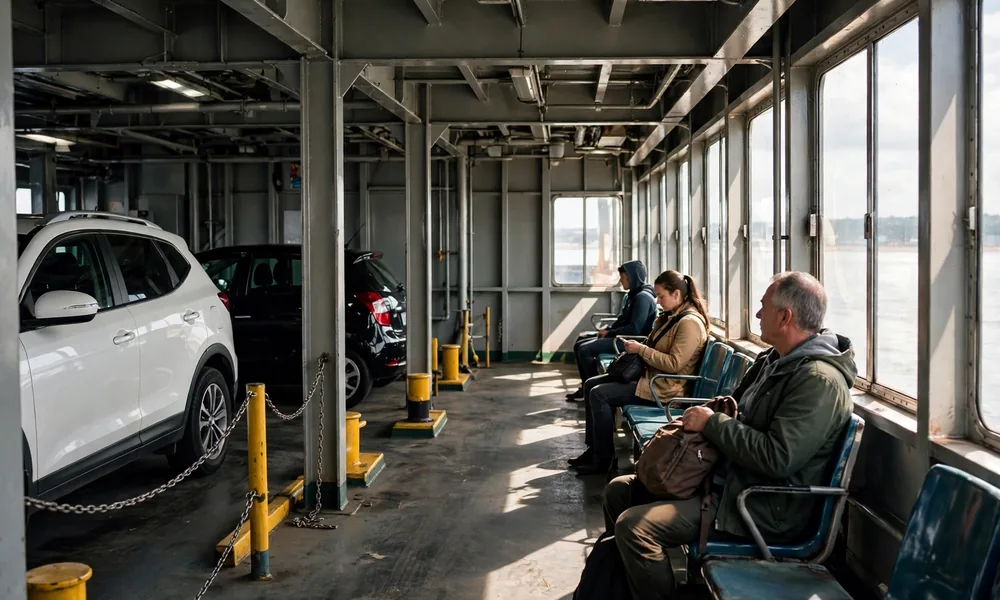
The honest counter-case
Hybrid ferries have real weaknesses, and the strongest is that they still burn diesel. A hybrid is cleaner than a diesel ferry, but it is not clean, and anyone who wants zero emissions in a harbour will not be satisfied with less smoke. Critics argue that hybrids are an excuse to delay the full electric transition — money spent on hybrid boats is money not spent on charging infrastructure and pure electric vessels.
There is also the cost and complexity. A hybrid ferry carries two propulsion systems instead of one, which means more parts, more weight and more to maintain. The batteries are expensive and need replacing, and the control systems that juggle diesel and electric power are complicated pieces of engineering.
Both objections are fair, and the answer to both is the same: the perfect is the enemy of the good. A hybrid ferry that cuts a route’s emissions substantially this year beats a full electric ferry that might arrive in five years, and a ferry fleet that waits for perfection keeps burning diesel in the meantime. The goal is cleaner harbours, not ideological purity. Hybrids deliver most of the benefit of electric ferries on most routes, and they deliver it now.
The verdict
Ferries are workhorses, and workhorses should be judged on the work they do. The hybrid ferry does the work better: quieter in harbour, cleaner where people breathe, cheaper to run, more reliable in service, and ready to order today without new infrastructure on shore. It is not the end of the story for ferry propulsion. It is the best available chapter.
Operators, ports and regulators should stop treating hybrid ferries as a stepping stone and start treating them as the standard for any route too long for batteries alone. Order them, run them, and let the full electric ferries take the short routes they suit. The harbour will be quieter for it, the air will be cleaner for it, and the ferries will keep running on time. That is what a good ferry is for, and the hybrid is the ferry that does it best. The best electric ferries ranked show what full electric can do on short crossings — hybrids bring most of that to every other route.